





 Portuguese
  English
  Spanish
  3 min of reading
  5 comments


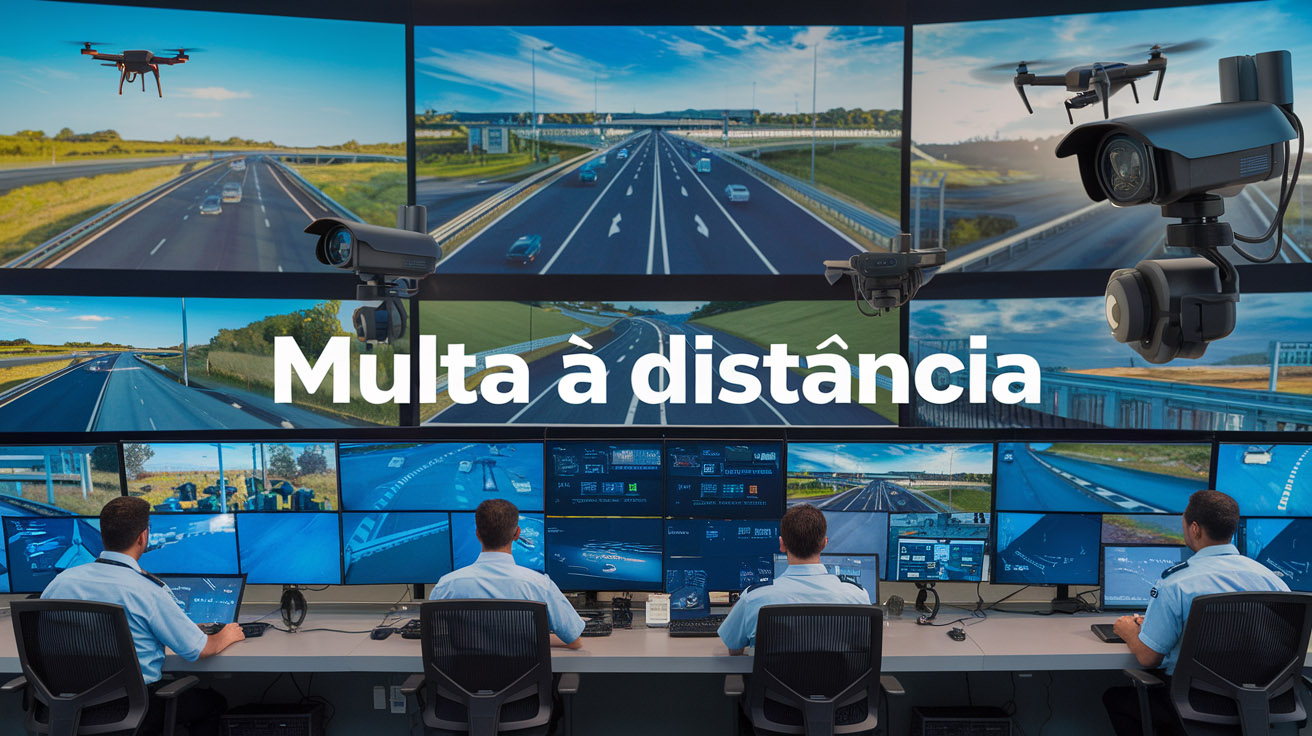


Technological Innovations Are Transforming Brazilian Traffic! Drones, Intelligent Cameras, and Predictive Tools with Artificial Intelligence Enable Remote Fines and Accident Prevention.
In recent years, technology has solidified itself as a crucial ally in traffic enforcement in Brazil.
The combination of artificial intelligence, video monitoring cameras, and drones has transformed how infractions are detected and punished, generating debates about privacy and efficacy.
The application of remote fines, once seen as something distant, is already a reality in several regions of the country.
-
Elon Musk’s Starship megafrocket puts $8 billion at risk, raises alarms in the market, and could affect technology, mining, and space internet startups in the coming years.

-
A Brazilian millionaire couple restores a farm over 150 years old in the interior of São Paulo and transforms the historic property with Portuguese tiles, antique furniture, and new spaces into a refuge that blends tradition, comfort, and sophistication.

-
Submerged city in a lake in Minas reveals intact streets, preserved vehicles, and houses after more than 60 years, impressing divers.

-
Yellowstone has started to rise again in an area of the caldera, and the movement rekindles fears surrounding the U.S. supervolcano, as scientists monitor the deformation and try to understand what is happening underground.


Since 2022, the National Traffic Council (Contran) has regulated video monitoring as a tool for the flagrant enforcement of infractions.
This means that traffic agents can issue fines even without being physically present at the location, as long as the infraction is captured live by cameras.
This enforcement model is already in practice in various cities and federal highways, with the Federal Highway Police (PRF) leading initiatives to expand the use of technology.
The Advancement of Video Monitoring
According to a report from the UOL portal, in Minas Gerais, the PRF has adopted drones to monitor critical areas of highways, where prohibited overtaking and other infractions are common.
Officers monitor the images in real time and automatically issue fines, without the need for a physical approach.
Additionally, intelligent cameras are being used to identify behaviors such as using a phone while driving and not wearing a seatbelt.
In Bahia, the PRF has deployed high-definition cameras at strategic points on the BR-324 and BR-116 highways.
In the first week of use alone, more than 1,000 drivers were caught without seatbelts and 240 using their phones while driving.
These numbers demonstrate the immediate impact of technology on enforcement and accident prevention.
Artificial Intelligence and Automated Enforcement
In addition to conventional video monitoring, artificial intelligence has been used to make enforcement even more efficient.
Advanced systems can read vehicle license plates and cross-reference information in databases, identifying irregularities in seconds.
If the system detects an infraction, the fine is generated automatically, or an alert is sent for agents to perform enforcement further down the road.
In the Federal District, the Detran-DF has adopted AI to reduce errors in enforcement.
Optical character recognition (OCR) software automatically verifies the make and model of vehicles, ensuring greater accuracy in the issuance of fines.
This technology helps avoid mistakes and speeds up the enforcement process.
Accident Prediction and Prevention
Another innovation that promises to transform traffic enforcement in Brazil is the use of predictive tools.
The National Traffic Secretariat (Senatran) developed Antecipa – Intelligent Traffic, a system that analyzes data and predicts locations and times with the highest risk of accidents.
During initial tests, the tool demonstrated potential to prevent up to 72% of analyzed accidents, generating significant savings in claims costs.
The predictive technology is also being integrated into urban monitoring systems.
Intelligent cameras at intersections and avenues identify driver behavior patterns and alert authorities about potential risks.
This way, preventive measures can be taken before infractions turn into serious accidents.
Challenges and Perspectives for the Future of Traffic in Brazil
Despite the advances, the growing use of technology in traffic enforcement raises important debates.
Issues such as privacy, data security, and transparency in the issuance of fines need to be constantly evaluated.
Moreover, it is essential that drivers have access to clear information about the rules and criteria used in enforcement.
On the other hand, the benefits of technology are undeniable.
Remote enforcement reduces the need for physical interventions, protects traffic agents, and expands the capacity for real-time monitoring.
The ultimate goal is to ensure that Brazilian streets and highways are safer for everyone.
In the coming years, the trend is for video monitoring and artificial intelligence to be increasingly integrated into traffic enforcement.
With new investments and regulations, Brazil can become one of the most advanced countries in using technology for road safety.




Esses governantes só investem em tecnologia pra aplicação de multas.
Eles primeiro deveriam investir na qualidade das vias.
Só no nosso.
Se houvesse a minima preocupação com as pessoas a gente até entenderia um pouco. Mas isto não passa de um sistema **** de extorsão do cidadão pelo ESTADO. Segurança é o nome que dão pra industria das multas.
Tecnologia sempre para punir, quero ver para salvar vidas.