





 Portuguese
  English
  Spanish
  4 min of reading
  0 comments


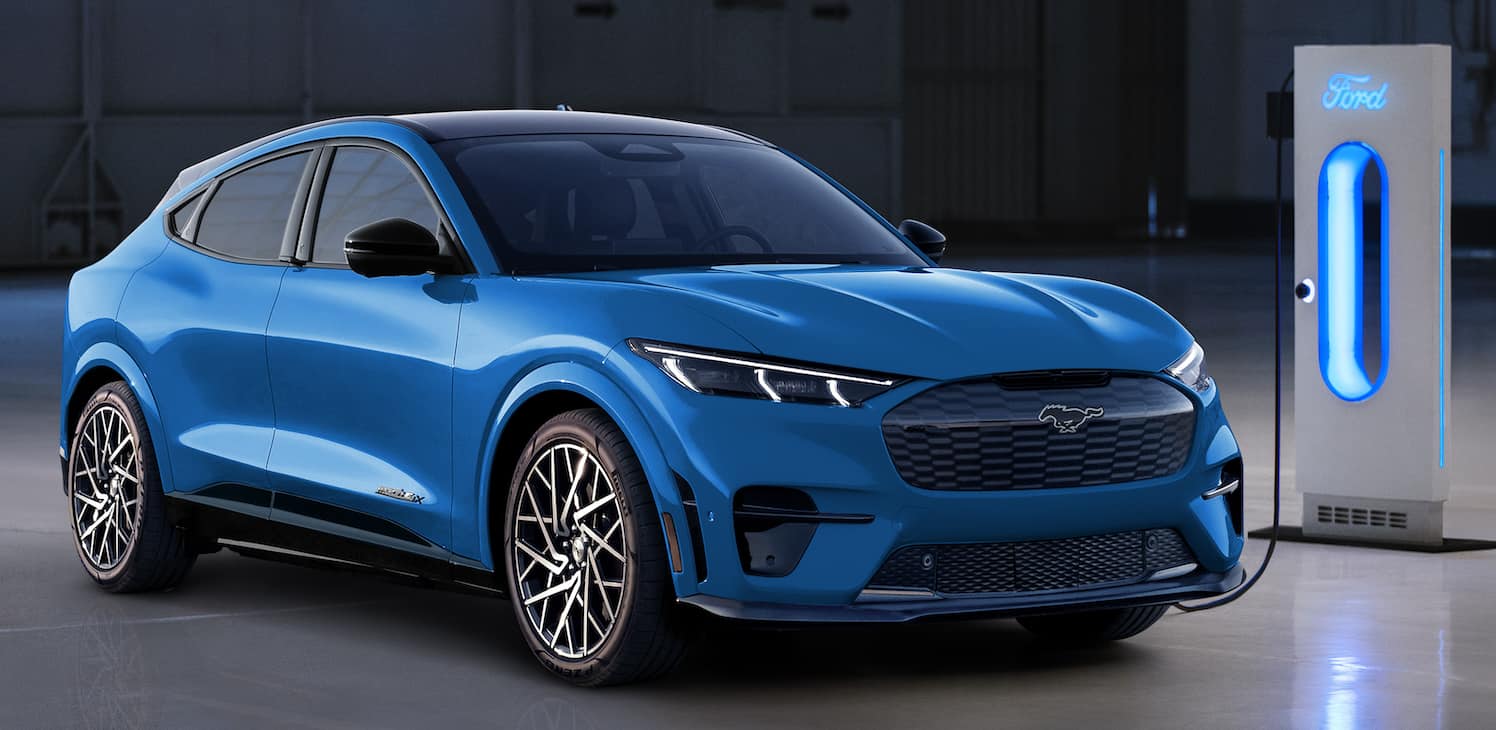


Failure of the Electric Mustang Doors Forces Ford to Call Global Recall in 2025 and Suspend Mach-E Sales. Issue May Trap Occupants and Affects More Than 300 Thousand Vehicles with Electronic Defect
The Ford electric Mustang, a symbol of the automaker’s transition to sustainable mobility, has become a cause for concern. A defect in the doors of the Mustang Mach-E has led to a global recall affecting approximately 300,000 vehicles. The problem may leave occupants trapped inside the car, posing safety risks and damaging the model’s and brand’s reputation.
The situation has led Ford to temporarily halt Mach-E sales while it works on a software update. The incident affects vehicles manufactured between 2021 and 2025 and reignites the debate about the reliability of electronic systems in modern electric cars.
What Is Happening with the Defective Mustang Mach-E?
Ford has announced a global recall of the electric Mustang after identifying a failure in the electronic locks of the front and rear doors. The failure occurs when the 12-volt battery drops to low charge levels, preventing the locking system from functioning correctly.
-
Less than a Tera TSI, up to 710 km of range and charging in 9 minutes: the new BYD Song Ultra expands the Chinese brand’s bet on increasingly faster, more technological, and competitively priced electric SUVs.

-
With a 1.0 engine producing 75 hp and costing less than R$ 70,000, Fiat’s car returns to the podium as the cheapest in the country; a temporary promotion for the 2026 Like version reduces the price of the Fiat Mobi.
-
With a mild hybrid system of 48 V, 176 hp and a price of R$ 175,990 in the Sahara version, the new Jeep Renegade changes mostly on the inside, improves slightly in fuel consumption, and remains almost the same car.
-
With a 293.5 cm³ engine and a range of up to 400 km with a 14.1-liter tank, the Honda CB 300F Twister 2026 has up to 24.7 hp, an initial price of R$ 25,150, and already exceeds R$ 29,000 in the Fipe Table.

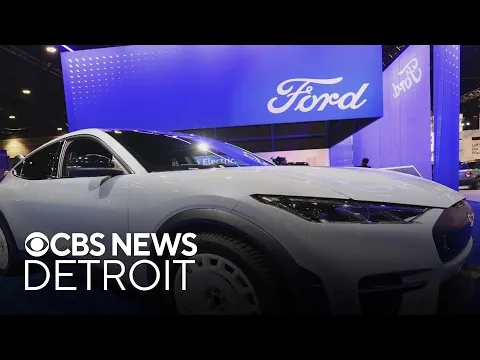

If the auxiliary battery drops below 8.4 volts, the car may keep the doors in their last state (locked or unlocked), preventing the driver from entering or exiting the vehicle. In more severe cases, there is a risk of children becoming trapped in the rear seat, as the rear doors lack internal mechanical release.
Ford Electric Mustang Recall Involves More Than 300 Thousand Vehicles
According to the NHTSA (National Highway Traffic Safety Administration), the recall initially affects 197,432 units in the United States. Globally, the number has exceeded 317 thousand vehicles of the Mustang Mach-E model, produced between 2021 and 2025.
Ford itself classified the issue as a “safety risk.” Although there are no recorded injuries, the automaker confirmed at least six cases in which occupants became trapped inside the vehicle — including incidents involving children.
The repair campaign was registered under the code 25S65 and began notifying owners starting June 23, 2025. Sales and deliveries of the model have also been suspended until a definitive solution is available.
Ford Halts Mach-E Sales and Prepares Solution
In light of the problem, Ford halts Mach-E sales as a precautionary measure. Additionally, it has issued an alert to dealers to stop test drives, demonstrations, and registrations of the model until the defect is corrected.
The automaker stated that the solution will come via software update to the door control modules. However, the reprogramming cannot be done remotely — it will require bringing the car to an authorized dealership.
The correction is expected to be available by the third quarter of 2025. Meanwhile, the company recommends that drivers stay alert to warnings from the SYNC system, such as the message “System Off to Save Battery,” and pay attention to any unusual resistance when attempting to open the doors manually.
Door Issues Concern Owners of Electric Vehicles
The failure of the locks raises questions about the reliability of embedded electronic systems in electric vehicles. The Mustang Mach-E, one of Ford’s main products in the electric lineup, is now facing one of its biggest challenges since its launch.
Another point of concern is the absence of manual release for the rear doors, which increases the risk in emergencies. Depending on the situation, occupants may become completely trapped inside the vehicle.
Market Reaction and Impact on Ford’s Image
Despite the incident, the electric Mustang continues to report good sales numbers. In May 2025 alone, 4,724 units were sold in the United States, an increase of 11% compared to the previous year. For the year to date, a total of 19,258 vehicles have been sold, keeping the model competitive in the segment.
However, the frequency of recalls involving Ford electric vehicles — such as the recall of 1 million units for a rearview camera failure in May 2025 — may impact consumer confidence in the long run.
Experts point out that, with the advancement of digitalization in cars, software failures are likely to become more common. The automaker’s speed in responding will be essential to preserve its image in the market.
Technical Specifications: Ford Mustang Mach-E (2025 Version)
| Item | Details |
| Powertrain | Electric |
| Power | Up to 487 hp (GT Performance) |
| Torque | 87.7 kgfm (GT version) |
| Estimated Range (EPA) | Up to 502 km |
| Battery | Lithium-ion, up to 91 kWh |
| Fast Charging | 10% to 80% in approx. 45 minutes |
| Traction | Rear or all-wheel drive |
| Acceleration (0 to 100 km/h) | Approximately 3.8 seconds |
| Starting Price (USA) | Starting at US$ 44,795 |
What the Ford 2025 Recall Case Teaches Us
The Ford 2025 recall case involving the defective Mustang Mach-E serves as an important alert for the automotive industry. As cars become more connected, dependent on software and electrical power, the complexity of systems increases, consequently raising the risk of unexpected failures.
Ford’s response was swift, with an immediate halt on sales, notification of owners, and planning for a solution through dealerships. Still, incidents like this challenge consumer confidence in electrified models, especially those aimed at families and urban use.
For those who own a Mach-E, the recommendation is to check if the vehicle is included in the recall, contact an authorized dealership, and avoid use in critical conditions until the correction is applied. In situations like this, safety must always come first.
The future of electric mobility depends not only on performance and range but also on robustness in electronic systems and consumer trust. The electric Mustang, now under scrutiny, must prove that it is up to this challenge.








This is precisely the kind of intelligent and stimulating discussion that’s sorely needed online. It promotes critical thinking rather than superficial consumption. Thank you for elevating the conversation.