





 Portuguese
  English
  Spanish
  5 min of reading
  0 comments


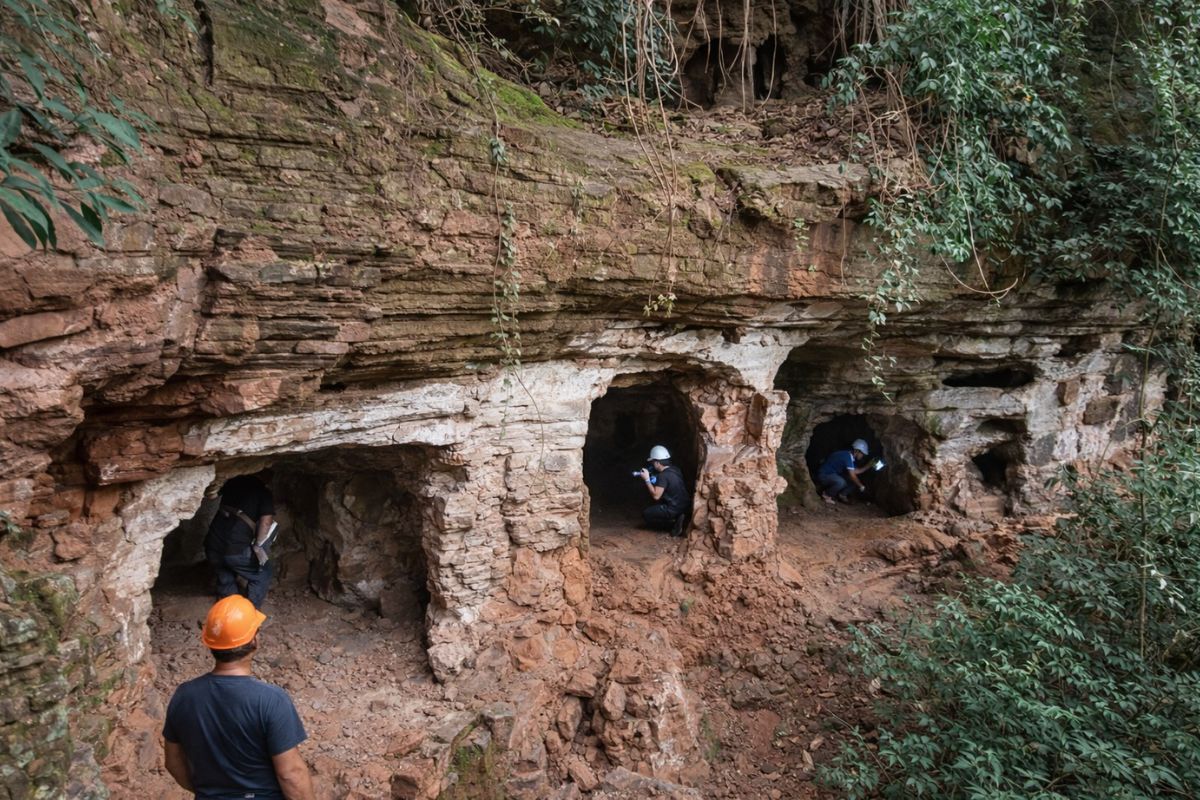
A mysterious rock formation was found in the rural area of Tomazina, in North Pioneiro of Paraná, with cavities in sedimentary rock that do not follow natural erosion patterns, and specialists from the Water and Land Institute are investigating whether there was human intervention, mobilizing IPHAN and state universities.
In the interior of Paraná, a discovery is putting a small town on the radar of the Brazilian scientific community. A mysterious rock formation located in the rural area of Tomazina features cavities carved in sedimentary rock with characteristics that completely deviate from natural erosion patterns, raising questions about its origin that could change what is known about human occupation in the region. The specialists who visited the site identified signs of alignment and organization in the structures that cannot be explained by conventional geological processes.
The discovery is not speculation. During a technical visit conducted in 2025, specialists from the Water and Land Institute (IAT) pointed out that the mysterious rock formation may not be exclusively natural, suggesting the possibility of human intervention. So far, there are no confirmed records in Paraná of formations with this type of configuration, which increases the scientific potential of the area. If the hypothesis of anthropic origin is confirmed, the site could significantly contribute to the understanding of how ancient populations occupied and modified the Paraná territory.
What specialists found in the mysterious rock formation of Tomazina

According to NP Diário, the cavities carved in the sedimentary rock are the central element of the discovery. The mysterious rock formation features openings and recesses with patterns that do not correspond to natural wear caused by water, wind, or thermal variations, which are the most common agents of erosion in sedimentary rocks.
-
The Brazilian Air Force has been in Sudan for a year coordinating drone operations, distributing humanitarian aid, and training military personnel from seven countries on a UN peacekeeping mission in one of the most unstable regions of the planet.

-
In Japan, there is a very common piece of furniture made with foam, fibers, cotton, and ancient artisanal techniques that transform the item into a variety of options for modern and small homes.
-
It’s not São Paulo or Rio de Janeiro, but a state in the South completely dominated the happiness ranking of Brazil with three cities in the top positions and excellent scores above 8.9.

-
Brazil on the radar of the space race in Latin America: what NASA’s new phase with the Artemis Program reveals about Alcântara, the best address in the world for rocket launches.

In natural processes, erosion tends to create irregular and random shapes. What researchers found in Tomazina are cavities with signs of alignment and organization that suggest deliberate action.
The regularity of the structures within the mysterious rock formation is what intrigues specialists the most. When nature sculpts rock over thousands or millions of years, the resulting patterns follow lines of least resistance in the material, creating shapes that, while impressive, are recognizable by geologists as known processes.
The cavities in Tomazina do not fit these models, and it is precisely this discrepancy that motivated the technical visit from the IAT and the mobilization of research institutions.
Why the mysterious rock formation may have been carved by humans
The hypothesis of human intervention in the mysterious rock formation is based on visual and structural evidence that specialists documented during the visit. The alignment of the cavities, the uniformity in some dimensions, and the spatial organization of the openings suggest that someone, at some point in the past, deliberately worked this rock to create the structures that now attract attention.
Peoples who inhabited the South of Brazil before European colonization are known to have modified landscapes, created shelters, and left marks on rock formations.
If anthropic origin is confirmed, the mysterious rock formation of Tomazina would be an unprecedented discovery in the state of Paraná. There are no confirmed records of formations with this specific configuration in the Paraná territory, making the site potentially unique.
Confirmation will require multidisciplinary studies that combine geology, archaeology, and material dating to determine when and how the cavities were created.
The institutions that have already mobilized to study the mysterious rock formation

The discovery has attracted interest from some of Brazil’s leading research and preservation institutions.
The National Institute of Historical and Artistic Heritage (IPHAN) has already shown interest in the case, as well as the State University of Londrina (UEL) and the State University of Ponta Grossa (UEPG), which may engage in research, technical surveys, and eventual heritage recognition of the site where the mysterious rock formation is located.
The participation of universities is essential because confirming the origin of the cavities requires laboratory analyses and systematic fieldwork. Geologists need to definitively rule out natural processes as the cause of the formations.
Archaeologists need to search for traces of human occupation in the surroundings, such as fragments of tools, remnants of fires, or other artifacts that indicate the presence of populations in the area. The mysterious rock formation is the starting point, but what exists around it may be equally revealing.
The importance of preservation while the mysterious rock formation is investigated
Experts familiar with the site issue a direct warning. Unauthorized interventions can compromise essential evidence for future analyses of the mysterious rock formation, making responsible management of the area crucial.
Curious visitors who remove pieces of rock, tread on sensitive surfaces, or alter the surroundings of the site can destroy clues that would be decisive in determining whether the cavities are natural or human-made.
Preservation is especially critical in potential archaeological sites because the evidence is fragile and irretrievable. Once a fragment of rock is displaced or a layer of sediment is disturbed, the information contained in that original position is lost forever.
The case of Tomazina requires the local community, authorities, and visitors to treat the mysterious rock formation with the same care that is dedicated to any historical heritage until the investigations are concluded.
What the discovery means for North Pioneiro of Paraná
The mysterious rock formation of Tomazina unexpectedly puts the region on the Brazilian scientific map. The area is already part of discussions about the so-called Georrota of North Pioneiro, an initiative that seeks to enhance the geological, environmental, and now possibly archaeological heritage of the region.
If studies confirm human intervention, the site could attract researchers from different fields and consolidate North Pioneiro as a territory of growing scientific relevance in Brazil.
The expectation is that the disclosure of the mysterious rock formation will encourage the conduct of multidisciplinary studies ranging from geology to anthropology, including history and archaeology.
For Tomazina and for North Pioneiro, the discovery represents an opportunity for recognition that transcends tourism: it is the possibility of contributing to the knowledge of who inhabited this territory before us and what those people did with the landscape they found.
What do you think of the mysterious rock formation of Tomazina: a work of nature or human creation? Do you believe that Paraná may hold more unknown archaeological sites in the interior of the state? Let us know in the comments. Discoveries like this happen when someone looks at what has always been there and finally asks: who did this?









Seja o primeiro a reagir!