





 Portuguese
  English
  Spanish
  5 min of reading
  0 comments


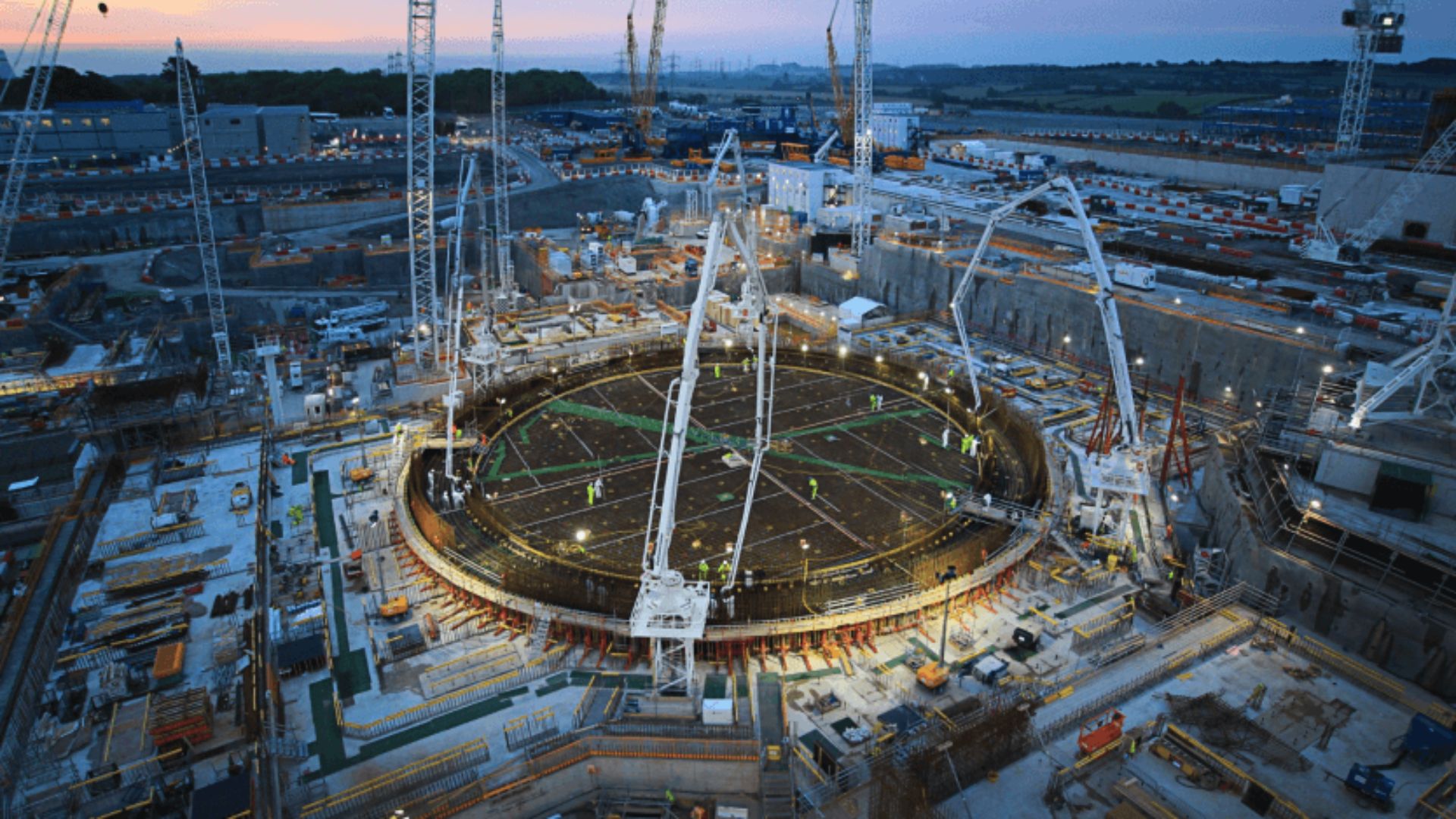
British Nuclear Megaproject Combines EPR Technology, Stringent Regulatory Requirements, and a Sequence of Timelines and Cost Reviews, While Sustaining the Promise of Generating 3.2 Gigawatts and Serving Millions of Homes for Decades, Amid Environmental Disputes Over Seawater Withdrawal.
The Hinkley Point C nuclear power plant, under construction in Somerset County, in the southwest of England, has established itself as the largest construction site in Europe and, at the same time, as a case study of how delays and regulatory requirements pressure energy megaprojects.
Planned to deliver 3.2 gigawatts of power when fully operational, the plant is regarded by the British government as a relevant piece in the low-carbon electricity strategy, with announced capacity to supply around six million homes for decades.
Cost of Hinkley Point C and the Budget Escalation
What stands out most in Hinkley Point C is the escalation of costs since the decision to move forward, when the estimate released in 2016 was £18 billion, with an operation start date projected for 2025, a timeline that has not held up with the progress of the construction.
-
Church from 1888 becomes a mansion of over 330 m² in Canada after a renovation of R$ 3.4 million and is eventually sold for nearly R$ 4.3 million.

-
How an innovative city combines high technology, well-being, and sustainability to become the largest reference in clean energy on the planet.
-
Couple buys 1846 church in ruins for R$ 660,000, invests R$ 3.2 million in renovations, transforms it into a millionaire mansion, and even preserved a historic cemetery with over 300 graves.

-
He started running at 66 years old, broke records at 82, and is now a subject of study for having a metabolic age comparable to that of a 20-year-old, in a case that is intriguing scientists and inspiring the world.


Since then, the projection has been revised multiple times, and in February 2026, EDF, the French state-owned company responsible for the project, announced a new estimate of £35 billion in 2015 values, while also shifting the expectation for the first reactor’s generation to 2030.

As part of the public debate in the UK, this number often appears accompanied by a crucial caveat: as it is anchored in 2015 prices, the conversion to “today’s” values raises the figure, and recent reports treat the project as nearing £49 billion in current cash.
Engineering Changes and Nuclear Safety Requirements in the UK
EDF attributes the main cost increases to civil engineering factors and a longer duration than planned in the electromechanical phase, a combination that raises contract costs, extends work fronts, and makes it more difficult to coordinate suppliers and schedules in a highly regulated system.
In this context, a recurring point is the adaptation of the original EPR reactor design to British rules, which, according to the company itself, required a large volume of changes to meet national safety and licensing standards.
According to information released by the company and reported by news agencies, 7,000 changes were necessary in the project, which implied an increase in material consumption compared to similar plants: about 35% more steel and 25% more concrete to execute additional structures and reinforcements.

Importance for Electricity in the UK and Decarbonization
Despite the history of delays, the plant is still treated as strategic infrastructure because, when completed, it is expected to account for approximately 7% of the electricity consumed in the UK, helping to replace fossil sources and offset the gradual retirement of older nuclear units.
In defending the project, the British government also emphasizes the long-term role of the asset, presenting Hinkley Point C as a project capable of operating for about 60 years, with firm generation, a characteristic considered useful in a system that expands wind and solar energy.
As construction progresses, the central challenge is to balance the promise of constant energy with the need to keep costs under control, since rising expenses reflect pressures on the financing model and on public discussions regarding the price of contracted energy.
Environmental Impacts and Seawater Withdrawal
In addition to engineering and finances, the project is also marked by an environmental dispute related to the cooling system, which involves taking very high volumes of water from the Severn estuary, a subject that mobilizes regulators and conservation organizations.
Licensing documents and planning records associated with the project describe a withdrawal capacity on the order of 120,000 liters per second, a figure that fuels criticism about the risk of fish mortality and impacts on migratory species and protected habitats.

In recent months, EDF has begun to advocate the adoption of an acoustic deterrent system, developed and tested with academic participation, as a means to keep fish away from water intakes, a strategy dubbed “fish disco” in the public debate.
The company claims that tests indicate good effectiveness of the method and states that the set of measures includes intakes designed to reduce the speed of flow and a recovery and return system for fish, in an attempt to meet environmental conditions without creating new compensation areas.
On the other side, environmental organizations contest how the effectiveness and costs have been presented and argue that the plant, without robust safeguards, could cause significant losses of wildlife, which keeps the controversy active in the regulatory process.
Delays in the Schedule and Financial Impact of Construction
The succession of timeline revisions is one of the elements that most affect the perception of risk because each additional year raises indirect expenses, prolongs the hiring of specialized services, and exposes the project to price shocks, especially in complex industrial items and skilled labor.
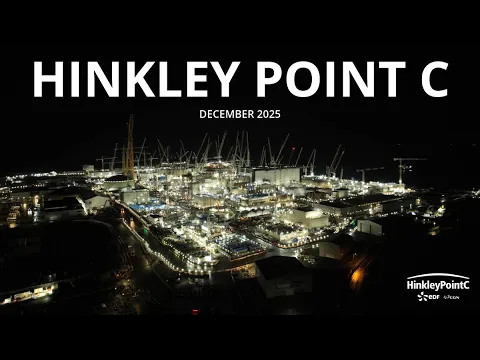

When EDF communicated the latest scenario, the company stated that it was working with a window that had already been indicated previously, but in practice, set 2030 as the new reference for the first reactor, making explicit the extent of the delay compared to the original plan.
At the same time, the company itself acknowledges that a further schedule slippage could add about £1 billion to the estimated cost in 2015 values, signaling that the financial impact of time remains a decisive variable for the rest of the execution.
Nuclear Regulation, EPR Technology, and the Challenge of Predictability
Hinkley Point C combines EPR technology, a multinational supply chain, and a regulatory environment that, by design, prioritizes safety standards and continuous oversight, which reduces margins for improvisation and makes project changes particularly expensive.
It is precisely in this combination of requirements, rework, and timeline extension that the project has become a benchmark in discussions about how the UK can expand nuclear energy without repeating the same cost trajectory while attempting to maintain climate goals and energy security.





Seja o primeiro a reagir!