





 Portuguese
  English
  Spanish
 5 min of reading
  1 comment


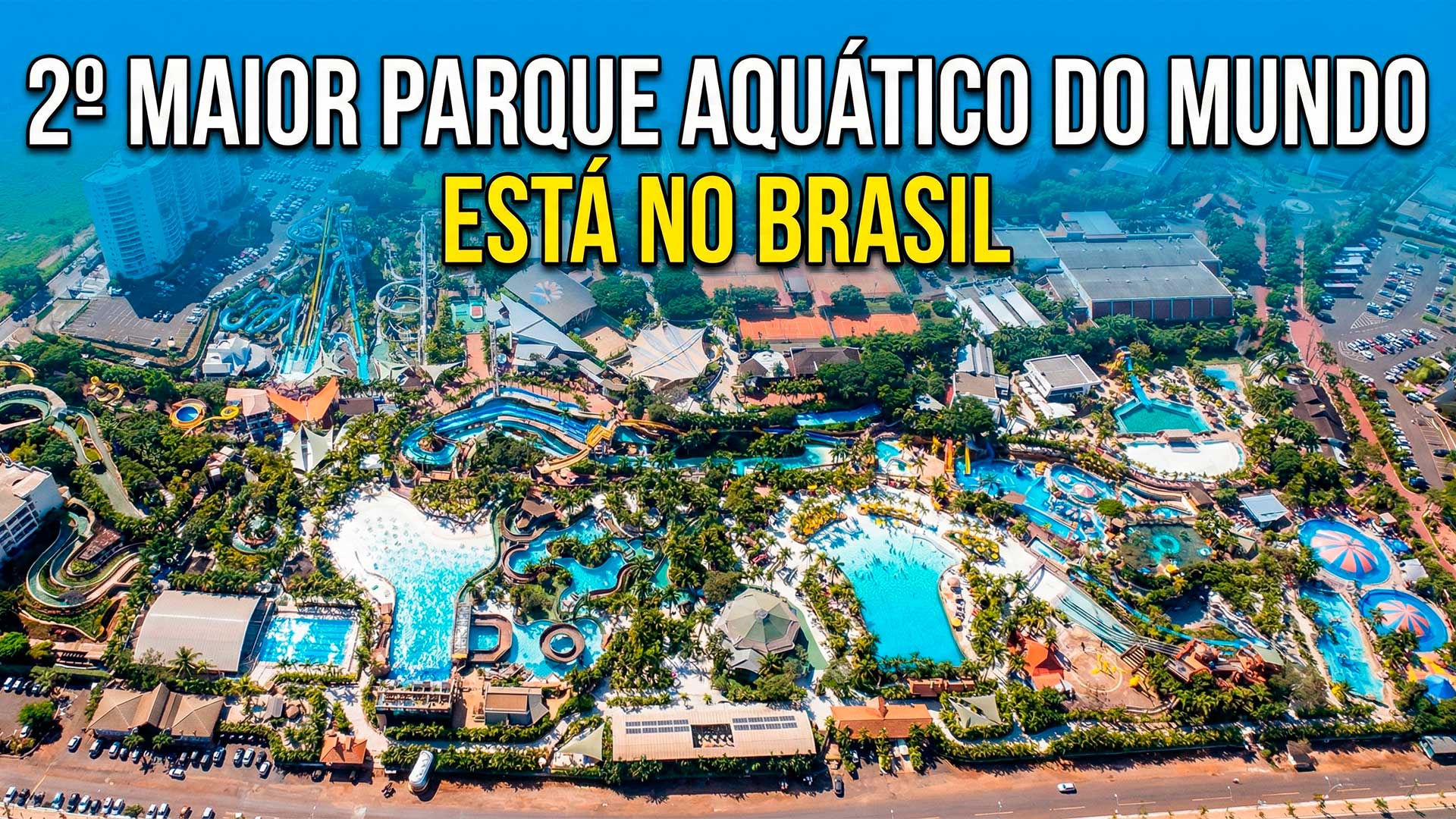


Olimpia Water Park Becomes a Tourism Powerhouse with Nearly 2 Million Visitors a Year, Thermas dos Laranjais Reinvests Profits and Plans a New Billion-Dollar Complex in Stages
Olimpia, in the interior of São Paulo, houses a phenomenon of Brazilian tourism that has become a global reference in water parks, ranking 2nd among the largest in the world. Thermas dos Laranjais generates around R$ 240 million per year and attracts an annual audience in the millions, boosting hotels, restaurants, and services in a city that has changed its economic vocation.
In international visitation rankings, the park ranks among the world leaders. In specific analyses, such as the sector survey for 2023, it appears as one of the most visited on the planet, occupying 2nd place and competing at the top with Asian giants like Chimelong Water Park in China, which holds the 1st place. This has helped solidify Olimpia as a tourist destination of international reach.
The strategy behind this result is simple to understand and difficult to execute. Investing continuously, launching high-impact attractions, and turning novelty into routine to make visitors return.
-
India announces a plan of $3.06 billion to bring aviation to forgotten regions: 100 new airports, $1.07 billion in subsidies, and regional routes guaranteed for 10 years, from 2026 to 2036, away from the centers.
-
Brazil blocked a proposal from the United States at the WTO that would make the exemption from tariffs on digital products like streaming and ebooks permanent, favoring American tech giants at the expense of developing countries.

-
IPTU exemption for seniors in 2026: see how to secure the benefit.

-
The institute that trained the greatest aerospace engineers in Brazil has just opened its first campus outside São Paulo after 75 years: ITA Ceará will have R$ 445 million, new courses in energy and systems, and classes are expected to start in 2027.
The latest move follows this script. The park is preparing for the opening of the Complexo Nações, a set of large water slides with a tower of about 33 meters and technology developed in international partnership, in addition to a package of new investments that may exceed R$ 300 million in the coming years.
The Million-Dollar Revenue and the Challenge of Keeping Visitors Coming Back
The main “problem” for a successful water park is not a lack of visitors, but the threat of repetition. After a visit, tourists tend to seek novelty in other destinations, and the competition for attention and travel time is increasingly fierce.
Therefore, Thermas has built a model based on recurring reinvestment, with renovations and expansions in sequence. According to information disclosed in interviews and statements by the park itself, the logic is to treat innovation as part of the product, not as a rare event.
In practice, the numbers add up because scale helps. A small increase in the return rate or a percentage increase in the total volume of visitors can pay for large projects in shorter timeframes than the public imagines, especially in a well-established destination in the São Paulo interior.
How a Social Club Became a Driving Force of Thermal Tourism in Olimpia
The story starts far from the glamour of today’s mega-complexes. Thermas emerged as a social club in the 1980s when Olimpia had an economic profile more linked to agriculture, with a focus on citrus cultivation.
The turning point came with the thermal water in the region, paving the way for naturally heated pools and a proposition that would function for much of the year. This detail is crucial for the interior of São Paulo, as it reduces dependence on short seasons and sustains jobs more stably.
Over time, the park began to influence the design of the destination. The Olimpia City Hall highlights the strategic position of the municipality in northwestern São Paulo and the strengthening of local tourism, reinforcing integration with the hotel network and the service economy that has grown around it.
The Complexo Nações and the Competition for Attention on the Global Water Parks Map
The big bet right now is the Complexo Nações, announced as one of the largest water slide structures in the world in its format. The announced investment for the attraction is around R$ 60 million, with construction in the final phase and a focus on multiple experiences in the same set.
The project brings together themed “slides” and a mix of technologies that include acceleration effects, curves, and sections with dynamics different from traditional water slides. Among the attractions mentioned in sector disclosures and by the park itself are modalities like Orbiter, Master Blaster, and a version of Anaconda, in addition to experiences with spins and drops in sequence.
This type of launch aligns with an important market data point. Rankings vary by methodology and year: in lists published by Brazilian outlets based on recent international reports, Thermas appears in positions that change based on the analyzed period, with parks from China, the United Arab Emirates, and Europe alternating at the top.
Even so, the message to the public is clear. The park wants to stay at the forefront, and to do so, it needs something “Instagrammable,” shareable, and capable of justifying a new trip.
Another point is the local symbolism. The Complexo Nações has also been presented as a tribute to its founder, Benito Benatti, and the businessman’s death in 2025 marked the recent history of Olimpia, according to official records from the municipality and coverage from the tourism sector.
What the Pandemic Taught About Cash Flow and Survival in Practice
If expansion requires courage, crises require method. During the pandemic, the park was closed for months, with revenue under pressure and significant fixed costs.
The case is notable because, according to reports from the park in interviews, the strategy prioritized keeping the team and maintaining operations with financial planning, mapping daily costs and renegotiating commitments to get through the most critical period.
This learning has become part of the current model. Cost control, in-house execution of parts of the process, and gradual growth without “leaps” beyond cash capacity appear as repeated elements in the management style described by park representatives.
Upcoming Investments and the Controversy of Growth That Changes the City
The line of projects does not end with the Complexo Nações. The park has already indicated it has acquired a much larger area than the current one to facilitate expansion and is considering building a second park in the coming years, with a proposal that could merge water and nature experiences.
The promise of investment exceeds R$ 300 million in stages until the end of the decade, with new high-value attractions and an expansion of the destination as a whole. For Olimpia, this usually means more jobs, more hotels, and more revenue.
At the same time, this growth often opens up discussions in tourist cities. To what extent does the explosion of tourism improve the lives of residents there, and at what point does it pressure prices, traffic, housing, and public services? It’s a debate that arises whenever a medium destination becomes an international showcase.
If you follow Olimpia or have visited Thermas, does mass tourism help more than it hinders the city in the long run? Let us know in the comments if you see real progress or if you think the cost to residents is becoming too high.






Parabéns a todos envolvidos nesse fenômeno chamado Thermas dos laranjais, quanto ao desenvolvimento de Olímpia é tudo que uma cidade precisa para dar ótima condições de vida para sua população!