





 Portuguese
  English
  Spanish
  5 min of reading
  0 comments


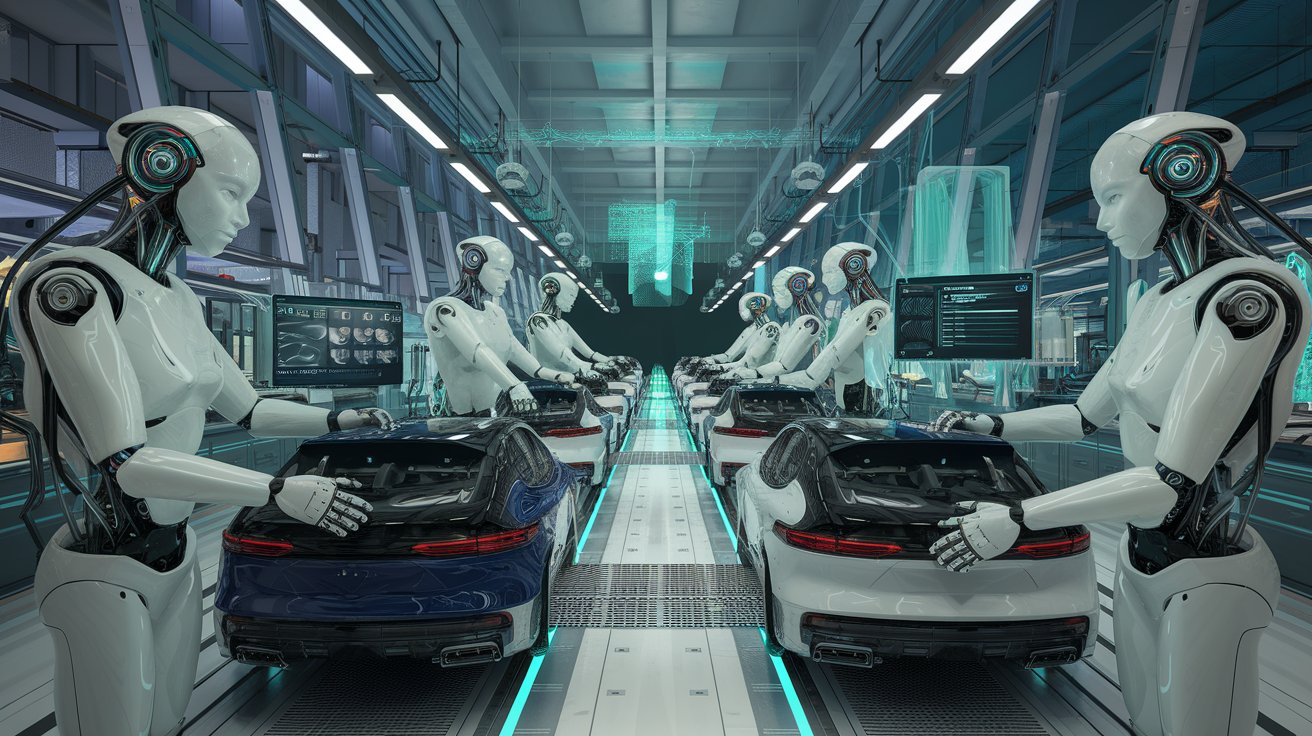
In a 5G Factory in China, Dozens of Humanoid Robots Are Transforming Car Production! Working Together in Synchronized Form, These Machines Are Challenging the Idea of Human Work, Doing High-Precision Tasks and Showing the Future of Automation.
The automotive industry revolution has already begun, but not in the way many imagined.
In the smart 5G factory of Zeekr, a subsidiary of the Geely Group, located in Ningbo, in the Zhejiang province, eastern China, humanoid robots are replacing human workers, marking a new level in industrial automation.
The interesting aspect of this innovation is that the robots not only perform simple tasks but also work side by side, coordinated and simultaneously, in a real factory environment.
-
Ducati brings to Brazil the Superleggera V4 Centenario: 228 hp that become 247 with a track kit, carbon fiber and carbon-ceramic brakes, estimated price between R$ 1.5 and 2 million, deliveries only in 2027.

-
INMET danger alert: heavy rains between the 3rd and 4th may drop up to 100 mm/day and winds of 60 to 100 km/h in several regions of Brazil require extra caution.

-
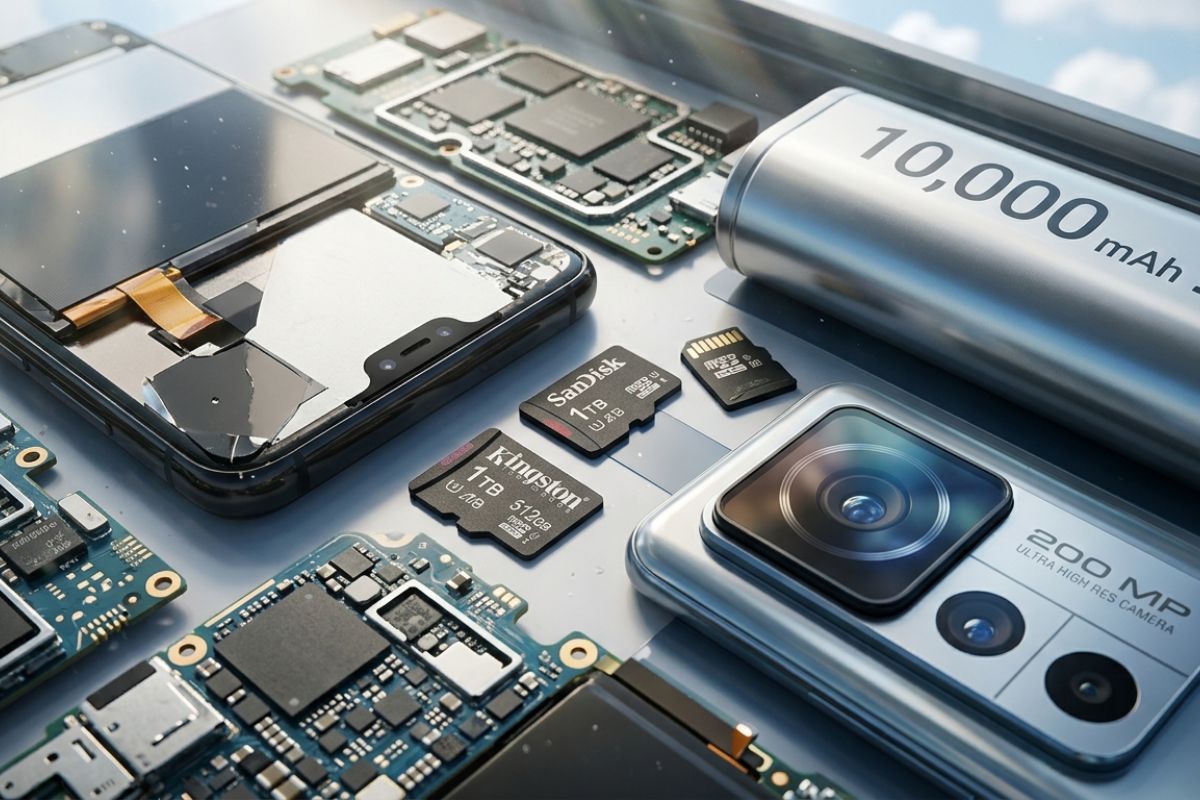
The parts crisis may bring back the drop notch and microSD in 2026; while Windows 11 promises to become lighter, leaks mention batteries of up to 10,000 mAh and 200 MP cameras.
-
Used cars with electric steering for R$ 30,000: check out 5 practical and economical options for everyday use.

This technological innovation is making history and is a clear example of the transformation that industry can undergo with advanced automation.
Instead of being a distant concept or a mere addition to the production line, humanoid robots are carrying out high-precision functions, such as sorting materials, transporting boxes, and even assembling delicate vehicle parts.
They are capable of working in sync, exchanging information in real-time and continuously learning from the tasks performed.
The Future of Automation: How Robots Work on the Assembly Line
These robots, known as Walker S1, are the result of technological advancements developed by UBTECH, a Shenzhen-based company specializing in robotics.
What makes these robots truly special is the artificial neural network system that controls them.
According to Jiao Jichao, vice president of UBTECH, the operation of the Walker S1 is based on what he calls the “brain network”, a system that allows the robots to act as a team, interacting in a coordinated and efficient manner across multiple simultaneous functions.
This revolutionary system combines a “super brain”, which functions as an operations manager, with “mini brains” installed in each robot.
These mini brains are responsible for perceiving the surrounding environment and adjusting the robots’ actions according to the task requirements, such as the force needed to handle delicate parts without damaging them.
Additionally, the robots can exchange data in real-time, making the production process even more efficient.
The key differentiator for these robots is their ability to learn and quickly adapt to new functions on the assembly line.
Each task performed by the robots is recorded and incorporated into a database with hundreds of millions of industrial data points, which helps further optimize the functions of the production line.
Ever Smarter Robots: One Step Closer to the Future of Factories
The images captured inside the factory show the robots with cameras that allow them to track parts and map work areas with impressive accuracy.
The ability of these robots to handle flexible materials, such as plastic films, without causing damage, is a clear example of how artificial intelligence can enhance industrial processes.
Moreover, the constant data collection allows the production line to become more agile and with fewer errors.
For the development of this technology, UBTECH is not alone.
The company has already established partnerships with major automotive manufacturers such as BYD and BAIC, as well as logistics giants like SF Express.
Jiao Jichao, vice president of UBTECH, revealed that the company is planning to expand these partnerships, aiming to increase the number of factories adopting this collaborative robot system.
The goal is to scale the use of humanoid robots in industrial environments and promote cooperation among various units to optimize production.
This expansion not only promises to enhance efficiency in factories but also opens doors to new possibilities in industrial automation.
The future of manufacturing lies in a collaborative model, where humans and machines work side by side, with robots taking on repetitive functions and human workers focusing on more complex and creative tasks.
This will not only increase productivity but also make factories safer and smarter.
The Transformation of the Global Industry: The Impact of Humanoid Robots
The use of humanoid robots on the production line is creating a true revolution in the model of global manufacturing.
The increase in efficiency and adaptability of these machines can lead to a significant transformation, with smarter and more integrated factories that can operate more agilely, with less margin for error and better quality control.
Furthermore, the adoption of this technology can significantly reduce costs associated with specialized labor, as robots are trained to perform tasks in less time, quickly learning new tasks as they accumulate more data.
This shift may also directly impact the training of new workers, as the need for highly specialized labor will decrease.
With this advancement, Zeekr and other companies in the automotive sector are leading a paradigm shift that could be a game-changer for the global industry.
The manufacturing of vehicles, one of the pillars of the global economy, may be on the verge of a complete revolution, where automation and artificial intelligence are no longer something of the future, but a present reality.
Humanoid Robots Can Change the Game in the Automotive Industry
The trend of integrating collaborative robots into factories has been accelerating, and Zeekr is just one of many companies betting on this future.
As humanoid robots gain more functions and develop greater adaptability and learning capacity, they can make production more efficient, agile, and less prone to human error.
The partnership between technology companies and the industrial sector can pave the way for a new type of factory, where machines and humans complement each other to achieve a more efficient and sophisticated production.
Meanwhile, the coming years may show that the factories of the future will no longer have a clear division between humans and machines, but rather an intense collaboration, where all elements of the production line work together to optimize product manufacturing.
The evolution of the industrial production model is underway and promises to profoundly alter the way industries operate in the near future.







-

Uma pessoa reagiu a isso.