





 Portuguese
  English
  Spanish
  4 min of reading
  66 comments





Car Manufacturer Often Overlooked by Brazilians Has Two of the New Darlings of the Automotive Market in the Country. Both Are Proof of the Revival of French Automakers, Now Competing for the Most Coveted Awards in the Sector.
For many years, a famous French automaker was the target of jokes in Brazil, seen as synonymous with low reliability, expensive maintenance, and cars that did not please the national taste.
However, the story has taken a turn and today, this same manufacturer, Peugeot, has launched a model that is winning the hearts of Brazilians and even surprising the most skeptical critics.
What seemed unlikely has now become a reality: Peugeot is back on top.
-
With a price almost R$ 100 thousand lower, the Haval H9 surpasses the SW4 for the first time in March, but Toyota still leads in the accumulated total for 2026; the Chinese SUV bets on technology and premium finishing to compete at the top.
-
6 used cars that cost less than a new Honda CG 160 Titan and still provide trunk space, four seats, and comfort that many new motorcycles cannot offer.
-
Caoa Chery Tiggo 5X skyrockets in sales in Brazil: a 2,318% increase and waiting lists of up to 4 months to acquire the model.
-
Goodbye falls: Singaporean company Omoway begins production of a motorcycle that doesn’t fall and surprises the market by offering automatic balance technology that reduces accidents and transforms the urban riding experience.

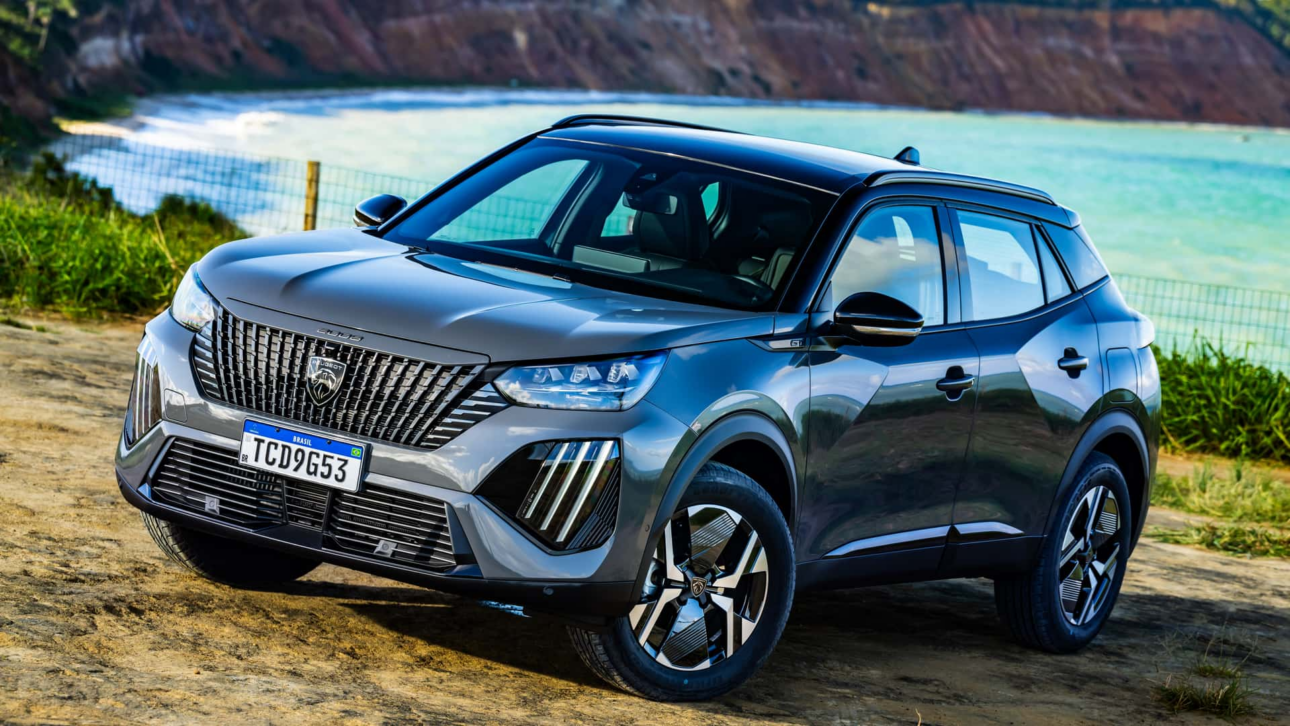
The Peugeot 2008, voted the best car of the year by the team at Cidade Conecta magazine, stands out as a true automotive revolution, combining innovative design, cutting-edge technology, and performance worthy of a high-end model.
Peugeot’s Revival with the 2008
The new Peugeot 2008 is one of the brand’s biggest successes in recent years. Available in three versions – Active, Allure, and GT – the model stands out for its sophistication and the performance it offers at an affordable price.
Equipped with 17-inch diamond-cut alloy wheels and the new 10.3-inch Peugeot i-Connect multimedia center, the 2008 features functionalities that place it at the forefront of today’s cars.
The multimedia center is compatible with wireless mirroring for Apple CarPlay and Android Auto systems, providing total connectivity for the driver.
In terms of powertrain, the Peugeot 2008 comes with the Turbo 200 engine, delivering an impressive power of 130 hp with ethanol (or 125 hp with gasoline), along with a maximum torque of 20.4 kgfm at just 1,750 rpm.
This engine, produced by Stellantis, is equipped with a turbocharger with electronic wastegate, which quickly adjusts the response to the accelerator.
Direct fuel injection and a 100% aluminum engine block are also features that contribute to the model’s efficiency.
However, the major highlight is the electrified version, the Peugeot E-2008.
With a 15% increase in power, the model has increased from 136 hp to 158 hp, and the battery capacity has been expanded from 50 kWh to 54 kWh.
With this change, the model’s range has significantly increased, and according to Inmetro, it is now possible to travel up to 261 kilometers on a single charge.
This represents a significant gain, as the Peugeot E-2008 was designed to meet the needs of both urban drivers and those who take longer trips.
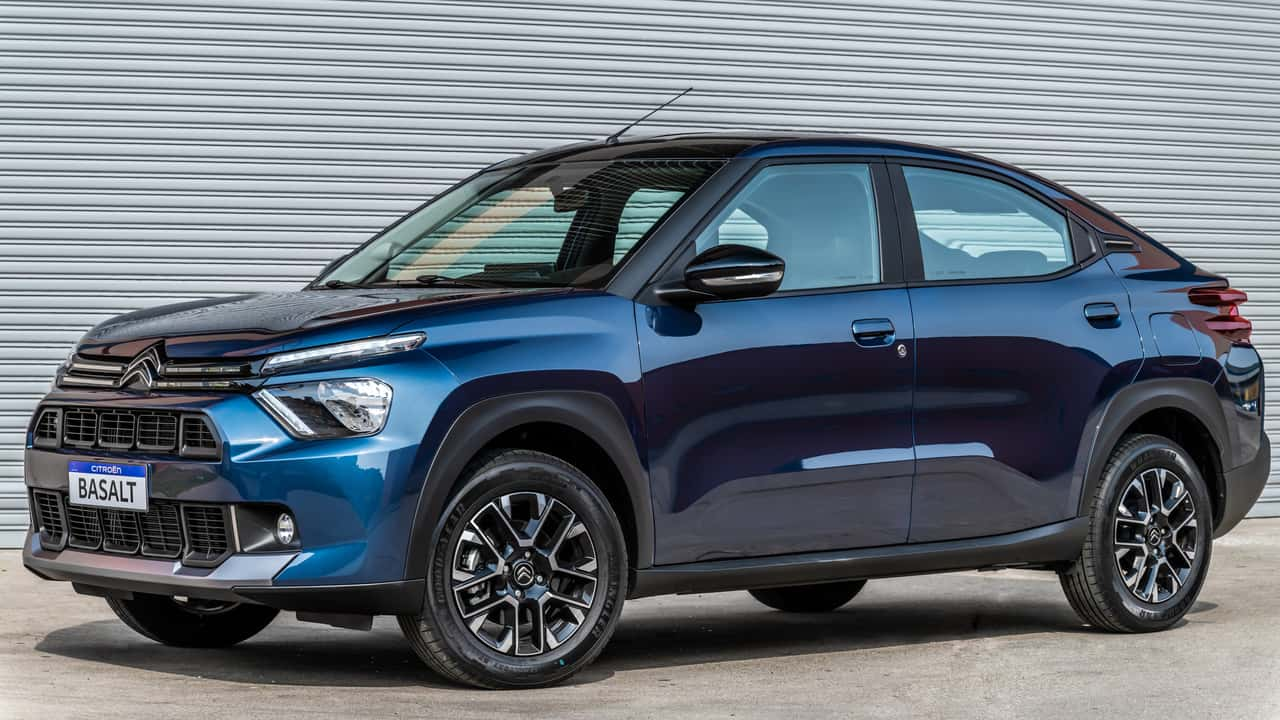
Citroën Basalt: A Compact That Defies Standards
While the Peugeot 2008 leads sales in the SUV segment, Citroën has also stood out with a launch that promises to capture a large share of the Brazilian market: the Citroën Basalt.
Awarded as the best compact of the year, the Basalt presents a unique proposition, combining the robustness and versatility of an SUV with the sporty and elegant style of a coupé.
The Citroën Basalt is part of the C-Cubed project, an initiative by Stellantis to create models that meet the demands of the most discerning consumers.
Produced at the Stellantis Automotive Center in Porto Real (RJ), the Basalt is a compact model, but it surprises with its internal capacity.
With a wheelbase of 2.64 meters, the Basalt offers more space than many competitors, ensuring comfort for passengers even on longer trips.
The design is one of the most striking points of the Basalt. Every curve, every line, has been crafted to provide not only aesthetics but also functionality.
The creases on the bumpers, sides, and roof convey a sense of solidity and strength, while the elevations at the back of the roof help optimize aerodynamics, providing even more efficient performance.
These details show Citroën’s commitment to delivering a product that is not only attractive but also highly functional.
In terms of powertrain, the Citroën Basalt offers two options: the 1.0 Firefly engine, which is extremely economical and ideal for those prioritizing low fuel consumption, and the Turbo 200 engine, delivering 130 hp of power and paired with a seven-speed CVT transmission.
This combination guarantees impressive performance, along with efficient consumption, making the Basalt an excellent option for those seeking a versatile car with low operating costs.
Peugeot and Citroën: The Future is Now
The Brazilian automotive market has become increasingly competitive, with new automakers and new models trying to win over consumers.
However, it is undeniable that both the Peugeot 2008 and the Citroën Basalt are changing the perception that Brazilians had of French brands.
Both models from the manufacturers demonstrate how innovation, bold design, and efficient performance can cater to the most demanding consumers.
The Peugeot 2008, with its electric version and turbo engine, stands out for its versatility and the offering of advanced technology.
Meanwhile, the Citroën Basalt, with its modern design and efficient powertrain, is an excellent option for those looking for a compact model with high-performance SUV characteristics.
Would you buy a car from a French brand after seeing these innovations and designs? Leave your opinion in the comments!







Já tive dois peugeot. Todos rodaram mais de 100.000 km apenas com manutenção preventiva. Compraria outro ou um Citroën, sem qualquer receio.
E a manutenção?
Só pode ser matéria paga. Presta atenção, francês só sabe fazer vinho, queijo e perfume. Automóveis são japoneses, alemães, ingleses e italianos. Os americanos vêm depois.