





 Portuguese
  English
  Spanish
  5 min of reading
  32 comments


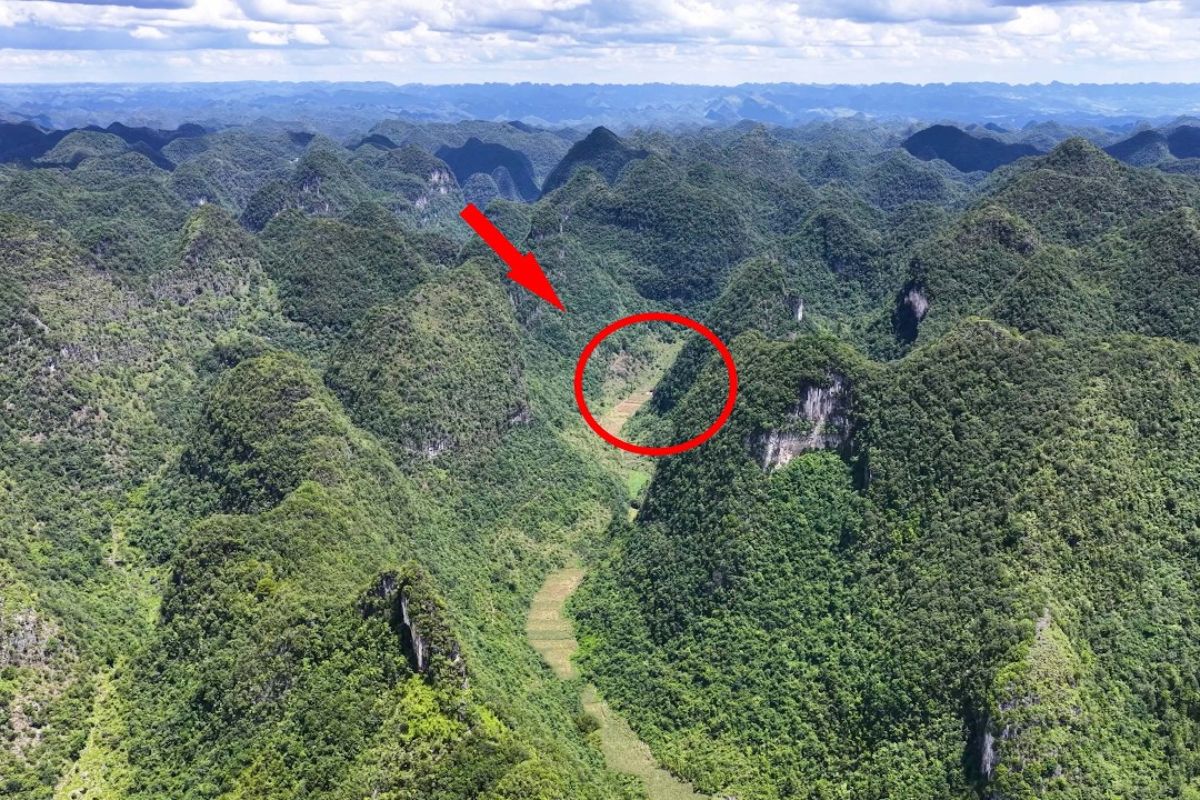


In The Mountains Of Guizhou In China, A Family Maintains A Subsistence Routine Without Cell Signal, Powered By Poles Along A Karst Fissure, Raising Sheep, Chickens, And Pigs And Growing Maize, Millet, And Beans, Showing A Self-Sufficient And Resilient Way Of Life
The mountains of Guizhou hold deep valleys, fissures, and depressions typical of karst terrain where a family has lived in relative seclusion for decades. The house, nestled at the bottom of a fracture between two massifs, was only identified from above, by drone, revealing active fields, an elevated corral, and simple vehicles parked at the door.
Without cellular signal and far from paved roads, the household organizes daily life around animal husbandry and planting. Electricity reaches through a dedicated line of poles along the fissure and water comes from a spring on the back slope of the house, enabling continuous agriculture and daily herd management.
Where They Live And How To Reach Them

The dwelling is located in an opening nestled within the mountains of Guizhou, resembling a tiankeng with natural raised walls.
-
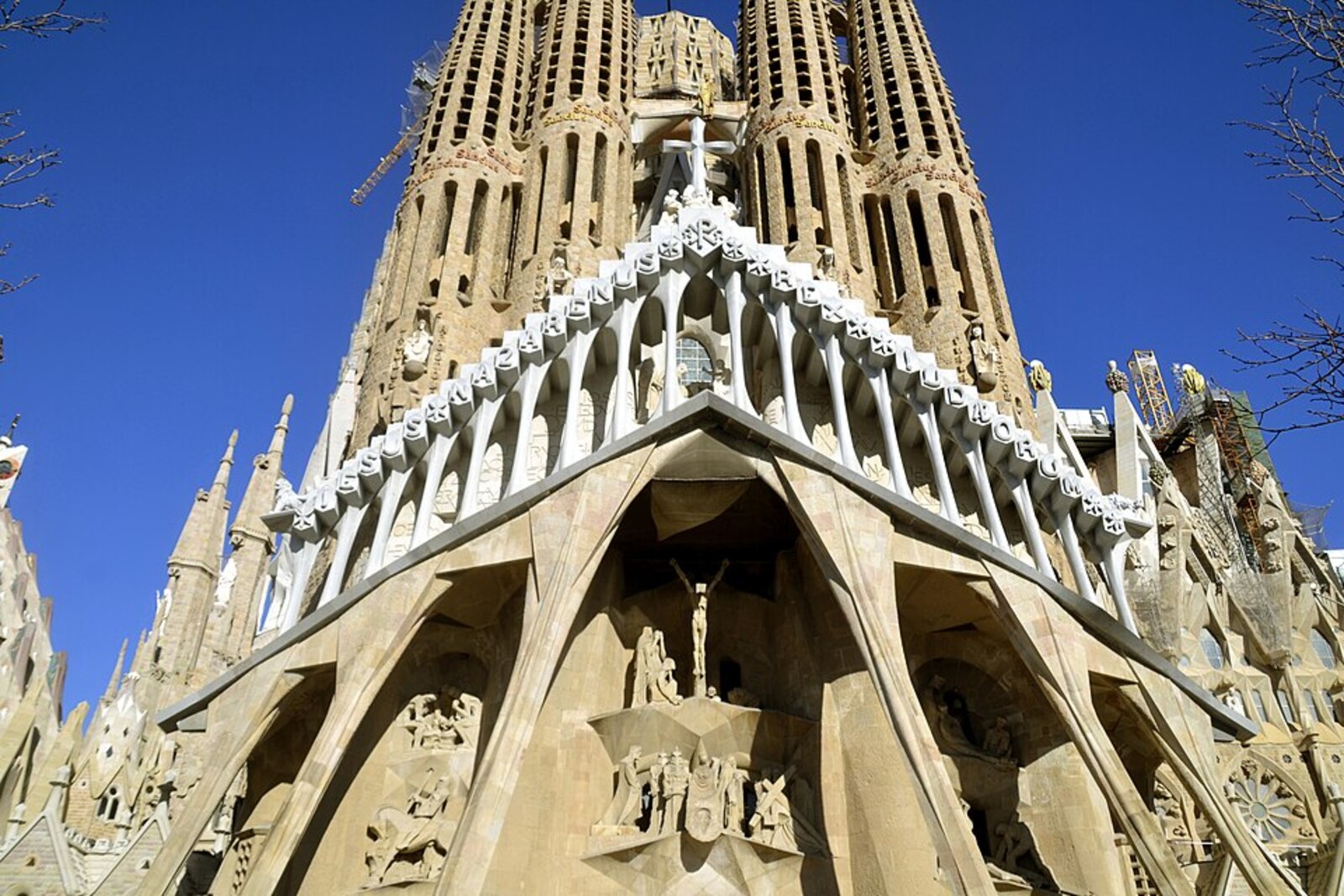
Masterpiece in Spain, under construction since 1882, receives 4.8 million visits in a year and impresses with its gigantism and architecture.
-
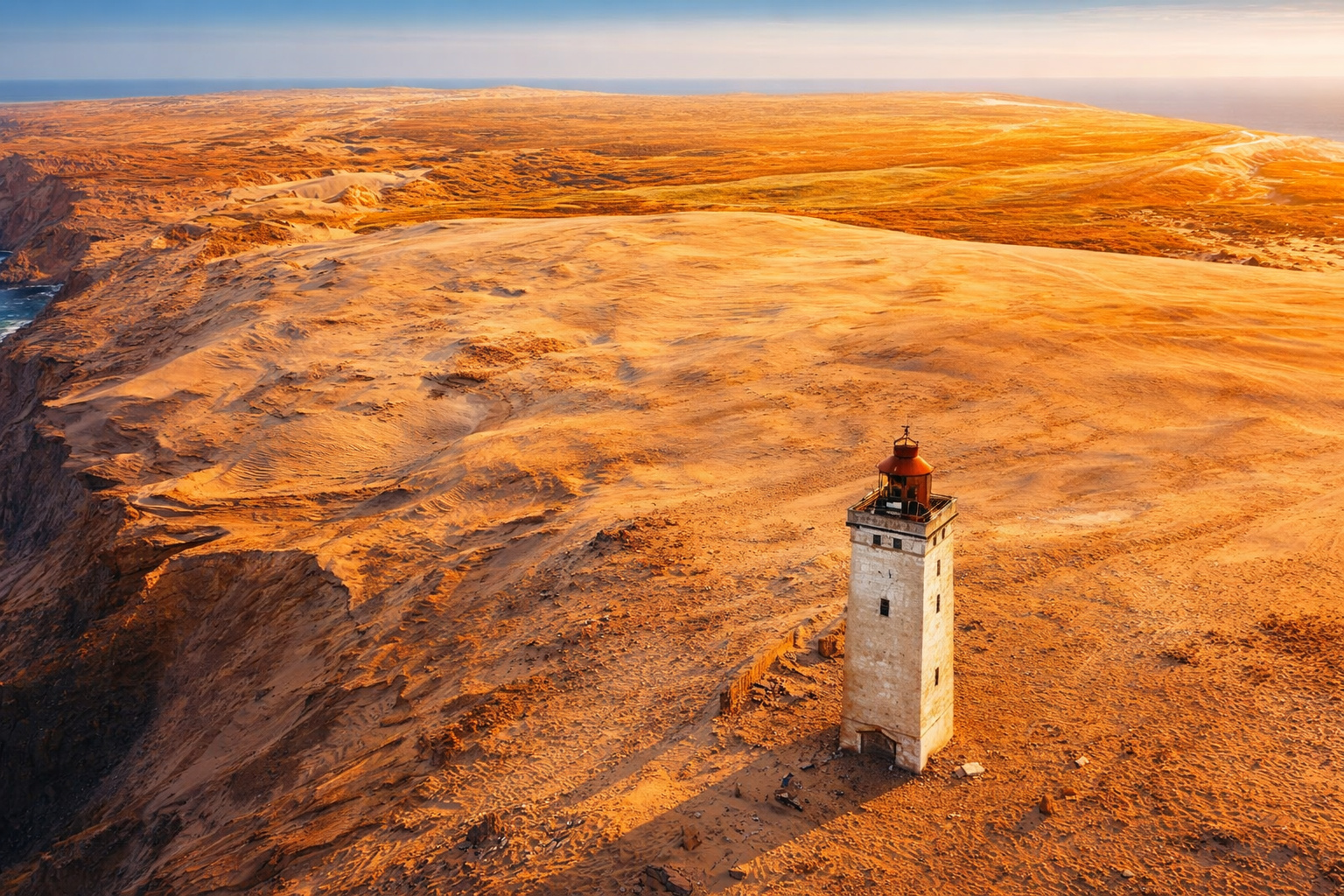
Attracting around 250,000 people a year, a lighthouse 200 meters from the sea, on a 60-meter high cliff, on the North Sea coast in Denmark, becomes one of the most impressive examples of how nature can threaten historical buildings.
-
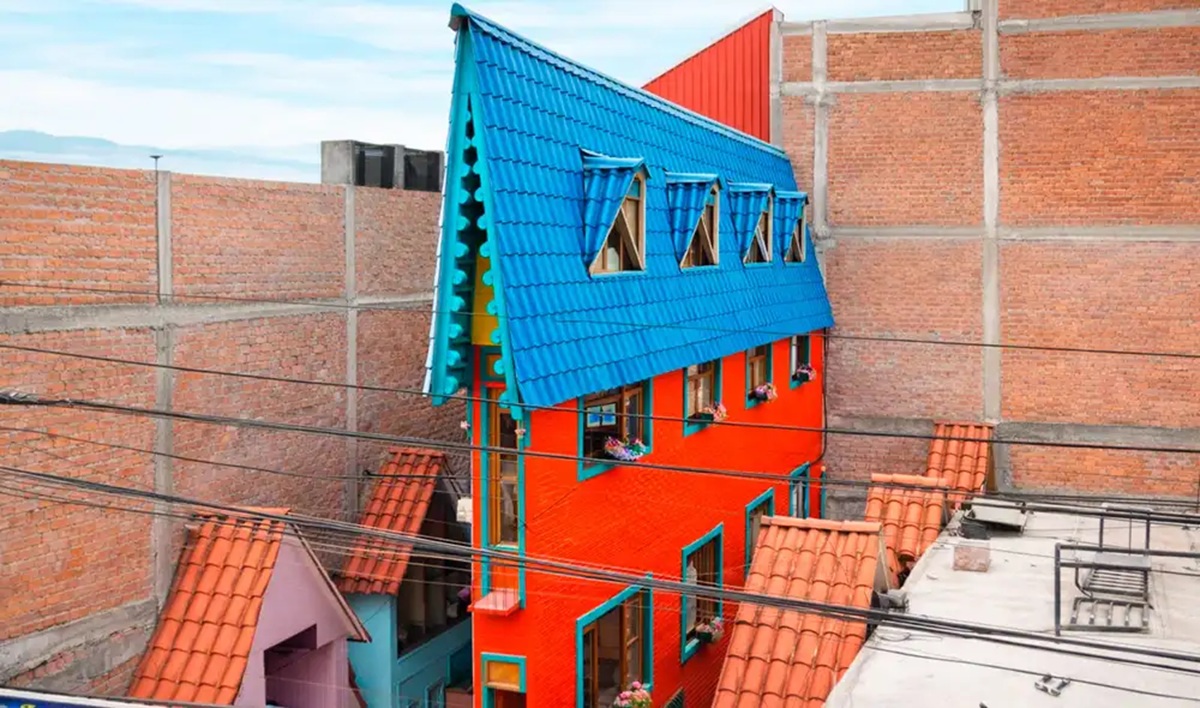
The narrowest house in the world is only 63 centimeters wide, but inside it can accommodate a bathroom, kitchen, bedroom, office, and even two staircases.
-
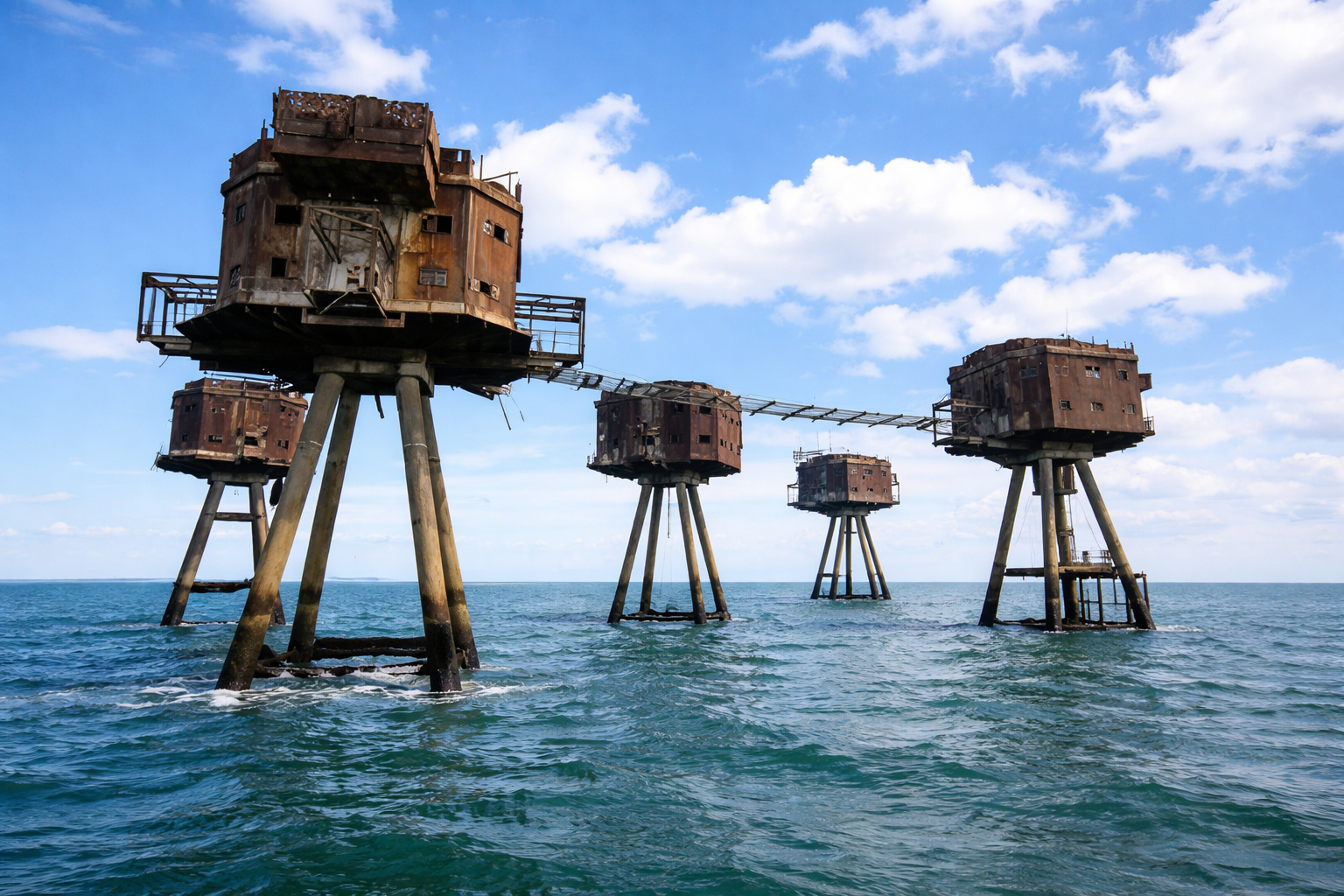
In the middle of the sea, these enormous concrete and steel structures, built by the British Navy to protect strategic maritime routes, look like they came straight out of a Star Wars movie.
The road is dirt, wide enough for cargo tricycles and, during dry periods, for pickup trucks.
Regular cars have difficulty, which explains why routine travel occurs by tricycle or motorcycle.
From above, one can see fields of maize and millet, along with beans recently tilled with a motorized cultivator. The trail shows frequent tire marks, indicating constant use to transport harvests and supplies.
The logistics are short from the field to the house, but long to the nearest village, which shapes self-sufficiency.
Who They Are And How They Organize

The inhabitants report familial presence there for several generations, with approximately six decades of continuous occupation connecting grandparents, parents, and children.
Part of the family now sleeps in the village but keeps the original house active for agricultural work, herd management, and storage.
Relations with neighbors persist through seasonal work. The maize harvest gathers people from the surrounding area, and the former presence of five families in the valley reduced to one today illustrates the recent transition of the territory, with abandoned houses converted into storage.
What They Produce And Why It Works

The production system combines small to medium-scale farming and animal husbandry. There are over a hundred sheep, dozens of chickens at various stages, and five pigs, along with two to three cows.
The maize and millet feed the pigs, sheep, and birds, closing the cycle with manure incorporated into the crops.
The decision to stay in the mountains of Guizhou is based on three pillars: the availability of spring water, stable electricity, and sufficient area for crop rotation.

The use of a motorized cultivator has replaced the plow pulled by oxen in the past, reducing effort and time for soil preparation.
Minimal But Functional Infrastructure
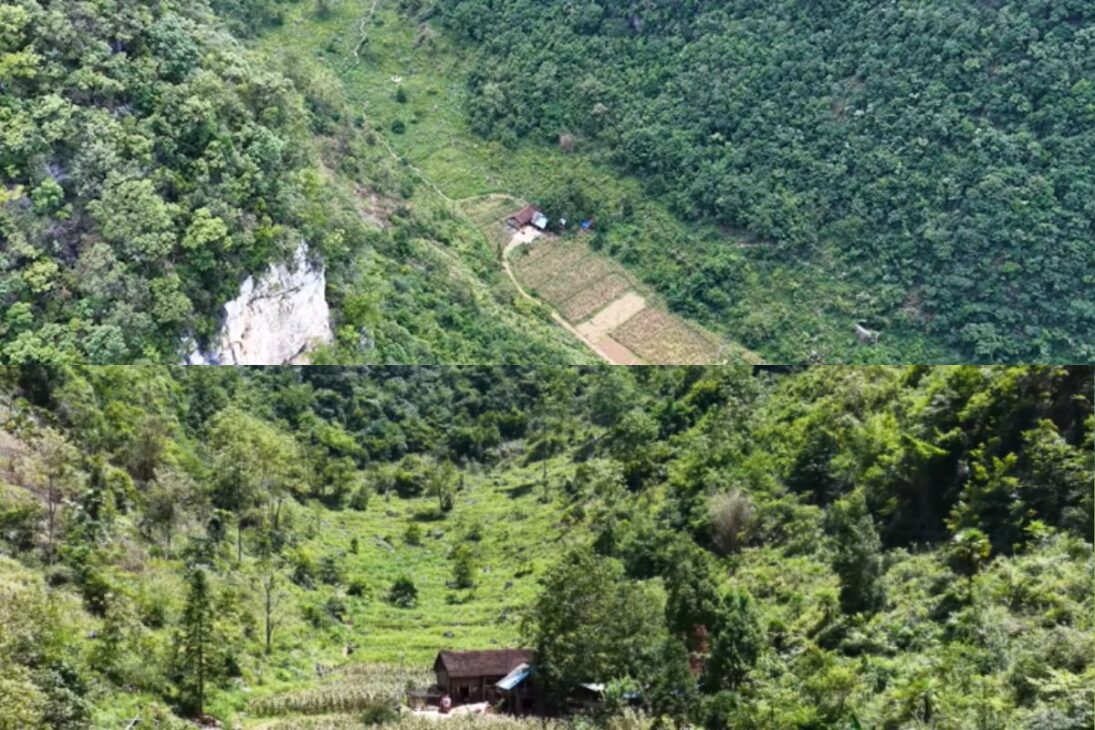
The valley has electricity specifically brought to the residence, with wiring following the bottom of the fissure. This allows for lighting, operation of basic machines, and preservation of supplies.
There is no internet and there is no cell signal, a condition that limits communication but reduces external interference in the work rhythm.
The water comes from a local spring, which resolves supply and light irrigation. Simple reservoirs store volumes for periods of higher demand, especially during harvest peak and for animal care.
The design of the raised corral improves ventilation and health of the herd, with waste collected for fertilization.
House, Attachments, And Division Of Uses
The main wooden house shares space with a kitchen and service areas, as well as structures for birds and pigs. Some old buildings have lost doors and windows and now house tools or grains.
The organization follows the logic of proximity between planting, storage, and animal care, reducing movements.
At the back, the elevated corral concentrates sheep and distinguishes newborn lambs. Next to it, the pigpen holds the five pigs.
In front, the fields extend to the edge of the slope, with bean beds and larger plots of maize and millet. Everything is within a few minutes’ walk.
Seasonal Routine And Work Flows
The annual calendar is marked by the maize harvest. During harvest, the flow intensifies with cutting, transportation by tricycles, and storage.
Outside the harvest season, the priority returns to daily management of sheep and chickens, fence repairs, and soil preparation with the cultivator.
The family alternates overnight stays between the village house and the valley house depending on the workload. At night, they tend to gather the herd and return to urban housing, which increases property security and facilitates occasional access to services.
Risks, Limits, And Choices
Living in the mountains of Guizhou brings clear limitations: absence of mobile communication, difficult access during prolonged rains, and the need for constant maintenance of machines and fences.
The dependence on light transportation imposes fractional loads, requiring more trips to transport production.
Isolation also demands its own health protocols, accident prevention, and organization of supplies.
Still, the family evaluates that freedom of schedule, control over work, and connection to the land compensate for the costs, maintaining the project for generations.
The valley serves as both a workplace and residence. Anyone documenting or visiting must ask for permission, respect management routes, and avoid interventions that disrupt herds and harvests.
Simple gifts are welcome when offered with delicacy and reciprocity.
Drone recordings must preserve privacy and security. The narrative about isolated communities should prioritize context, accuracy, and consent, avoiding exoticization and focusing on difficulties without explaining the choices and local knowledge.
What stands out most to you about this way of life in the mountains of Guizhou: self-sufficiency with water and energy, the scale of the herd, or the organization of the fields at the bottom of the valley?







Nada do que falou em relação ao meu nome é verdade kkkkk. Ainda tem quem acredita nessas baboseiras.
Está insuportável ler coisas nessa página,tantos anúncios,tampando 80 % da página. Que saco
Eu não sei porque essas **** aparecem
E não deixa a pessoa ler.E horrível dá raiva.
Você não consegue ler a página.
Eu li toda a matéria e gostei muito do que vi. A China é um país gigante em dimensões territórial e essas montanhas na cidade de GUIZHOU é muito famosa. A vida simples dessas pessoas é a parte que mais chama atenção. Preferindo o isolamento e vivendo longe de tudo e de todos deve ser muito bom viver assim, desconectado da vida moderna e dos noticiários que pouco acrescenta na nossa vida, Elles vivem uma vida modesta quieto e sossegada isso é ser feliz
Com tanta simplicidade precisaria claro de reportagem com uma sofisticada linguagem kkkkk !