





 Portuguese
  English
  Spanish
  4 min of reading
  13 comments


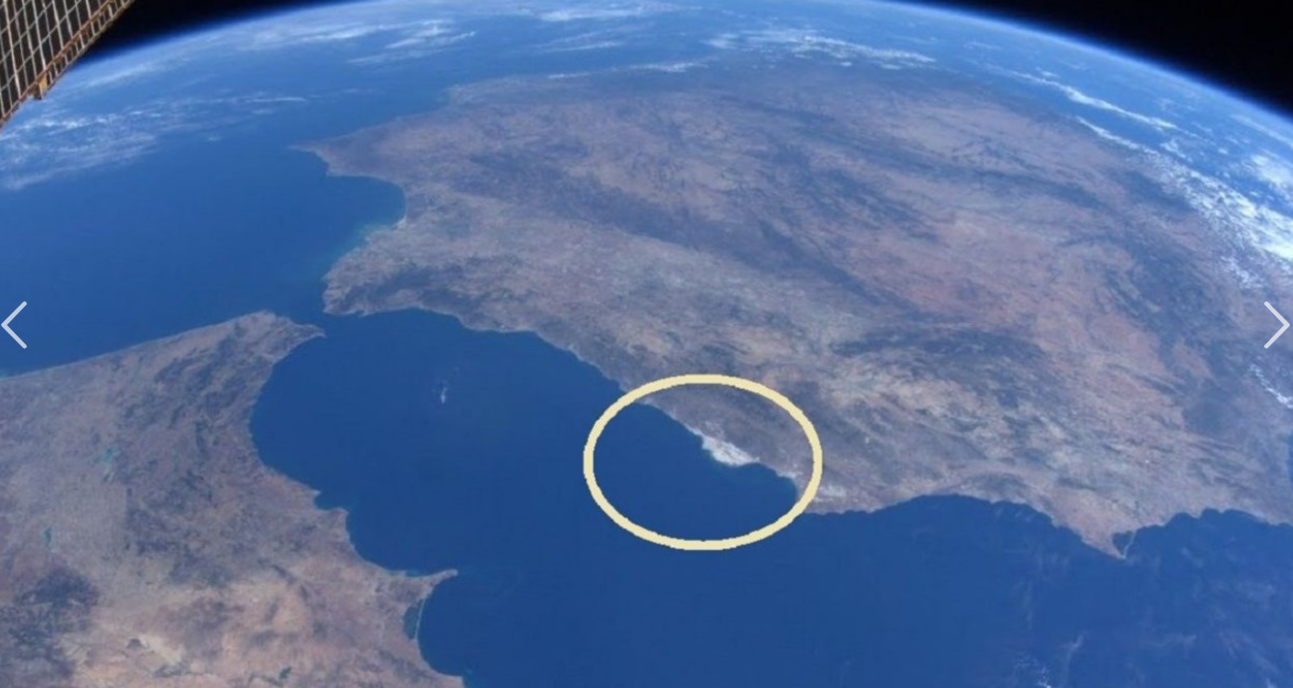


NASA Revealed That the Most Visible Human Structure from Space Is Not the Famous Great Wall of China. Meet the True Record-Breaking Construction.
The popular belief that the Great Wall of China is the only man-made structure visible from space is a myth that has persisted for decades.
From an early age, we imagined this colossal Chinese construction winding through mountains and deserts, so grand it could be seen by astronauts in orbit.
But the reality is different. Surprisingly, the most visible structure from space is not in Asia, but in Europe, and it is not what you would expect: a “Sea of Plastic” formed by greenhouses in the Almería region of Spain.
-
Church from 1888 becomes a mansion of over 330 m² in Canada after a renovation of R$ 3.4 million and is eventually sold for nearly R$ 4.3 million.

-
How an innovative city combines high technology, well-being, and sustainability to become the largest reference in clean energy on the planet.
-
Couple buys 1846 church in ruins for R$ 660,000, invests R$ 3.2 million in renovations, transforms it into a millionaire mansion, and even preserved a historic cemetery with over 300 graves.

-
He started running at 66 years old, broke records at 82, and is now a subject of study for having a metabolic age comparable to that of a 20-year-old, in a case that is intriguing scientists and inspiring the world.


Is the Great Wall Visible from Space?
The Great Wall of China, with its more than 21,000 kilometers in length, is undeniably an impressive work. However, several factors make it practically invisible from space:
- Narrow Width: Despite its length, the wall is only 4 to 5 meters wide, a thin line that gets lost in the vastness of Earth as seen from space.
- Low Height: With about 6 to 7 meters in height, the wall does not cast significant shadows that would distinguish it from its surroundings.
- Natural Camouflage: Built with local materials, the wall blends into the landscape, especially in mountainous regions.
Almería — A Sea of Greenhouses Visible from Space
While the Great Wall of China hides from the sight of astronauts, the greenhouses of Almería shine brightly.
Covering about 40,000 hectares, this vast expanse of white plastic reflects sunlight so intensely that it becomes visible to the naked eye from space.
Images from NASA and the European Copernicus program confirm this phenomenon. Spanish astronaut Pedro Duque stated that, from the International Space Station (ISS), human activity is only visible “in the field of greenhouses in southern Almería,” due to the “great solar light reflecting capacity” of the plastic covering the greenhouses.
The Impact of Greenhouses

The transformation of the Almería landscape is a relatively recent phenomenon. Until the 1950s, the region was arid and desert-like, an ideal setting for western films.
Starting in the 1970s, NASA began to document the expansion of greenhouses, which transformed the area into a “sea of plastic.”
In addition to being visible from space, the greenhouses of Almería may cause a local cooling effect, as the white covering reflects a significant amount of sunlight, as noted by NASA.

The Evolution of Agriculture in Almería
The history of the greenhouses in Almería began with farmers who, in the 1950s and 1960s, experimented with covering the soil with sand, dead mulch, and plastic to protect crops from maritime winds.
The results were surprising: greenhouse cultivation proved to be much more productive, as the soil retained more heat and moisture.
With the introduction of techniques like drip irrigation, artificial soil use, and hydroponics, agricultural production in Almería intensified. The region, previously semi-arid and sparsely populated, transformed into an agricultural powerhouse, adapting natural conditions to technological innovation.
Adapting to the Climate
To control temperature and humidity inside the greenhouses, farmers developed a peculiar technique: whitening with lime.
During the summer, natural ventilation is not sufficient to dissipate heat, and lime is applied to the plastic to reduce solar incidence.
By the end of August, the lime is removed to allow the necessary heating for winter and spring crops.
Almería in Numbers
The economic importance of the greenhouses in Almería is undeniable. Data from the Ministry of Agriculture of Andalusia (2021/2022) shows that the region has 47,911 hectares of greenhouse cultivation area, producing more than 3.4 billion kilos of fruits and vegetables, valued at R$ 2.7 billion.
The majority of the production (bell pepper, tomato, squash, eggplant, among others) is exported to countries such as Germany, France, and the United Kingdom.
Almería is not alone in this “sea of plastic.” Spain has about 70,000 hectares of greenhouses, making it the second country with the most area covered by polyethylene, just behind China, with 82,000 hectares.
A report from the Food and Agriculture Organization of the United Nations (FAO) in 2023 warns of the global increase in the use of plastics in agriculture.
The demand for greenhouse coverage, soil, and silage is expected to increase by 50% by 2030, reaching 9.5 million tons.
With information from NASA.






E se no trocassem o plástico por células solares. Armazenamento da energia gerada para climatização e automação do cultivo de precisão sob as mesmas. Será que funcionaria? Se necessário para completar, refrigeração passiva, dessanilisação, aerogel de sílica? 😀
Há mais de 15 anos que se sabe que o Campo de Dalías tinha mais visibilidade do espaço que qualquer outra construção humana, e só agora vem dizer que a NASA descobriu isso?
Deviam migrar essas pessoas excedentes para Austrália, para plantar lá!!! Bebês meninas Indianas e chinesas, para adoção para se casarem no futuro com, Australianos, Ingleses, alemães povoando lentamente a Austrália e incentivando a agricultura e o plantio de hortaliças…
Melhor os bebês para adoção, para não levarem a cultura extrema de seus países de origem e serem educados na cultura Australiana…
É muita Terra desperdiça, que poderia estar produzindo… Alimentos!