





 Portuguese
  English
  Spanish
  2 min of reading
  0 comments


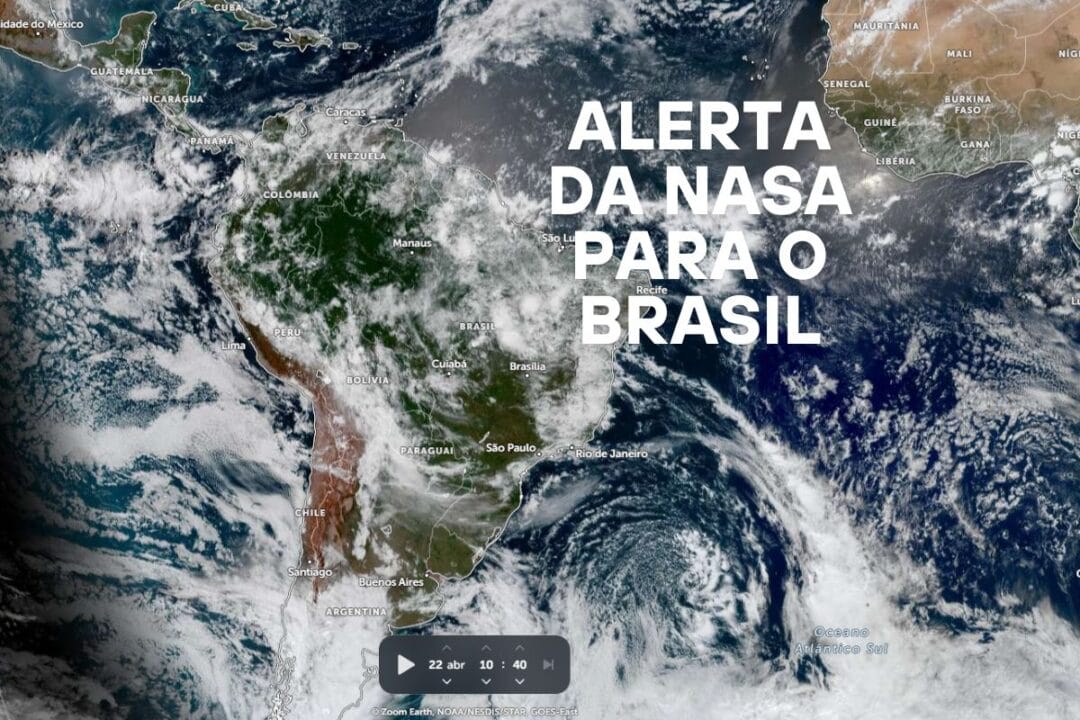
Midwest, Northeast, North, and Southeast Are Among the Most Vulnerable Regions; Understand the Criteria and Health Risks.
A NASA study revealed that parts of Brazil may become uninhabitable by 2073 due to extreme heat. Combining temperature and humidity, regions such as Midwest and Northeast will face risks of thermal collapse. Learn which areas are threatened and how heat can affect human health.
The NASA research points out that areas in the Midwest, Northeast, North, and Southeast of Brazil are vulnerable to uninhabitable conditions in the next 50 years. The criterion used goes beyond temperature: it considers the combination of heat and humidity, called wet-bulb temperature, which amplifies the effects on the human body.
Understand the Wet-Bulb Temperature Criterion
The wet-bulb temperature is measured with a thermometer covered by a wet cloth. Values above 35°C make survival practically impossible. In Brazil, regions with high humidity and heat above 37°C (with 70% humidity) may reach this threshold, posing a risk of death even in the shade.
-
The Artemis II mission will take the Orion capsule back to the vicinity of the Moon with four astronauts, a private bathroom with a curtain, a system adapted for men and women, and a level of comfort that highlights how the Apollo era operated at the rawest limits of space exploration.

-
Giant structures on the seabed precisely control oil and reveal how high-tech underwater valves work.

-
China has just tested a giant drone the size of a fighter jet with a wingspan of 25 meters that carries 6 tons, flies for 12 hours, and the most frightening part: it can launch entire swarms of smaller drones directly from the air.

-
In the center of the Milky Way, there is a sleeping monster with a mass of 4 million suns, and NASA has already set the date for its awakening: in 2 billion years, a neighboring galaxy will collide with ours and feed it with fresh gas.


Diseases and Risk of Organ Failure
Extreme heat is linked to 27 lethal disorders, including:
- Organ failure (when body temperature exceeds 42°C);
- Worsening of cardiovascular and respiratory diseases;
- Brain damage.
Between 2000 and 2019, heat caused 489,000 deaths/year worldwide, according to WHO and WMO – an underreported number.
Beyond Brazil
The study highlights that South Asia, the Persian Gulf, parts of China, and Southeast Asia may also become uninhabitable. The wet-bulb temperature criterion was applied globally, using satellite images and climate projections.
How to Mitigate the Effects? Urgent Measures Highlighted by the NASA Study
To avoid this scenario, NASA recommends:
- Reducing greenhouse gas emissions;
- Combating deforestation and wildfires;
- Implementing early warning systems for heatwaves;
- Promoting sustainable consumption of natural resources.
The NASA study is a warning for immediate actions. Extreme heat is not just an environmental crisis but a public health threat. Without global measures, entire regions of Brazil and the world may become inhospitable in decades.









Seja o primeiro a reagir!