





 Portuguese
  English
  Spanish
  3 min of reading
  0 comments


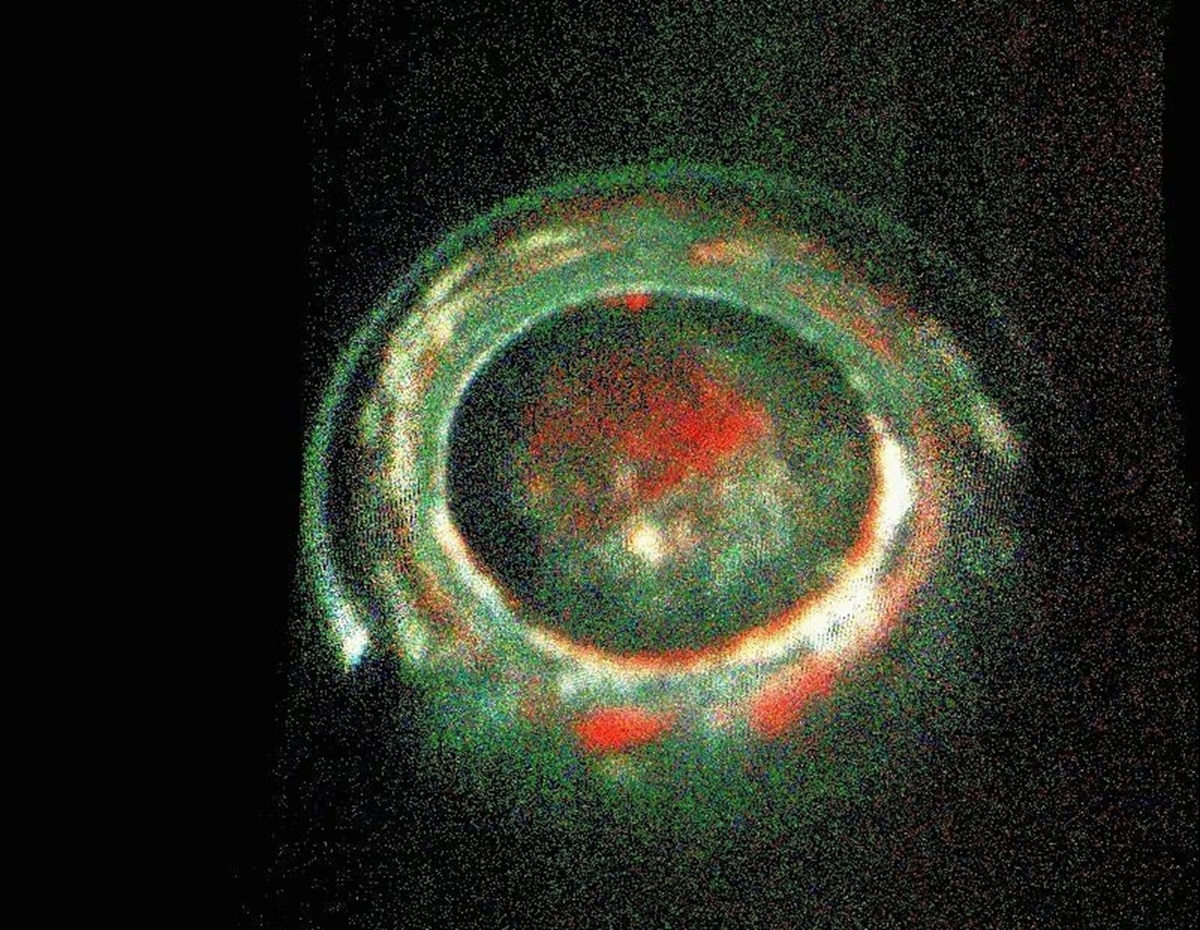
The Juno Probe Made an Unexpected Discovery on Jupiter: Different Plasma Waves Vibrating Together Near the Planet’s Poles. The Phenomenon Surprised Scientists and Could Help Understand Jupiter’s Intense Auroras and the Magnetic Fields of Other Celestial Bodies.
The Juno probe, from NASA, recorded an unprecedented phenomenon at Jupiter’s north pole. Plasma waves never seen before surprised scientists and opened new doors to understanding the largest planet in the solar system.
Since 2016, Juno has been collecting data from the gas giant. The latest discovery has been described as one of the most unusual ever recorded in space physics.
Synchronous Waves Reveal Rare Plasma Behavior
Researchers from the University of Minnesota, the University of Iowa, and the Southwest Research Institute identified an unusual interaction between charged particles.
-
Technology developed to protect military communications in the 1940s scrambled voices and today gives rise to the robotic sound that dominates current music.

-
If you look at the sky this Wednesday, you will see the Pink Moon shining at its peak at 10:11 PM, but before you get disappointed, know that the name has nothing to do with the color and instead refers to flowers that bloom at this time in the United States.

-
Discovery at USP reveals how Brazilian arnica can revolutionize the production of silver nanoparticles with less environmental impact.

-
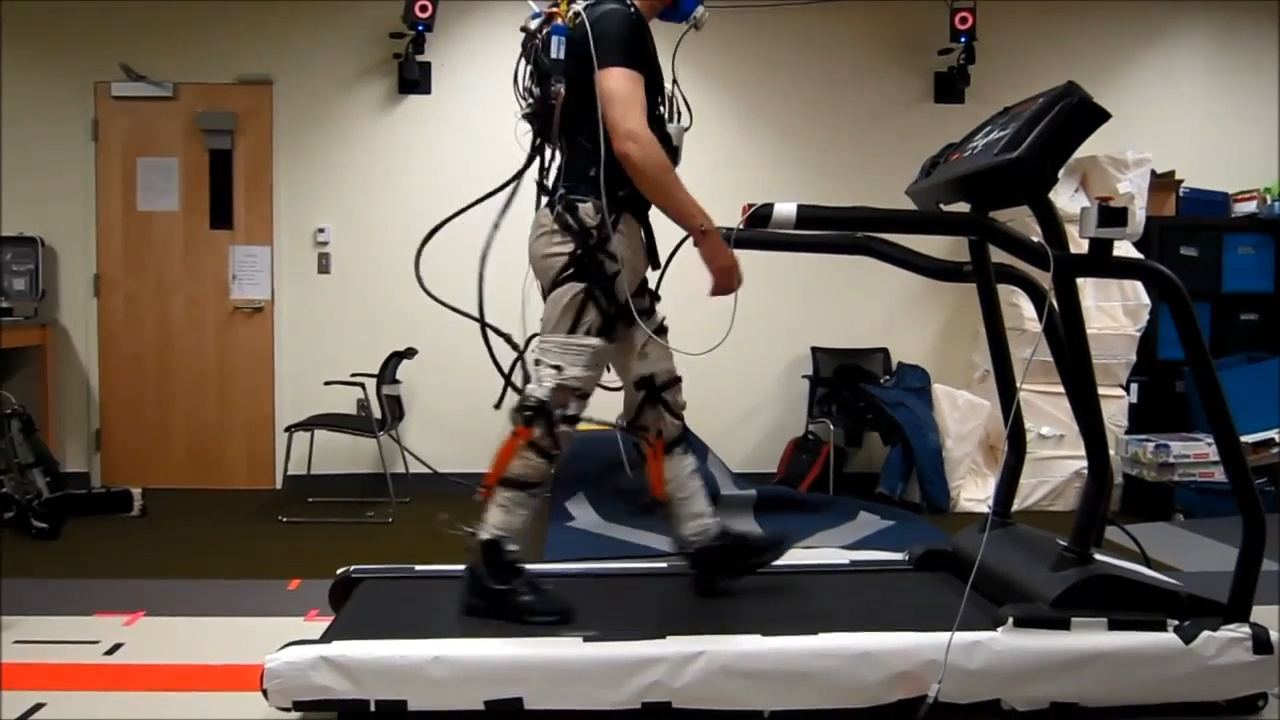
Harvard scientists have created a tissue exoskeleton that does not look like an exoskeleton, with no rigid parts and reduced weight, using flexible cables and miniaturized motors to assist the ankle and hip, reducing the effort of walking by up to 23% in controlled tests.

The probe captured two types of plasma waves — Alfvén and Langmuir waves — oscillating together in Jupiter’s polar regions.
Normally, these waves are independent. Alfvén waves reflect the movement of ions, while Langmuir waves come from the oscillation of electrons.
Since electrons are much lighter, the frequency of each type is usually different. However, in Jupiter’s extreme environment, they synchronized.
The discovery surprised scientists. John Leif Jørgensen, one of the study’s authors, told New Scientist that the observed behavior “has not been found anywhere else in the solar system.”
According to researchers, this type of dual wave is only possible due to the planet’s intense magnetic field. This field forces different populations of plasma to interact in unexpected ways.
Understanding Jupiter’s Intense Auroras
Unlike Earth, where auroras appear after solar storms, Jupiter can generate auroras on its own. This occurs due to the extreme strength of its magnetic field.
These auroras are hundreds of times more energetic than those seen in Earth’s atmosphere. The spectacle appears in the form of ultraviolet light above the poles.
The newly discovered waves may help to better understand how these auroras function. The interaction between the two types of waves may play an important role in the dynamics of auroral regions.
The team also points out that this phenomenon could occur on other gas giants, exoplanets, or even highly magnetized stars.
Juno Approaches Its End, But Leaves a Legacy
The Juno mission was scheduled to end in 2017. NASA even planned a controlled descent of the probe to avoid contamination of Jupiter’s moons. However, the team extended the mission, as they concluded that the probe posed no risk to the Jovian system.
As a result, Juno continued to orbit the planet and send important data. But the mission may be nearing its end.
Scientists estimate that by September this year, the probe’s orbit will degrade until it is engulfed by the planet’s atmosphere.
Even with the conclusion, the data already sent will still be analyzed for many years.
The Future of Exploration on Jupiter
The NASA work on Jupiter does not end with the conclusion of the Juno mission. The American space agency plans new ventures in the Jovian system.
One of the main bets is the Europa Clipper mission. This probe is expected to arrive at Europa in 2030. The goal is to investigate whether this moon has favorable conditions for life.
For Scott Bolton, the chief scientist of the Juno mission, studying Jupiter is essential. “Jupiter is the Rosetta Stone of our solar system. Juno goes there as our emissary — to interpret what Jupiter has to say.”
The new discovery of plasma waves reinforces this role. It shows that the planet still holds many secrets and can teach us a lot about the universe.








Seja o primeiro a reagir!