





 Portuguese
  English
  Spanish
  3 min of reading
  0 comments



New Observations Made by the James Webb Space Telescope Allowed NASA Scientists to Refine the Trajectory of Asteroid 2024 YR4, Discounting the Possibility of Collision with the Moon on December 22, 2032 After More Precise Calculations Reduced Orbital Uncertainties
NASA scientists announced that asteroid 2024 YR4 will not collide with the Moon on December 22, 2032. The conclusion was reached after new observations from the James Webb Space Telescope refined the object’s trajectory.
NASA Uses Data from James Webb to Discount Asteroid Impact
NASA scientists used observations from the James Webb Space Telescope to recalculate the trajectory of asteroid 2024 YR4 and completely rule out the possibility of a collision with the Moon in 2032. The object will pass approximately 21,200 kilometers from the lunar surface.
The new measurements were analyzed by specialists at the Center for Near-Earth Object Studies (CNEOS), which operates at NASA’s Jet Propulsion Laboratory located in Southern California. The updated calculations significantly reduced the uncertainties of the trajectory.
-
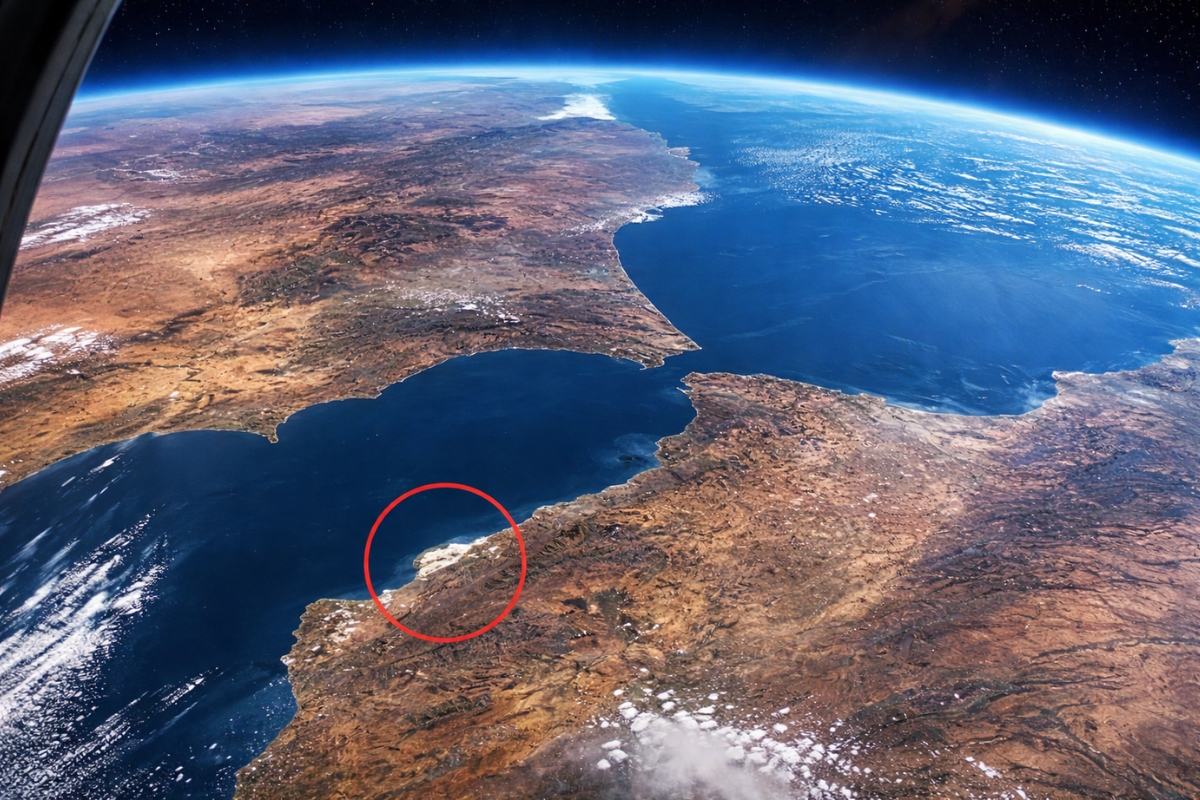
According to an analysis by NASA, only one human-made structure is visible from space, and it is not the Great Wall of China or the Pyramids of Egypt.
-
After 377 years of history, the Brazilian Army will have its first female general: Colonel Claudia Cacho has been promoted to brigadier general by Lula and will receive the sword and command baton this Wednesday in Brasília.

-
A Mercado Livre customer opened their package and found 32 resumes of people looking for jobs crumpled as protective paper inside the box, exposing names, addresses, documents, and phone numbers of dozens of candidates.

-
Iceberg A23a, one of the largest in the world, is undergoing accelerated collapse and may disappear: what explains the end of the ice giant?


Before the inclusion of the latest observations, models indicated there was about a 4.3% chance of the asteroid hitting the Moon. With the refined data, scientists confirmed that this scenario has been completely ruled out.
NASA Observations Reduced Uncertainties About the Asteroid’s Orbit
NASA explained that the update of the prediction does not mean that the asteroid has changed course. What happened was an improvement in the accuracy of the measurements, allowing for a more precise determination of its position in space.
The new analyzed data was obtained by the James Webb Space Telescope on two specific dates, February 18 and 26. These additional observations were crucial for narrowing down the range of possible positions for the object.
According to scientists, this type of refinement is common in asteroid studies. As new observations are collected, orbital models are updated and the uncertainties about the future position of space objects decrease.
NASA Managed to Observe the Asteroid Even When It Became Extremely Faint
To collect the most recent data, researchers utilized the sensitivity of the James Webb Space Telescope to detect extremely faint objects in space. This capability allowed tracking the asteroid even when it became practically invisible to other instruments.
The team responsible for the observations was led by the Johns Hopkins Applied Physics Laboratory located in Laurel, Maryland. Researchers were able to record two additional measurements deemed essential for improving the orbital estimate.
Since spring 2025, asteroid 2024 YR4 has remained nearly impossible to observe by ground-based telescopes and most space telescopes. Webb’s sensitivity allowed for continued monitoring of the object even under these conditions.
Scientists stated that the telescope managed to capture one of the faintest observations ever made of an asteroid. This type of recording is crucial for keeping track of objects that may pose future risks.
NASA Has Been Tracking the Asteroid’s Trajectory Since Its Discovery in 2024
Asteroid 2024 YR4 was identified in late 2024 by the Asteroid Terrestrial-impact Last Alert System, known as ATLAS. The research station responsible for the discovery is funded by NASA and located in Chile.
The initial measurements indicated that there was a slight possibility of the object colliding with Earth in the future. Over time, telescopes around the world collected new observations throughout 2025.
These data allowed scientists to gradually refine the asteroid’s orbit. The updated analyses ruled out any significant risk of impact with Earth on December 22, 2032.
The current models also indicate that the asteroid does not pose a threat to the planet over the next century. This type of monitoring is part of the planetary defense system that tracks near-Earth objects.
According to researchers, newly discovered asteroids often present temporary impact probabilities. As more data is collected, uncertainties decrease and the actual trajectory can be determined with greater precision.
With the most recent measurements from the James Webb Space Telescope, scientists now claim to have much more confidence in predicting the asteroid’s position in 2032. The new analyses have definitively ruled out any possibility of impact with the Moon.








-

-

-

-

-

7 pessoas reagiram a isso.