





 Portuguese
  English
  Spanish
  4 min of reading
  0 comments


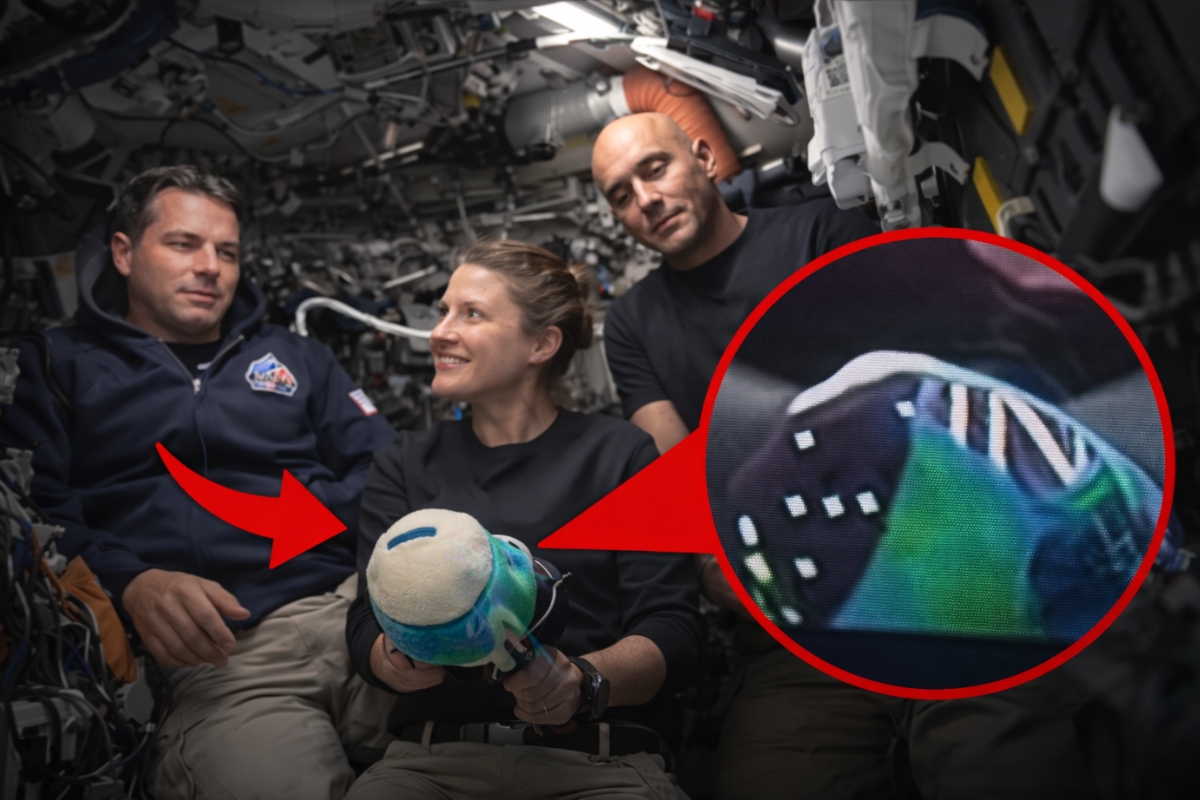
A recorded video from television during an interview with Artemis II spread suspicions on social media by displaying flashing letters over a plush toy in zero gravity. The effect, however, came from the way the screen was filmed, and not from fraud in the lunar mission.
A video shown during the Artemis II passage along the route to the Moon spread doubts on social media after showing white letters flashing over a plush toy floating inside the capsule. The scene was treated by conspiracy profiles as a sign of manipulation.
The effect, however, is linked to the way the image was recorded. Instead of a direct capture of the broadcast, the viral clip came from filming a television with a cellphone, which alters the reading of what appears on the screen.
Crew interview with plush toy Rise became the center of the controversy
The crew participated in a live interview to comment on the journey, while the plush toy Rise floated as an indicator of zero gravity. It was at this moment that fragments of text such as “TAN” and “OW” appeared over the image and drew attention.
-
In the Netherlands, a village with nearly 3,000 residents has no streets: in Giethoorn, each house is located on an islet surrounded by canals, has thatched roofs that last up to 40 years, transportation is done by silent electric boats, more than 180 wooden bridges connect the properties, and the mailman delivers mail by boat because there is no other way to reach the doors.

-
Many people avoid making eye contact due to insecurity, but those who maintain eye contact during a conversation possess four characteristics that psychology associates with confidence, empathy, firmness, and above-average concentration.

-
The “most luxurious ship in the world” arrives in Brazil with 2 helicopters, a submarine that reaches 300 meters, a value of R$ 3 billion, only 200 passengers, and an expedition structure that contrasts with suites worthy of a 5-star resort.

-
Forgotten for 38 years in a barn, this Citroën BX 16RS emerged with thick dust, rust, a missing wheel, and original interior, linked to the engineer of the car that set a world speed record.

As the recording was made in front of a TV, the cellphone captured both the main image and the graphics applied in the broadcast at the same time. When these elements do not align in the same visual rhythm, overlays appear that seem out of place.
Flashing letters appeared due to difference in image refresh rate
This type of noise occurs when video and characters on the screen are captured at slightly different times. The result can make pieces of subtitles, names, or identifications appear stuck on clear or moving objects.
In the case of the viral recording, the colorful plush toy became the most visible point of this distortion. Therefore, the letters gave the impression of being over the body of the object, even though they are part of the graphic elements of the broadcast.
Explanation gains strength with clean images from the original broadcast
According to Daily Mail, an international British newspaper, the original images from NASA and CNN show the plush toy floating normally, without the flashing letters or the distortion seen in the viral video.
This reinforces the reading that the confusion arose from the indirect recording of the screen, and not from a digital alteration made inside the spacecraft. In practice, what circulated on social media was a combination of imperfect capture with hasty interpretation.
Mission expected to set record at 252,757 miles from Earth
As the controversy grew, the mission advanced towards a historic milestone. The expectation was that the crew would surpass the mark of Apollo 13, which reached 248,655 miles from Earth in 1970.
On the new journey, Artemis II is expected to reach 252,757 miles, placing the team in one of the most symbolic stages of the trip. The objective includes observing the Moon, recording photos and videos, and collecting crew insights.
40-minute blackout is the most tense phase of the lunar flyby
The most delicate part occurs when the lunar surface blocks communications between the spacecraft and Earth. During this 40-minute interval, the control center loses contact with the astronauts while the capsule passes behind the Moon.
It is precisely during this phase that the mission comes closest. Without immediate communication, any problem raises the tension of the flight and transforms the flyby into one of the most sensitive moments of the entire operation.
Short observation window increases the weight of the moment
After breaking the distance record, the crew enters decisive hours of lunar observation. The space available near the windows is limited, forcing the astronauts to take turns during the work.
As a result, each stage of the mission gains greater value, both for visual recording and for the symbolism of the flight. The video that became a topic of debate on social media ultimately ended up sharing attention with an achievement that repositions the space race.
The episode shows how a visual reading failure can fuel suspicions in just a few minutes, even when the technical context points to a simple explanation. In the digital environment, appearance often arrives before confirmation.
At the same time, Artemis II continues to be surrounded by expectation due to the record distance, the communication blackout, and the strategic weight of the lunar flyby. It is a move that changes the strategic reading.








Seja o primeiro a reagir!