






 Portuguese
  Spanish


The Curiosity rover reached a geological transition zone in Gale Crater, recorded striped rocks on Mars, analyzed targets with a laser, spectrometer, and close-up camera, and gathered new data on sediments, minerals, dunes, atmosphere, and water-related processes that transformed the planet over billions of years.
NASA recorded striped rocks on Mars after the Curiosity rover advanced through a geological transition zone in Gale Crater. During observations conducted in July 2026, the vehicle photographed unusual formations, analyzed the composition of different targets, and investigated signs of environmental transformations that occurred on the planet.
According to a report by the Daily Galaxy portal, on July 15, 2026, Curiosity reached a region where sandy and relatively smooth terrains give way to rougher rocky surfaces. The change made the area important for studying layers formed in different periods of Martian history.
Terrain changed as Curiosity advanced
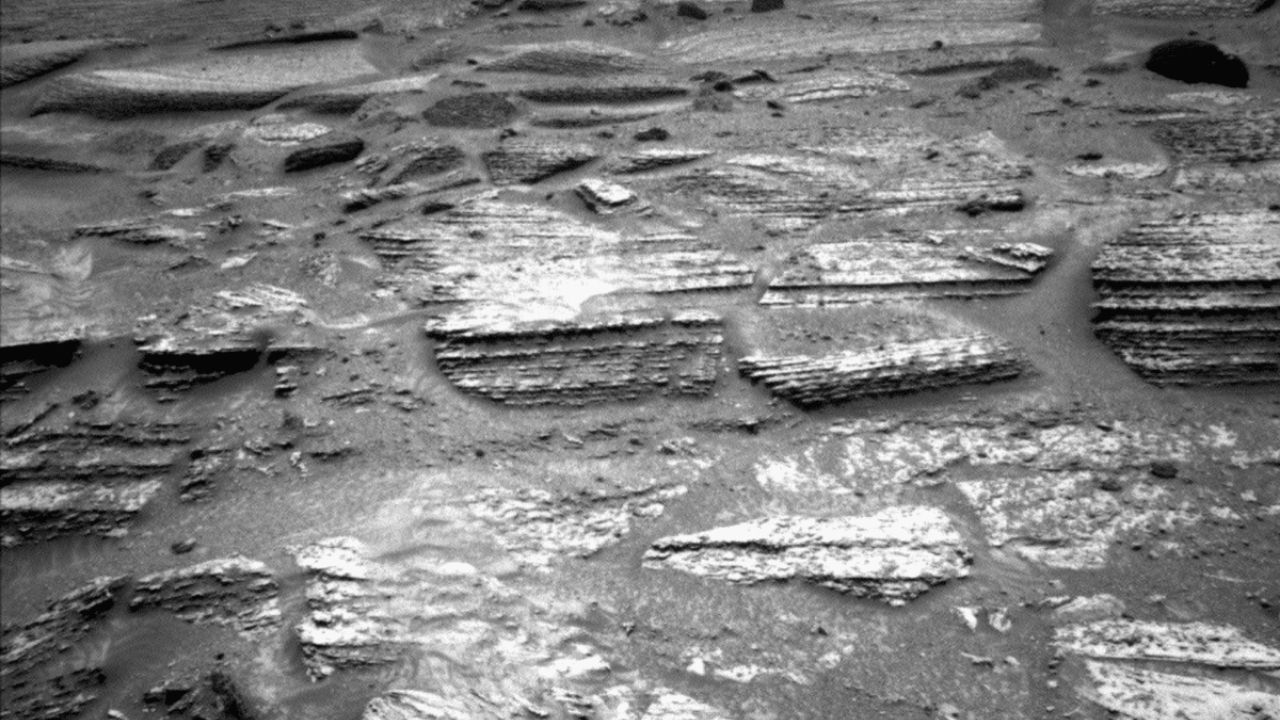
The rover encountered a landscape distinct from previously traversed areas. The transition between sandy surfaces and exposed outcrops allows for the comparison of materials formed or modified under different environmental conditions within Gale Crater.
-
Batista Brothers, Owners of JBS, Advance on the Purchase of Avibras After Brazil’s Antitrust Agency Approves Acquisition of Rocket Manufacturer

-
Xiaomi’s Two New Phones Near Brazil Launch: Model with Up to 9,000 mAh Battery Stands Out While Duo Features 120 Hz AMOLED, Snapdragon 6s Gen 4, and 67W Charging. Redmi Note 17 Pro and POCO X8 Appear in Anatel Directory, Close to Launch in Brazil
-
Exoskeleton Allows User to Stand with Free Hands, Receives FDA Approval and Arrives in the U.S.

-
Mars rocks record at least three encounters with water, surprising Perseverance scientists


These geological boundaries function as overlapping pages of the planet’s history. By analyzing changes in texture, color, composition, and layer arrangement, researchers can reconstruct part of the processes that altered the Martian surface over billions of years.
Striped patterns drew attention in the landscape
Among the observed characteristics were exposed formations with visible bands, described by the team as striped rocks. The patterns stood out from the surrounding structures and suggested that different materials or processes participated in the formation of the layers.
The striped rocks on Mars can help scientists investigate how sediments were deposited, hardened, and later exposed by erosion. However, the isolated appearance does not determine their origin, making chemical analyses and detailed images necessary.
Layers may record changes related to water
Curiosity reached the new area after traversing terrains with different sedimentary structures. Some of these layers may have formed or been modified when water still exerted significant influence over parts of the Martian surface.
Gale Crater presents evidence of environments that, in the distant past, had lakes and flowing water. The goal is not to find preserved organisms directly, but to identify environmental conditions that could have been favorable to microbial life.
Laser revealed the composition of selected targets
To examine the materials, the ChemCam instrument fired laser pulses at specific points. The energy vaporizes a very small amount of the surface, and the equipment analyzes the emitted light to identify the chemical elements present.
Among the targets studied were rocks called Kunturiri and Toconce. The results allow for comparison of the striped formations with other materials found in the area and verify if the visual differences correspond to real changes in composition.
Spectrometer compared different types of rock
Curiosity also used the Alpha Particle X-ray Spectrometer, known by the acronym APXS. The instrument was directed at targets like Malpartida and Pico Del Tunari to measure elements present on the rock surfaces.
The comparison between different samples helps identify mineral variations within the same region. These differences can indicate changes in sediment sources, the presence of water, or the chemical conditions existing during the formation of the rocks.
Camera zoomed in on textures invisible from a distance
The MAHLI camera, installed on the rover’s robotic arm, produced close-up images of selected areas. The equipment functions like a magnifying lens and reveals grains, fissures, layers, and other structures too small to be observed by navigation cameras.
By combining these images with chemical measurements, researchers can assess not only what the rocks are made of, but also how their materials are organized. Texture and composition, when analyzed together, offer more consistent clues about the origin of the formations.
Image captured outcrop at the beginning of July
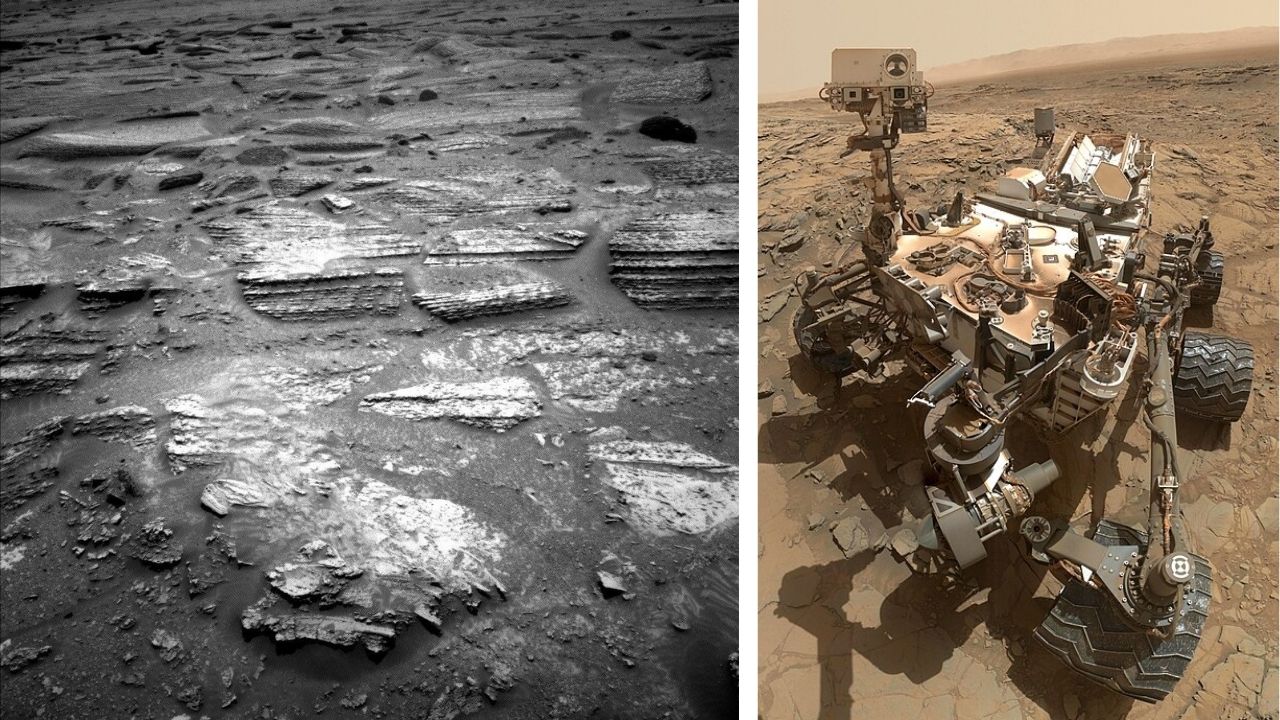
On July 1, 2026, on the 4,942nd Martian day of the mission, the left navigation camera of Curiosity captured the outcrop named Cerro Castillo. The target Hornillos appeared in the lower region of the image obtained by the rover.
Hornillos was also examined by laser and detailed images. Although the surface could not be excavated, the observations provided data about the terrain and expanded the documentation of the striped rocks on Mars found in that transition zone.
Dust was removed to reveal preserved material
Other targets, including Laguna Fea and Laguna Lejia, were prepared with a tool capable of removing surface dust. The cleaning exposed fresher parts of the rocks, reducing interference caused by the loose material accumulated on them.
Martian dust can hide visual details and alter some measurements taken directly on the surface. Removing it allows instruments to examine a portion less exposed to the current environment, bringing the analysis closer to the original material of the formation.
Dunes and ridges help explain the sediments
In addition to the outcrops, the rover observed sandy ridges, dunes, and layered structures. These features show how wind, erosion, and deposition continue to reshape the landscape of Gale Crater even after the disappearance of ancient aquatic environments.
The study of sediments also helps separate ancient structures from marks produced more recently. A visible band may have a mineral, sedimentary, or erosive origin, and the team needs to compare different measurements before establishing a geological interpretation.
Dark blocks may have descended slopes
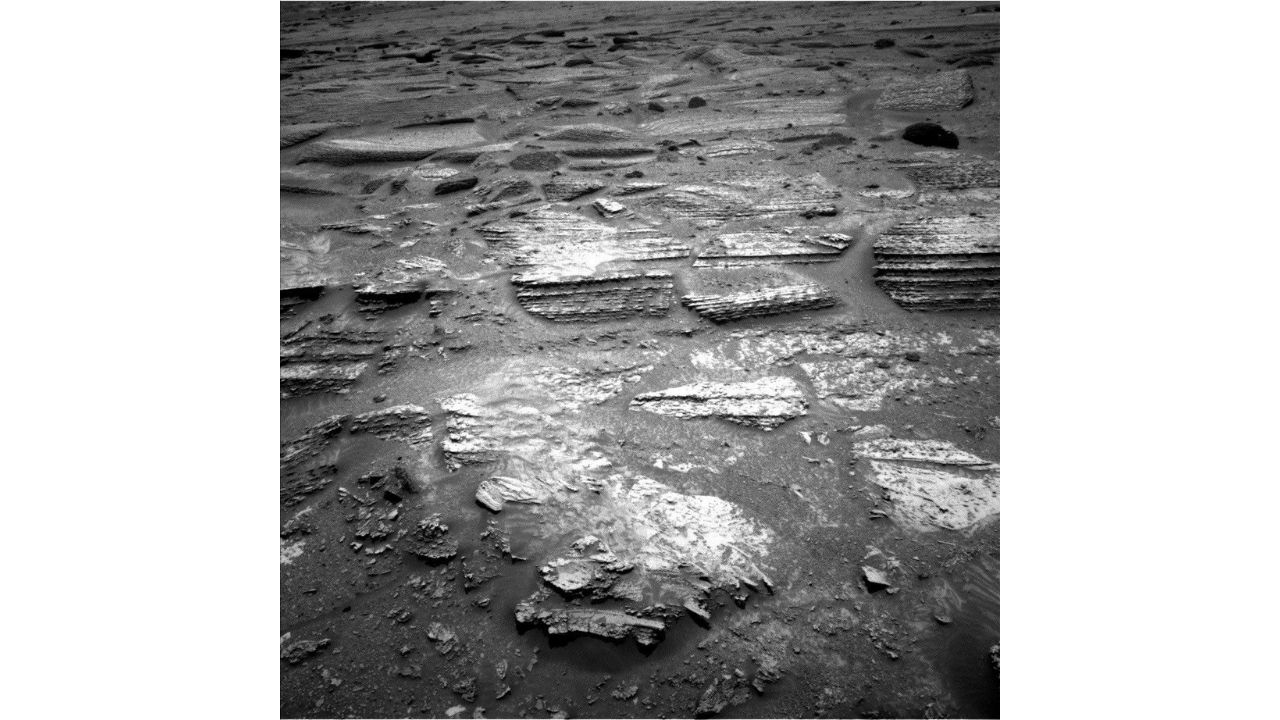
The Curiosity examined darker formations near an elevation in the region. Some blocks may have shifted downhill as a result of geological processes that occurred in the past.
These rocks may hold information about higher areas that the rover has not yet reached. Researchers are also evaluating possible relationships with ancient climatic conditions and processes associated with ice, without considering these hypotheses as definitive conclusions.
Atmosphere continues to be monitored by the rover
While investigating the soil, the Curiosity monitors the Martian atmosphere. The rover observes dust, clouds, and possible whirlwinds, gathering information about the current environmental conditions of the Red Planet.
This monitoring complements the study of the rocks because the climate still affects the surface. Winds move particles, cover outcrops, and gradually alter the features observed by the cameras, connecting ancient geology to currently active processes.
Mission seeks to reconstruct a different planet
Since landing on Mars in 2012, the Curiosity has been investigating how Gale Crater transitioned from a water-rich environment to the dry landscape observed today. The evidence gathered throughout the mission indicates that the site went through different geological and climatic phases.
The new striped rocks on Mars add data to this reconstruction but still need to be interpreted in conjunction with other records. Each analyzed layer helps to determine when and how changes occurred in the availability of water, soil composition, and Martian climate.
Possible meteorite will be the target of new observations
The team is also preparing to analyze a large dark rock that may be a meteorite. If the hypothesis is confirmed, the object could provide information about materials that arrived on the surface of Mars from space.
The next steps will continue combining images, chemical measurements, and atmospheric monitoring. Do you believe that the striped formations could reveal a habitable period of Mars, or do you think the answers are still far off? Tell us in the comments which Curiosity discovery most piques your interest.


