





 Portuguese
  English
  Spanish
  4 min of reading
  0 comments


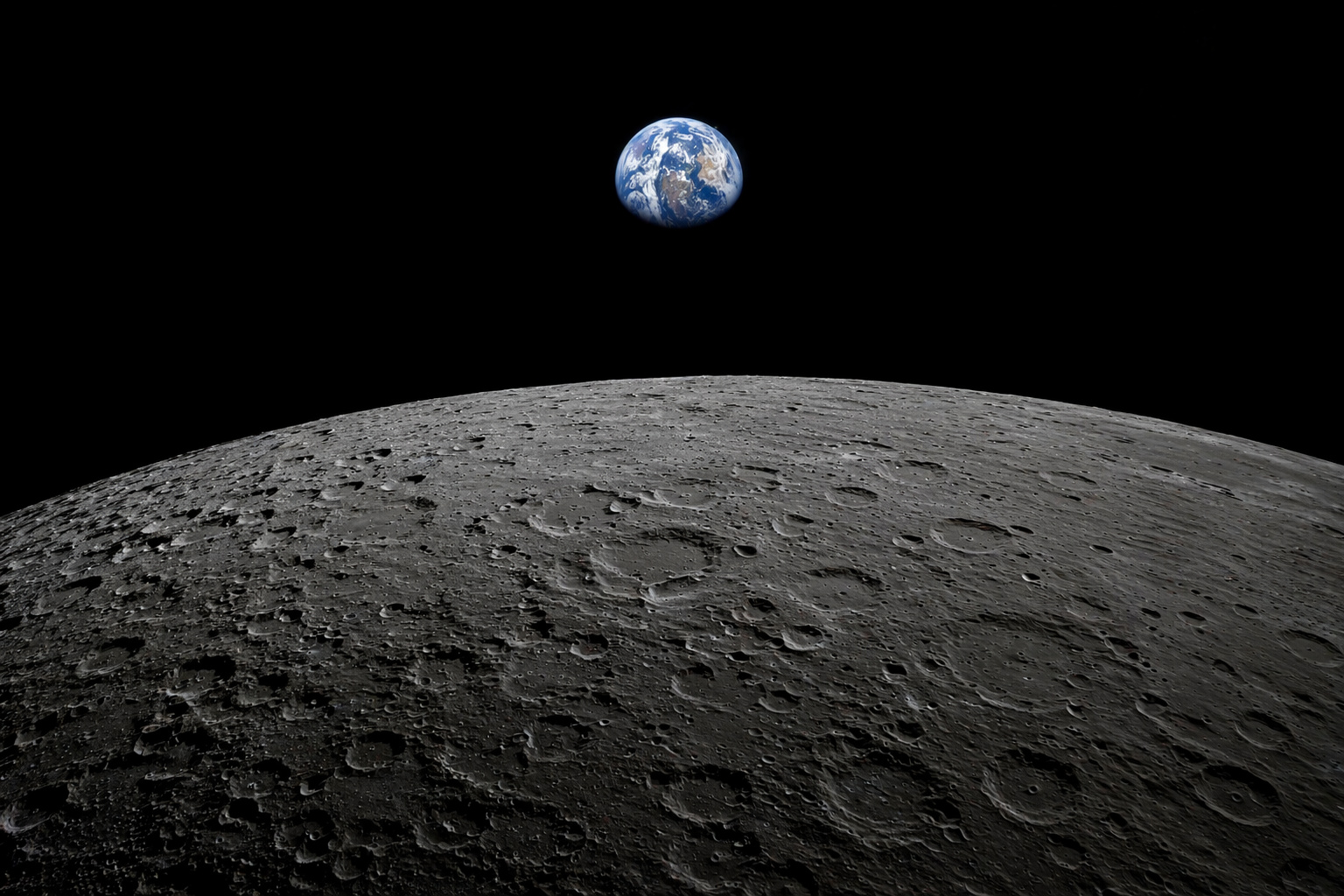
Artemis II mission reveals the hidden side of the moon, records rare solar eclipse and marks the farthest point ever reached by humans
The NASA announced, this Tuesday (7), the first image of the hidden side of the Moon, captured during the Artemis II mission, which quickly attracted global attention.
The spacecraft was performing a lunar flyby, and at the same time, revealed one of the most significant moments of recent space exploration.
The image was captured from the Orion constellation, as Earth appeared on the lunar horizon, which reinforces the rare nature of the event.
This scenario demonstrates how the mission managed to combine strategic orbital positioning and advanced scientific observation.
Recording of the hidden side of the moon reveals rare phenomenon
The capture occurred during an alignment between Orion, the Moon, and the Sun, which consequently enhanced the scientific value of the mission.
Additionally, NASA simultaneously released a video of the moment when the spacecraft entered a solar eclipse, a phenomenon that lasted about an hour.
-
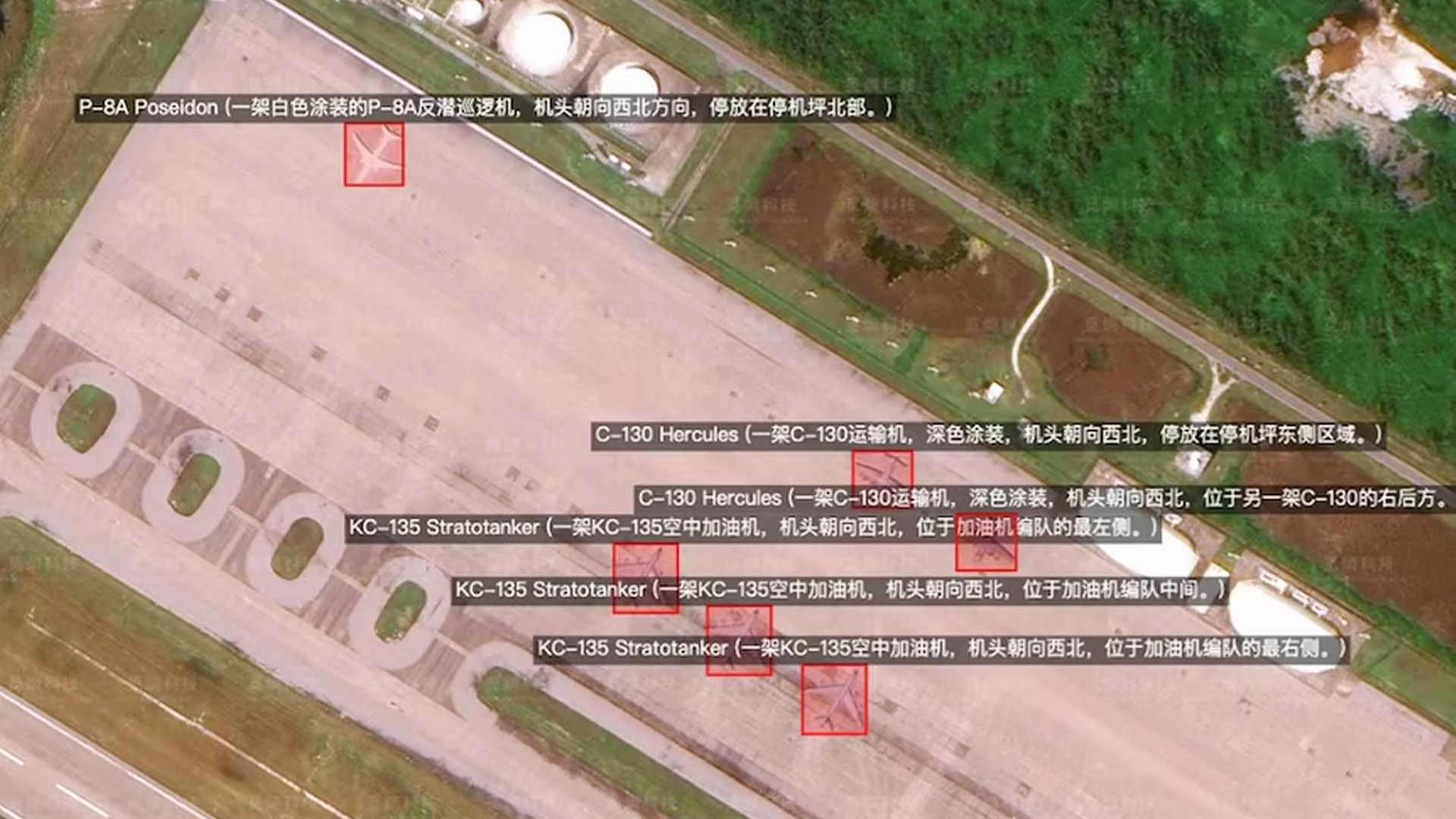
Chinese AI satellite images are helping Iran target US bases in the Middle East, and reports indicate that the technology is already accelerating missile and drone attacks.
-
Exemption from the Enem 2026 fee has a defined deadline; see how to apply.

-
Why fighter pilots never return after ejecting: the seat launches the body at 600 km/h in 1 second, compresses the spine, reduces G tolerance, and leads to medical disqualification, not punishment.

-
The end of electrical waste? Meet the new AI that uses 100 times less energy, learns in minutes, and is still much more accurate than famous models.

In this context, the crew took the opportunity to study the solar corona, which corresponds to the outermost layer of the Sun.
During this period, the corona was observed shining around the lunar edge, allowing for detailed analyses.
Subsequently, NASA also released a complete image of the eclipse, reinforcing the technical importance of the records.
Thus, the set of images enhances understanding of phenomena observed beyond Earth.
Record distance redefines limits of human exploration
After the lunar flyby, the four astronauts began their journey back to Earth.
As predicted by NASA, the spacecraft passed behind the Moon, resulting in a loss of communication of approximately 40 minutes.
During this period, the crew reached the farthest point ever achieved by humans: more than 406 thousand kilometers from Earth.
This milestone redefines the limits of space exploration and highlights the complexity of the Artemis II mission.
Even so, the team maintained the scheduled scientific activities, demonstrating high technical preparedness.
This moment reinforces, therefore, the operational challenges faced in long-distance space missions.
Resumption of contact marks symbolic moment
As soon as contact was reestablished, astronaut Christina Koch sent the first message to base.
In the communication, she stated: “Houston, this is Integrity… it’s great to hear Earth again”, highlighting the impact of the moment.
At the same time, pilot Victor Glover reported that he said a prayer during the communication blackout but remained focused on scientific observations.
Additionally, Koch emphasized the importance of the experience, especially for the global perspective and the record achieved.
This return of the signal marked a crucial point of the mission, as it reestablished contact with Earth.
Thus, the episode highlights the intensity and complexity of space operations.
Political recognition reinforces importance of the mission
After the historic achievement, the astronauts participated in a call with President Donald Trump.
During the conversation, he stated that there is no comparison with what the crew accomplished and highlighted the United States’ leadership in the space race.
The president emphasized that the Moon represents only the beginning, while the ultimate goal will be the planet Mars.
At the same time, he asked the astronauts about the experience of being without communication with Earth.
Finally, Trump formally invited the crew to a reception in the Oval Office after their return and recovery period.
This gesture highlights the political and symbolic impact of the mission.
Final phase of the mission and preparation for return
Currently, the mission is entering its final stage, focusing on life support systems and preparations for atmospheric reentry.
According to NASA, this Tuesday (7), at 2:25 PM, the spacecraft is expected to leave the gravitational influence of the Moon.
From this moment on, Earth will exert the main gravitational force on the spacecraft, guiding the return.
This process is crucial to ensure the safety of the crew.
The landing is scheduled for Friday at 9:07 PM in the Pacific Ocean, near San Diego.
Thus, the Artemis II mission is heading towards its conclusion, consolidating historical milestones in space exploration.
In light of these scientific advances and this record distance, how far can human presence in space reach in the coming decades?







Seja o primeiro a reagir!