
NASA Administrator Jared Isaacman unveiled the X-70 Fractal, a crewed experimental jet built to carry up to 2,000 pounds of test equipment, cruise at Mach 0.75 and fly about 1,726 miles, with a first NASA flight expected within two years.
NASA showed its newest X-plane on Wednesday, November 4, during the UP.Summit at Kennedy Space Center in Florida, the agency said in a release published the same day.
The aircraft is called the X-70 Fractal. NASA describes it as a crewed, high-performance research platform designed to speed up the development and testing of new aviation technologies.
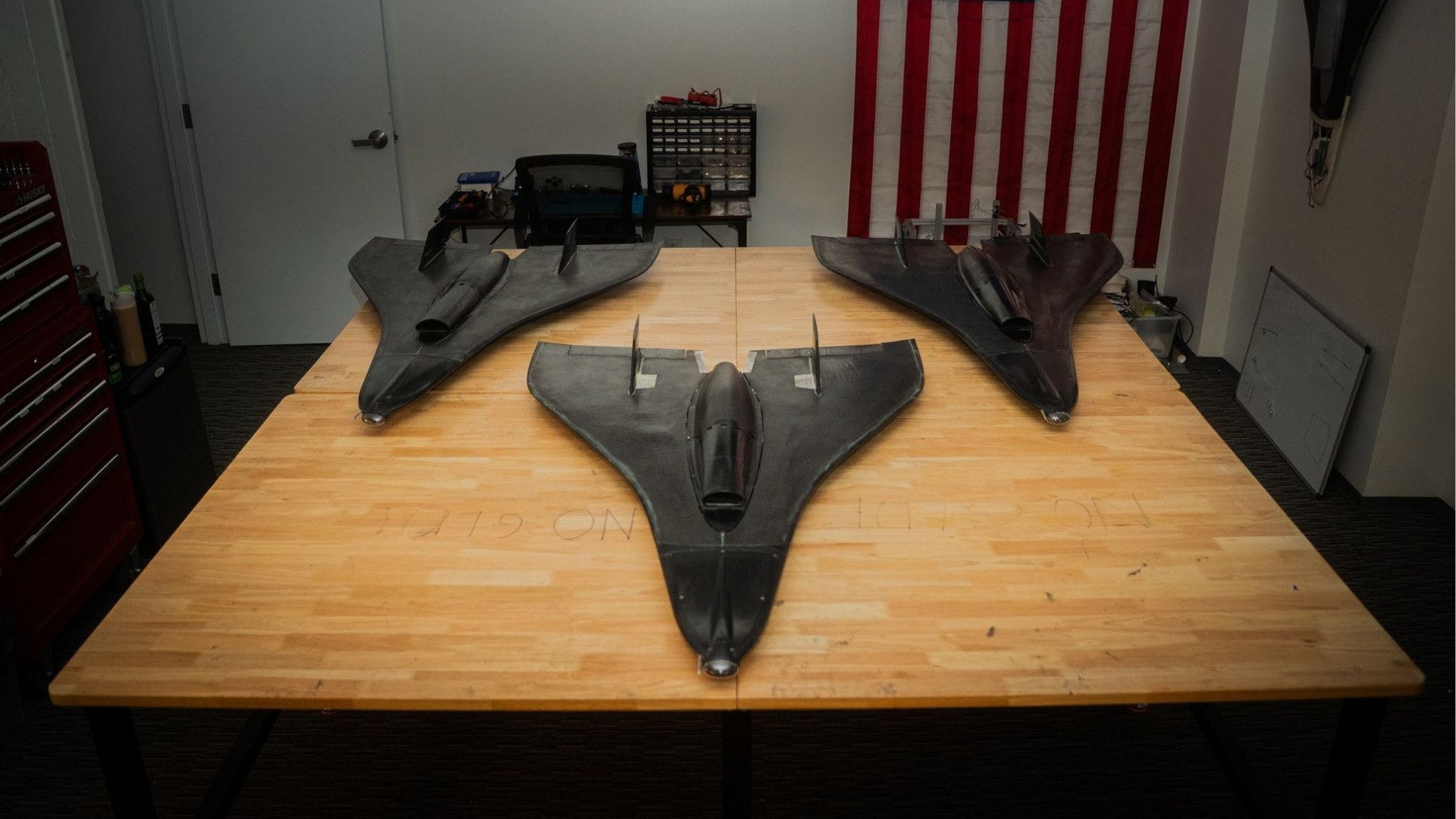
The only image released so far is a picture labeled “generated content,” showing a dark silhouette in clouds. The real aircraft has not been shown in public, and NASA has not named its builder.
-
ITER lead mechanical engineer Adrien Deydier says a 330-tonne superconducting magnet, cooled to minus 269°C, carried 34,000 amperes, half its working current, before heading into the world’s largest tokamak

-
Geochemist Kliti Grice says the 115-million-year-old leg bones of a small Brazilian dinosaur that escaped the 2018 National Museum fire hold what look like fossilized red blood cells and traces of heme, a world first
-
Astronomer Kristen McQuinn and her team used Hubble to count the oxygen in 37 nearby dwarf galaxies and found they kept only about 11% of what their stars made, with supernova-driven winds pushing the rest out
-
NASA’s Swift principal investigator Brad Cenko says tungsten pieces and parts of the mirrors of the 1.5-ton observatory could survive when it falls back to Earth this week, after 22 years and more than 2,000 gamma-ray bursts



A plane built to be rebuilt
What sets the X-70 apart, according to NASA, is its rapidly reconfigurable flight-control technology. The agency says it will let researchers explore maneuverability in ways never before demonstrated in crewed flight.
The airframe can take up to 2,000 pounds of experimental payloads, mounted in internal and external locations. That lets engineers swap one experiment for another without designing a new aircraft each time.
“Its modular design and ability to rapidly swap internal and external payloads will keep our teams flying, learning, and moving quickly from one experiment to the next,” Isaacman said in the release.
The numbers NASA released
The X-70 has a takeoff weight of 10,000 pounds. It is designed to cruise at Mach 0.75, about three quarters of the speed of sound, and to climb as high as 45,000 feet.
Its planned range is more than about 1,726 miles, or 1,500 nautical miles. NASA says this will allow demanding flight research across a broad range of operating conditions, over longer distances and durations.
The release does not say what engine or engines will power the X-70, how many crew members it will carry, or where the aircraft will be based once it joins the agency’s fleet.
“This is why people come to NASA”
Isaacman gave the clearest timeline in the announcement. “We expect her first flight under the NASA banner within the next two years,” he said, adding that the X-70 is only one part of a new start for aeronautics.
“This is why people come to NASA: to build, to learn, and most importantly, to fly,” the administrator said. He had teased the new aircraft the week before the reveal, The War Zone reported.
The phrase “under the NASA banner” left a question open. The War Zone wrote that it could mean the agency will take delivery from a manufacturer, or that an existing aircraft is being moved over from another program.
Who built it is still unknown
NASA did not say who designed or built the Fractal. The War Zone noted that the released image has splayed tails, a bubble canopy and fighter-like wings, but stressed that it is only an impression of the final shape.
The outlet compared it with other recent testbed aircraft, especially from Scaled Composites, which built a flexible platform called Beacon. That aircraft, however, focuses on autonomy and drone technology rather than flight controls.
More details could come soon. NASA’s Max Power air show is scheduled at the Shuttle Landing Facility at Kennedy this weekend, and The War Zone said it expected to learn more there.
What kind of tests it could fly
NASA’s release did not list specific experiments. It mentions advanced flight control, maneuverability and “other cutting-edge technologies,” leaving the first research campaign to be announced later.
The War Zone listed possible directions for a modular aircraft like this one: lift fans, thrust vectoring, morphing wings and controls that use bursts of air instead of traditional moving surfaces. None of these were confirmed by NASA.
What NASA did confirm is the purpose. “It’s exciting to bring on another X-plane to accelerate and drive aeronautics research,” said Laurie Grindle, director of the Aeronautics Division in NASA’s Research and Technology Mission Directorate.
Joining the X-1 and the X-59
The X-70 enters a long line of experimental aircraft. NASA’s release cites the Bell X-1, which first broke the sound barrier in 1947, and the X-15 hypersonic research aircraft that followed it.
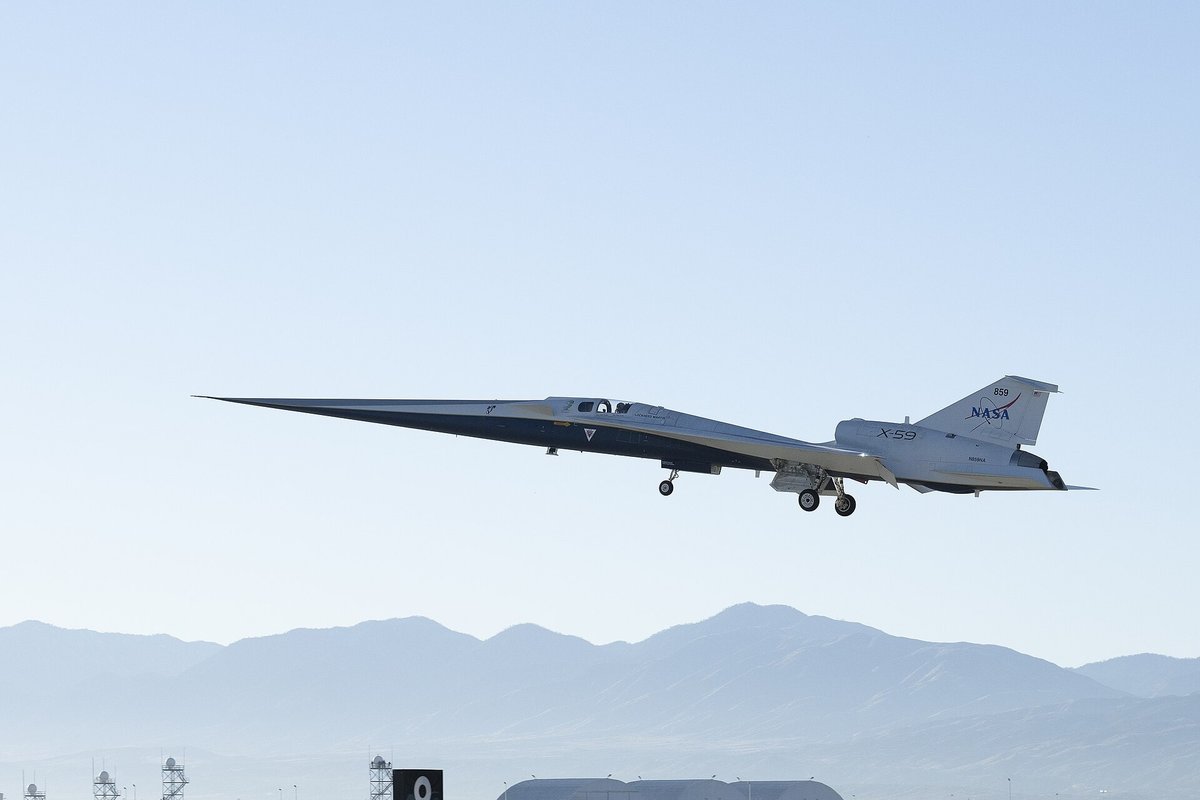
The most recent example named by NASA is the X-59, which the agency describes as its quiet supersonic demonstrator.
“For decades, NASA Aeronautics has used X-planes to develop technologies that advance aviation,” Grindle said. The X-70 is the next number in that series, though NASA has not said how many more are planned.
A pilot running the agency
The new aircraft also fits Isaacman’s own background. He flies a private MiG-29 and once owned a company that provided contractor aggressor aircraft for military training, The War Zone reported.
According to the same outlet, pushing aeronautics forward with new X-planes has become one of the top priorities of the agency under his leadership.
NASA’s release frames the X-70 in similar terms, saying it will help expand the agency’s capacity to do experimental flight research and speed up the testing of emerging technologies.
Earlier NASA experimental flights have pushed speed far beyond airliners, like the test that took an experimental aircraft to nearly 11,000 km/h for a few seconds before a planned splashdown.
What comes next
For now, the X-70 exists for the public only as a name, a set of numbers and a generated picture. The first flight under NASA, by the agency’s own estimate, is up to two years away.
Questions remain about who builds the aircraft and which flight-control systems it will test first. Aviation Week reported that NASA promised more X-plane programs are coming.
If the Fractal flies on schedule, its swappable 2,000-pound payload space will let NASA move experiments out of simulators and into real flight, which is the stated goal of the program.
Should NASA put more money into crewed X-planes like the X-70, or would drones and computer simulations deliver the same answers faster and at lower cost?