





 Portuguese
  English
  Spanish
  7 min of reading
  0 comments


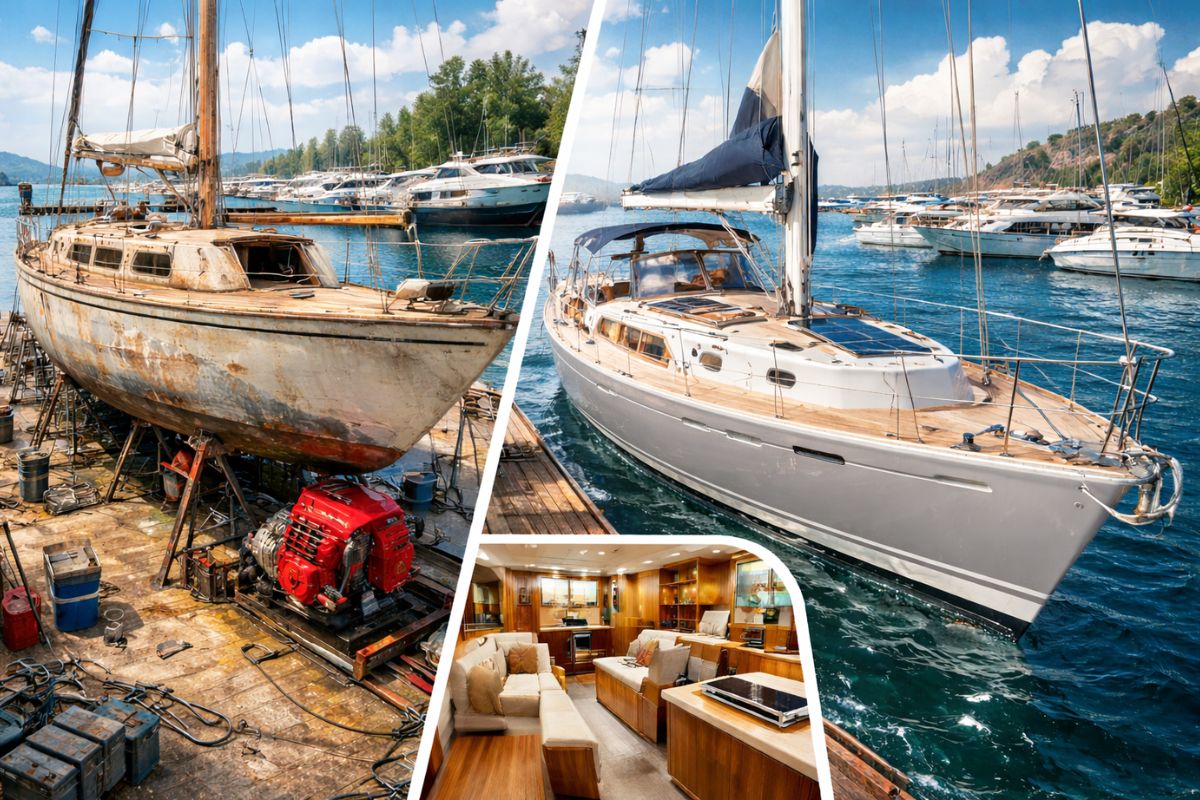
The naval refurbishment turned the boat into a residential yacht with Awlgrip paint on the hull, a new Beta Marine engine, and sealing of the chain plates, closing at US$ 25,479.
The naval refurbishment began with a disguised warning of opportunity: an abandoned sailboat for US$ 5,000, full of holes in the hull, rotten wood, falling windows, and an old engine about to die. Even without real experience in construction, the couple decided to bet everything to transform the boat into a residential yacht and their own home.
From there, the naval refurbishment became a physical, financial, and emotional test, with tropical rain disrupting painting, shipyard fees of US$ 80 per day pressuring deadlines, and a crossing that exposed the most dangerous flaws. The project only advanced because they accepted to redo, correct, and restart as many times as necessary.
A US$ 5,000 ad that seemed cheap but was a warning

The beginning of the refurbishment naval was driven by an ad with a “ridiculous” price on Craigslist. However, the price came with clear signs of risk: holes through the hull and deck, rotten wood, disintegrating windows, lack of sails, and an old engine, ready to fail. It wasn’t a discount, it was a warning.
-
Firjan proposes to ANTT the acceleration of works on BR-101 in Northern Fluminense to improve logistics, urban mobility, and regional competitiveness.

-
Couple that traveled by Kombi through many countries moves forward with the land in the south of SC: machines level the refuge in the woods, reinforce embankments, set up a construction camp, and train chainsaw operators to speed up the building process.

-
Couple leaves the city and builds a steel frame house in the countryside: sandwich roof, beams and columns secure the roof, X-braces prevent the walls from moving, and the 3-month deadline tightens.

-
A simple technique of wetting the brick before laying it prevents cracks, improves the adhesion of the mortar, reduces fissures, and ensures stronger walls and more durable constructions.

Even so, the couple bought the boat and adopted a survival strategy: a year of improvised and cheap repairs just to keep the structure afloat while they continued working and saving money for the real reconstruction.
The journey that exposed the hull and pushed the keel to the limit
When they decided to test the boat, the naval refurbishment gained urgency. The vessel, named Dead Dolphin, left Fort Lauderdale heading to Puerto Rico. Over time, parts began to fall off, shortcuts appeared, and the ocean exposed everything that was fragile.
The worst moment came in the Mona Passage, described as a tough and relentless stretch of the Caribbean: 40 hours of structural stress, heavy seas, and temporary patches threatening to break open.
In the midst of this, the engine stopped. They arrived in Puerto Rico, but the boat could not continue on its own and needed to be moved with the dinghy pushing about 20,000 lb of dead weight.
External naval refurbishment: washing, epoxy, sanding, and base for painting

On land, the naval refurbishment turned into a diagnosis and a reality check. The hull was covered in barnacles and rust, and the biggest discovery was in the keel: a large hole and a deep crack in the steel. They realized they were lucky not to have sunk.
The response began with the heavy basics: high-pressure washing, filling holes and imperfections with repair epoxy, and sanding to create a smooth and even surface. Every inch of the hull and deck needed to be prepared for new paint.
Awlgrip paint, tropical rain, and the “mirror” finish

With the surface ready, the naval refurbishment entered the aesthetic phase that is also protection. On the deck, a non-slip additive was applied because a smooth and wet deck turns into ice.
And then came the race against the weather: mixing base and hardener, working quickly, and trying to paint before the mixture hardened.
The tropical rain disrupted with short and repeated cycles, requiring cleaning and restarting. Despite this, the hull progressed, and the chosen premium paint was Awlgrip, valued for its mirror-like shiny finish and resistance to sun and salt.
To ensure uniformity in the final shine, an experienced painter came in with a spray gun and pointed out flaws with a pencil, marking unevenness and “slips” from sanding. The rule became clear: good was not enough; it had to be perfect.
Splash day, steering failure, and the part that no longer existed
When it was time to return to the water, the naval refurbishment almost turned into total frustration. The hull was watertight, but during the test, the steering wheel did not respond. Result: immediate removal from the water and more days at the shipyard.
The cause was a backing plate from the steering system, a vital part that disintegrated after 40 years of salt and neglect.
Since the part was obsolete, it could not be purchased. It had to be made from scratch. In the meantime, the bottom paint also suffered because the lifting straps scraped and stained the anti-fouling paint, requiring sanding and a new coat with proper curing to avoid smearing again. It was the kind of mistake that costs time and money at the same time.
New Beta Marine engine and the replacement of the “heart” of the boat
With the exterior progressing, the naval refurbishment migrated to the engine. The old one was so corroded that the coolant looked like rusty water. The removal was a risky operation: the engine weighed about 300 lb and had been stuck for four decades.
They improvised using the boat itself as a winch, attaching the engine to the halyard system and using the mast winch as a pulley.
The new engine cost about US$ 15,000 and arrived as a game-changer: a red 30 hp Beta Marine, described as much quieter, in the range of 50 to 60 dB.
The installation required careful alignment to avoid vibration and included protective items for the investment, such as a sea water strainer for cooling and a fuel filter to handle dirty diesel in remote ports.
Autopilot and real change in life aboard

An upgrade that symbolizes the turning point of the naval refurbishment into a “residential yacht” was the wheel autopilot, cited as equipment costing around US$ 2,000.
For a crew of two, this changes routine and safety: the boat maintains its course without someone tied to the helm all the time, even on long crossings.
The installation required precision to avoid magnetic interference between the motor and the internal compass of the system. It’s the kind of invisible detail that separates reliable automation from headaches at sea.
Chain plates, leaks, and the number one enemy of any naval refurbishment
In the midst of the internal retrofit, the naval refurbishment collided with the problem that derails any boat project: water coming in.
A test with buckets revealed a leak in the area of the chain plates, critical points connected to the mast rigging. The previous sealing, done with cheap silicone, had given way after tensioning the mast, and the water found its way inside.
The correction became a priority because it makes no sense to modernize the interior without eliminating water entry points. First, the boat must be watertight, then comfort comes.
Interior naval refurbishment: rotten wood, windows, and cabinets planned for maintenance
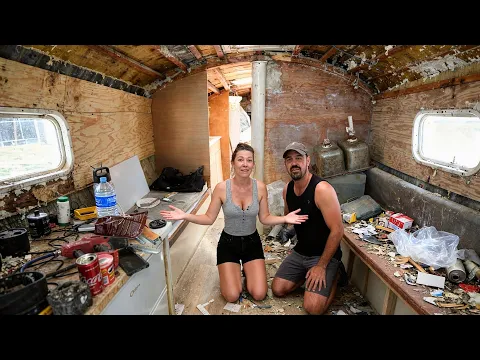

Upon dismantling the salon, the naval refurbishment revealed completely rotten wood. Part of the structures connected to the mast had to be removed and redone, with the concern of maintaining future access to critical areas.
Therefore, cabinets and panels were designed to be removable, allowing inspection of the chain plates hidden behind the walls.
There was also an update of windows. A test with a new window showed the contrast: glass so clear it seemed non-existent. Small changes like this shift the feeling from “old boat” to “house at sea”.
Kitchen and bathroom: PVC, rails, locks, and modern finishing

In the kitchen, the naval refurbishment started from scratch. Old drawers would jam and open during navigation, so stainless steel slides and mechanical locks were added to prevent pots from turning into projectiles.
An useless cabinet was removed to gain space and depth, and the interior received material that reduces noise, keeping dishes quiet in rough seas.
For the countertop, PVC was chosen for being lightweight and waterproof, without rotting or swelling in humid weather. Errors also appeared, such as the PVC “bubbling” when trying to bend it with heat, requiring parts to be redone.
In the bathroom, the naval refurbishment included the toilet base, the shower structure redone, and finishing with a porcelain sink, as well as doors and mirrors with a cleaner look.
Electricity, lighting, and “house” upgrades inside the boat
The naval refurbishment also had to face an “ugly secret”: the electrical system. Old and cheap wiring had already caused sparks and nearly started a fire.
The reorganization involved safe routing, separation of systems, and lighting with dimmers to create a modern interior atmosphere.
Routine upgrades were also added, such as a mini washer of 30 lb for US$ 1,200, capable of running on solar power, in addition to improvements in organization and access, because everything on a boat needs to be inspectable.
How much it cost and what the naval refurbishment proved in the end
In conclusion, the project ended with a total cost of US$ 25,479 to transform the “US$ 5,000 warning” into a functional residential yacht.
The story also includes a storm season with winds up to 70 mph, scares, rework, and constant learning the hard way. The naval refurbishment turned into a survival and restart project, not just an aesthetic one.
Quick question for you to comment: if you found a sailboat for US$ 5,000, would you take on a naval refurbishment of this size to live aboard, or would you run away immediately?








Seja o primeiro a reagir!