





 Portuguese
  English
  Spanish
  6 min of reading
  0 comments


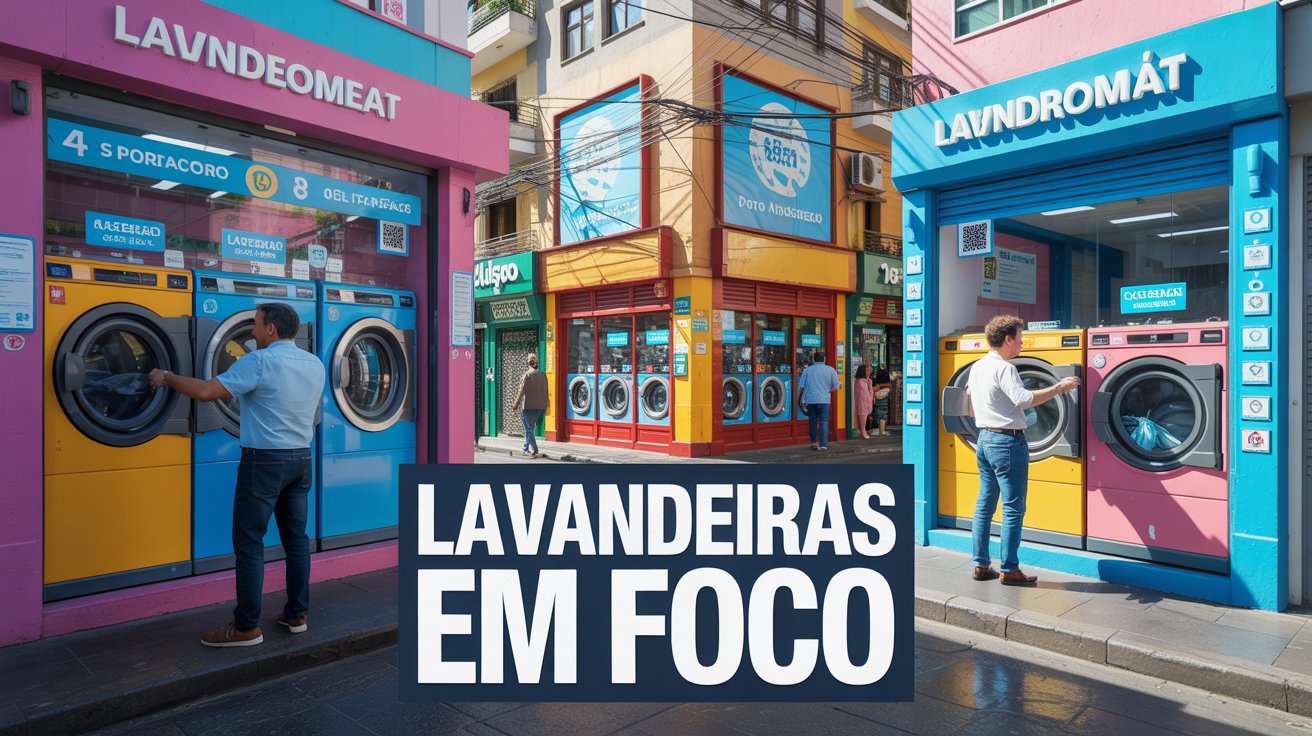
Accelerated Expansion of Self-Service Laundries Catches Investors’ Attention, but Reveals Behind the Scenes of Intense Competition, Seasonality, and Hidden Challenges in the Routine of Entrepreneurs and Users, Especially in Porto Alegre.
The accelerated growth of self-service laundries in Porto Alegre, especially in 2025, has drawn the attention of investors and consumers.
Inspired by the model of modern barbershops, this sector is taking over the neighborhood store space with an innovative concept.
Automated laundries, operating without staff and fully digitally, have become a new commercial phenomenon in the gaúcha capital.
-
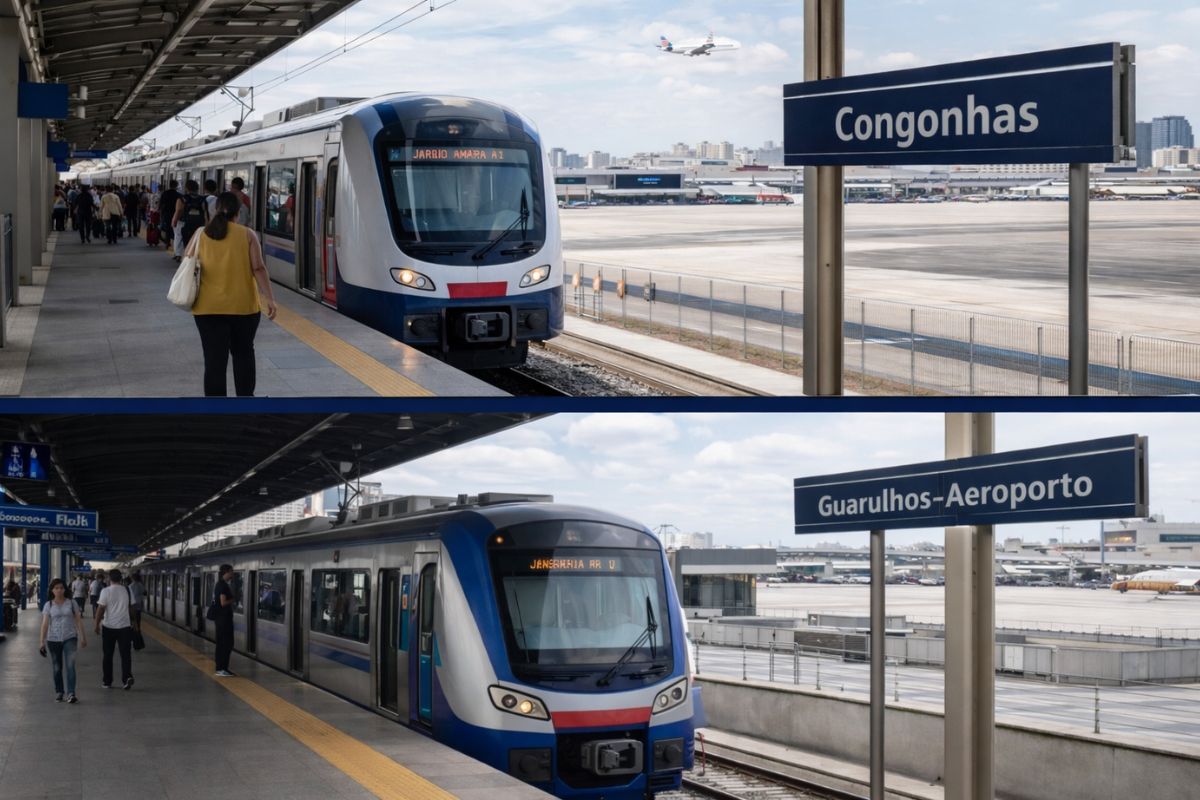
São Paulo has connected its two airports by rail for the first time in history, and now you can travel by train from Congonhas to Guarulhos for just R$ 5.40. However, the journey requires four transfers, takes about two hours, and only operates during a narrow time window that almost no one can use.
-
The savings of Brazilians are depleting: savings accounts recorded the third consecutive month of withdrawals, with over R$ 41 billion taken out in the first quarter of 2026, the largest outflow in an entire year.

-
Curitiba will have a direct flight to Europe starting in July, and for the first time in history, Paraná will have a continuous air connection with Europe, saving three hours of travel for passengers who previously needed to connect in São Paulo.

-
The federal government will cancel Bolsa Família and other benefits for millions of Brazilians who do not update their CadÚnico in 2026, and the new system already cross-references data with the Federal Revenue Service in real time to identify those who are irregular.

Data from the Brazilian Service of Support for Micro and Small Enterprises (Sebrae) indicates that 73 laundries were opened in Rio Grande do Sul in 2025 alone, 17 of which are in Porto Alegre, according to a report published by Zero Hora.
However, the scenario reveals both opportunities and challenges that are not easily visible to the public.
Behind the Scenes of Automated Laundries
At the center of this transformation, the sector faces intense competition between independent entrepreneurs and franchisees, as well as operational challenges that often go unnoticed by those merely observing the stores’ activity.
The explosion of openings, driven by the promise of simplified management and low operational costs, has brought with it fierce competition and reports of financial crises among some owners, according to an investigation by the newspaper Zero Hora.
According to Adriano Vescovi, 37, who opened his first unit after discovering the self-service model in the Northeast, the initial financial return was encouraging, but reality changed quickly.
He invested independently, covering the cost of industrial machines, maintenance, branding, and supplies, without the backing of a franchise.
“In the beginning, it was very good, but then the franchises arrived. In less than three months, seven laundries opened around my store,” he says in an interview with Zero Hora.
The sudden increase in competition, especially from franchises, created an imbalance in the market, making it difficult for small entrepreneurs to stay afloat.
In addition to the competition, Vescovi cites the seasonality of the sector as one of the main hurdles: in winter, demand increases due to Porto Alegre’s humid climate, but in summer and during year-end parties, traffic decreases dramatically.
The entrepreneur also highlights high costs for products — such as detergent, which can cost up to R$ 1,000 per gallon —, recurring thefts, and technical failures, exacerbated by the automation of the stores.
“The store is fully automated. If the internet goes down, everything stops: payment, cameras, access to the machines. I’ve had cases of theft, customers with clothes locked in the machine, and I had to rush back to unlock,” he recounts.
In light of the scenario, Vescovi chose to return to a traditional laundry model, with full service, but is now trying to sell the stores, unsuccessfully.
“They are selling a dream. They say you just need to restock and walk away. But the reality is different,” warns the entrepreneur.
Franchises and Strategy: Support and Location
On the other hand, some see the self-service laundry segment as a promising market, provided that the investment is made with the support of a consolidated franchise.
This is the case of former biology teacher Henrique Acosta Torales, 44, a franchisee of the AquaMagic chain, with a unit located in the basement of Shopping João Pessoa.
For him, the support provided by the franchisor — including competition analysis, marketing, technical support, and monitoring — was essential to his decision to enter the sector, as reported to Zero Hora.
Torales emphasizes the strategic importance of location.
“The rule is to have circulation. A neighborhood with only houses, for example, can’t sustain a laundry. Customers need to be nearby, passing through. Here, demand doubles or triples on rainy days, and we can operate freely,” he explains.
According to him, the presence of several laundries in the same region can even benefit businesses, creating a service hub, similar to what happens with restaurants and workshops.
The newspaper also pointed out that, despite the advantages, the sector faces low periods, especially in January and February, requiring financial planning to get through seasonality.
Change of Habits and Consumption
In addition to entrepreneurs, the routine of city residents also influences the growth of this business model.
For Fernanda Nery da Silva Trindade Bela Vista, 45, originally from Natal, Rio Grande do Norte, the convenience offered by self-service laundries has been essential for her adaptation to life in Porto Alegre.
Living temporarily in the city and accompanying her son to sports practices, she sought the convenience of automated stores as a way to optimize her time.
“Porto Alegre is very humid, and I don’t have much time to wash and dry clothes at home. So, I adopted this model for the convenience,” she reports.
The experience, however, varies depending on the regional context.
In Natal, Fernanda’s hometown, the climate favors the use of external areas for drying clothes, reducing the need for services like automated laundries.
The resident observes that, even on sunny days in the gaúcha capital, humidity and the lack of space in apartments make the domestic washing process difficult.
Opportunity, Saturation, and Market Trends
The growth of automated laundries is a direct result of the change in Brazilian families’ lifestyles, especially after the COVID-19 pandemic.
According to Jociane Ongaratto, an administrator and analyst at Sebrae-RS, the sector’s expansion is linked to the search for more convenience and outsourcing of daily tasks.
“The self-service model gained maturity in the post-pandemic era, when consumers began to value convenience even more,” she assesses, as per analysis published in Zero Hora.
The profile of investors has also changed.
Many are retirees, professionals in transition, or people seeking a secondary source of income.
The franchise model, according to Sebrae, continues to be the main engine of growth, as it provides training, planning, and support for those without prior experience.
However, the institution warns: no matter how automated the business is, the presence and monitoring of the entrepreneur are still indispensable.
“There’s this idea that you will set up a franchise and it will run itself, but that’s not 100% true. The human factor needs to be present,” emphasizes Ongaratto.
Lucas Roldan, a professor at the Pontifical Catholic University of Rio Grande do Sul (PUCRS) and a PhD in administration, analyzes that the “boom” of laundries in Porto Alegre is directly related to the verticalization of housing, the decrease in family sizes, and the absence of service areas in new apartments.
The expert also points out that, despite the growth, the sector is in the structuring phase and may suffer saturation if planning does not keep pace with the opening rate.
“It seems simple, but it requires working capital, organization, and analysis of the location. In summer, revenue plummets, and those who are unprepared may not survive,” he highlights.
How a Self-Service Laundry Works
The operation of automated laundries is simple:
- The customer chooses an available machine,
- Makes the payment — usually via app, card, or QR Code —
- Selects the desired washing type.
- The cycle usually lasts between 35 and 40 minutes, with a light indicator or message on the screen informing the start and end of the operation.
- The service caters to everyone from those who don’t have a machine at home to those seeking convenience amid a busy routine.
Self-Service Laundries: Solid Trend or Bubble Risk?
With low operational costs, rapid expansion, and changes in consumption habits, automated laundries seem to have filled the space left by other neighborhood businesses.
However, in light of the increasing competition, seasonality, and management difficulties, the question remains:
Will the self-service laundry sector be able to maintain itself as a solid trend or is it on a path to saturation, like other urban fads?








-

-

2 pessoas reagiram a isso.