





 Portuguese
  English
  Spanish
  4 min of reading
  0 comments


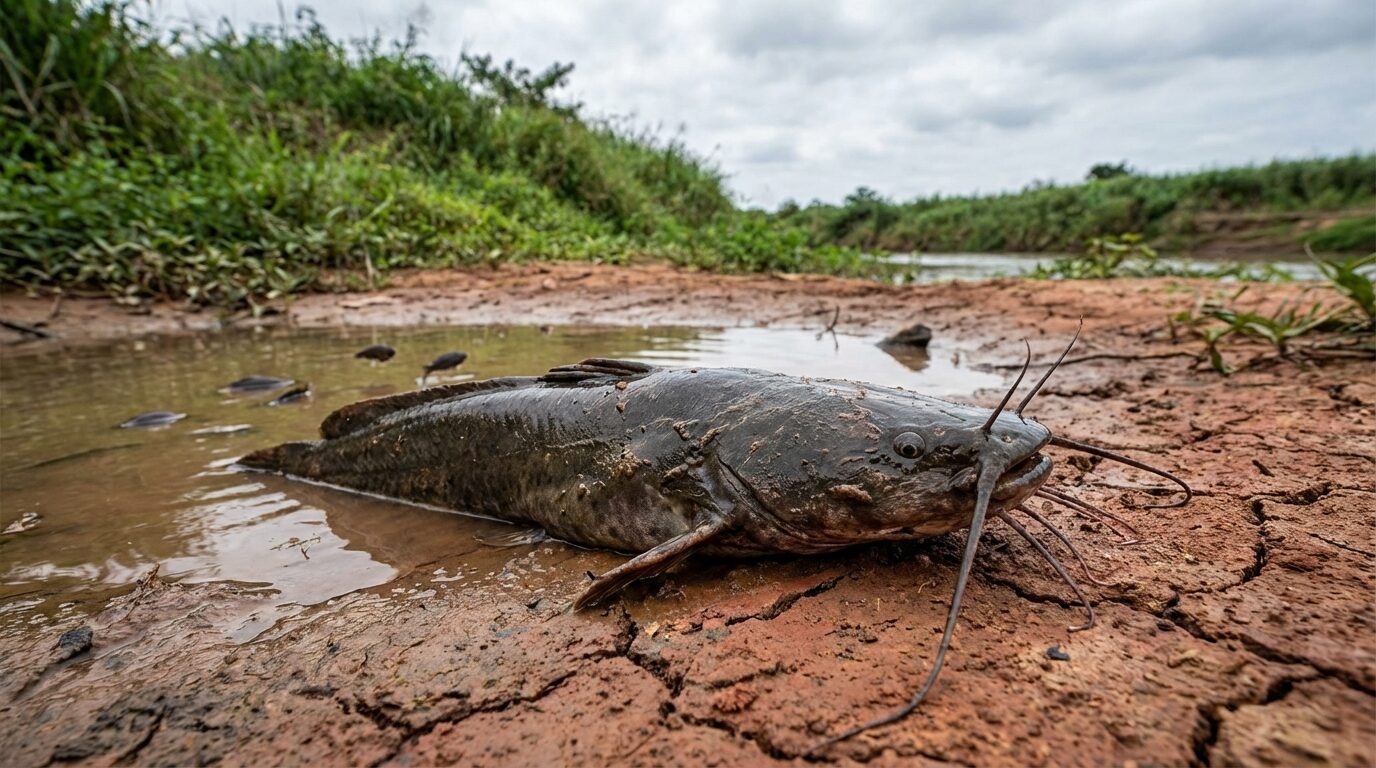
Impact of African Catfish in Brazil, Invasive Species That Migrates on Land and Resists Water Pollution, Threatens Native Fauna.
A fish capable of migrating on land, breathing outside water for hours, and surviving in mud and sewage is spreading through rivers and ponds across the country. This is the African catfish (Clarias gariepinus), a voracious predator that escaped from farms and is now putting pressure on native biodiversity.
Introduced for fish farming in the late 1980s, the animal gained ground in several basins and adapts to degraded environments where most species cannot survive. Authorities and researchers treat the case as high biological risk, with alerts for containment and management.
According to Embrapa Fisheries and Aquaculture, exotic species in aquaculture require strict biosecurity to prevent escapes and impacts on adjacent rivers. The advance of the African catfish exposes past failures and the urgency for effective control now.
-
New Zealand builds a shimmering building that vibrates, featuring a 62-seat cinema, moving sculptures, and an environment where sound, light, and energy are felt in the body.

-
Two colored cubes of 2.5 m transform a public bathroom into a selfie spot in Western Australia, costing up to 75% less than traditional construction and helping to reduce vandalism in public spaces.

-
Santa Catarina produces up to 7 times more than it consumes in some sectors, and its century-old industries founded by grandparents and great-grandparents now compete on equal footing with Germany and the United States in the international market.

-
U.S. war giant weighing 9,600 tons and equipped with long-range missiles is sent to the Atlantic to protect global internet and hunt submarines.


Origin and Biology, How the Catfish Became a Survival Machine
Native to rivers and swamps of Africa and the Middle East, the African catfish thrives in low-oxygen waters. According to FishBase and literature on the Clariidae family, it possesses an accessory respiratory organ that allows it to capture oxygen from the air, explaining its resistance in shallow pools and mud.
The scaleless body, covered in mucus, reduces friction and aids in gas exchange when the skin remains moist. The sensory barbels act like a radar on the murky bottom, locating buried prey.
The pectoral fins have serrated spines used for support when crawling on moist terrain, a behavior that facilitates migration between pools and ponds. There are reports of painful injuries caused by these spines in fishermen, which reinforces the need for careful management.
From Fish Farming to the River, How the Exotic Species Spread Through Brazil
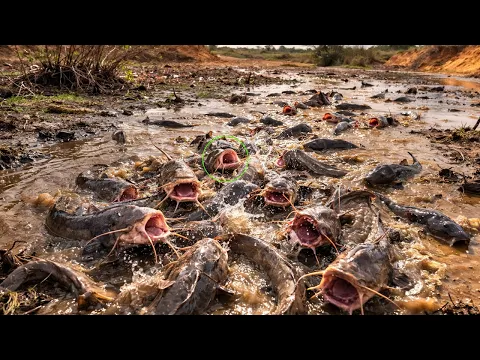

In Brazil, the first batches arrived with the promise of being the beef of the waters, with meat that has few bones and good performance in captivity. According to technical publications from Embrapa, the introduction occurred for commercial purposes in the late 1980s, with initial records in Minas Gerais and rapid spread throughout the Southeast states.
Over time, some fish escaped during floods or were released when farmers abandoned tanks. The journey resembles that of tilapia, another exotic species that left farming structures and colonized natural environments.
Without natural predators in many basins, the African catfish found a favorable scenario. The combination of hardiness, rapid growth, and high fecundity completed the invasion equation.
Environmental Impacts, From the Top of the Food Chain to the Turbidity That Suffocates Lakes
The African catfish is a top predator in the environments it establishes itself, consuming native fish, crustaceans, amphibians, and eggs. Studies on invasive exotic species cited by ICMBio indicate that introduced predators can collapse nurseries and local trophic networks by competing and preying on a large scale.
In addition to direct predation, the habit of stirring up the bottom suspends sediments, clouds the water, and blocks sunlight, hindering photosynthesis of aquatic plants and algae. When turbidity remains high, the base of the ecosystem weakens and the lake loses oxygen, favoring collapses.
Abundant reproduction multiplies the problem. A single female can release tens of thousands of eggs per spawning, and larval survival increases significantly when natural enemies are absent, accelerating the population explosion.
Brazilian cases with other species show the extent of the risk. The tucunaré, native to the Amazon, when introduced into reservoirs in the Southeast and Midwest, altered local stocks; and the pirarucu, sent to basins in the Northeast, also established itself with effects on the fauna, as ICMBio recalls when addressing exotics outside their natural distribution area.
Control and Biosecurity, What Producers and Fishermen Need to Do Now
Environmental agencies and the aquaculture sector recommend reinforced physical barriers, appropriate screens, and closed recirculation systems to prevent any contact with waterways. Embrapa and federal biosecurity standards emphasize raised tanks and management with traceability as minimal conditions for responsible production.
There are also farming lines with sterile hybrids, which reduce the reproductive risk in case of escapes, although they require better quality water and incur higher costs. The authorities’ message is clear, according to ICMBio, the precautionary principle should guide the management of high-risk exotics.
In natural environment control, the recurring guidance is not to return the live African catfish to the water after capture. In polluted areas, however, it is prudent to avoid consumption, as fish living in contaminated sediments may accumulate heavy metals, warns Brazil’s sanitary surveillance in technical notes on food safety.
Meanwhile, commercial production remains viable when there is total biosecurity. Nigeria leads the farming of Clarias gariepinus in Africa and is among the largest producers in the world, according to FAO in 2022, showing that the model can be safe with appropriate technology and oversight.
Join the Debate Have you encountered the African catfish in your area, and do you think controlled farming should continue or be completely banned near natural basins? Share your experience, report occurrences, and tell us which measures you consider most effective to protect our rivers. Your comment helps map the extent of the problem and pressure for better solutions.







-

-

-

-

-

30 pessoas reagiram a isso.