





 Portuguese
  English
  Spanish
  4 min of reading
  2 comments


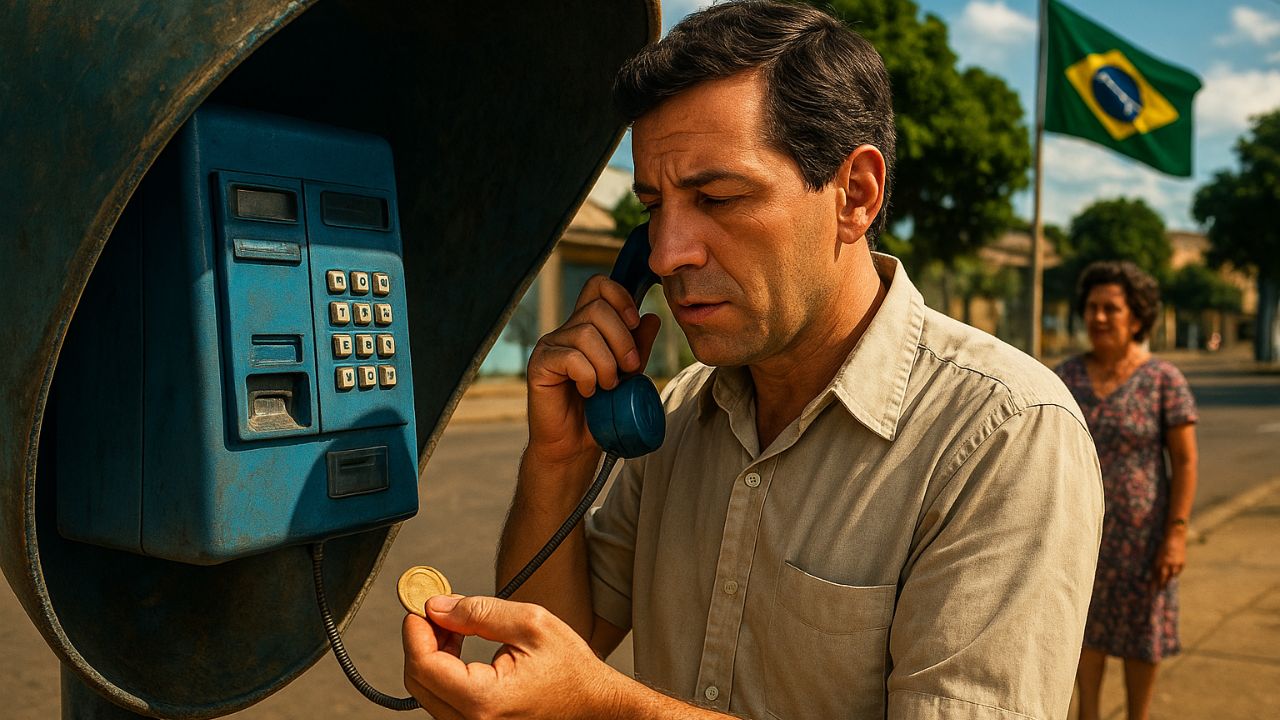


Before The Pocket Internet, A Long-Distance Call Was A Family Event And Having A Landline Was A Tax-Declared Asset, Often More Expensive Than A Car.
In Brazil a few decades ago, communication was a universe of rules, costs, and rituals that are unimaginable today. Getting a landline was a process that could take years and cost thousands of dollars, turning the device into a true asset. For most of the population, the reality was waiting at the payphone, with conversation time dictated by the short duration of a token.
This era of scarcity, marked by waiting and high investment, was the backdrop to one of the largest infrastructure transformations in the country: the privatization of the Telebrás system in 1998. Understanding how telephony functioned during this period is to revisit the history of a nation that shifted from connectivity as a luxury to connectivity as an essential part of daily life.
The Telephone As A Luxury Asset
Long before it became a basic service, having a landline at home was a status symbol and a significant investment. According to data gathered by the E-Investidor (Estadão), on the eve of privatization in 1998, the cost to acquire a landline could reach the equivalent of US$ 5,000. This amount placed telephony in a “elite service” category, comparable to buying a popular car.
-
“No one will make us change the Pix,” says Lula after the US report.

-
Lula responds directly to Trump and says that Pix is from Brazil and will not change under pressure from anyone, after a report from the United States pointed out the Brazilian payment system as an American trade barrier.

-
Amazon has just announced a new fee on all deliveries, and your online purchases will become more expensive starting April 17, including for those buying from the United States here in Brazil.

-
He sold his share for R$ 4 thousand, saw the company become a giant worth R$ 19 trillion, and missed the opportunity of a lifetime.


The complexity didn’t stop at the price. The importance of the line was such that it needed to be declared on the Income Tax, listed alongside other assets like property and vehicles. As reported by E-Investidor, the scarcity of new lines was so great that it fostered a parallel market where owners rented their phones to third parties, a practice unthinkable by current standards of public utility services. It was the logic of an asset, not of a service.
The Voice Of The Street: The Dominance Of The Payphone And The Token
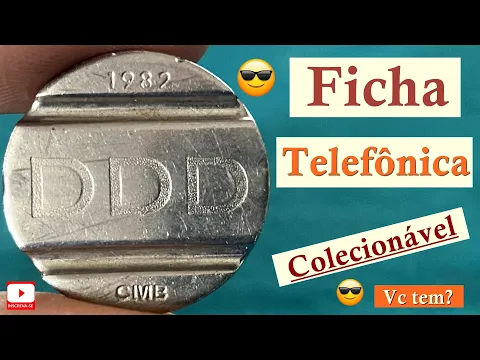
For the vast majority of Brazilians who did not have a line at home, communication depended on an iconic national invention: the payphone. Distributed throughout the cities, public phones served as the main point of connection for millions of people. However, access was mediated by a small piece of metal that became the currency of conversation: the phone token.
The economy of time was rigid and imposed an almost brutal discipline on communication. A report from the portal Nova Friburgo em Foco detailed this microeconomy: a token for a local call allowed a conversation of approximately three minutes. For a long-distance call, the same token guaranteed only eighteen seconds of talk time. Speaking for longer required agility to insert token after token, hoping the call wouldn’t drop in the middle of an important sentence.
The Privatization Of 1998: The Auction That Changed Everything

The state telephone system, unable to keep up with demand and suffering from a lack of investment, became a bottleneck for the development of Brazil. The solution came with the auction of the Telebrás System on July 29, 1998, an event that dismantled the state monopoly and opened the doors to private capital, forever changing the telecommunications landscape in the country.
According to information from Wikipedia about privatization, the system was divided into 12 new companies, including fixed line, long distance, and mobile phone operators. The auction attracted international giants and moved over R$ 22 billion. Among the most emblematic negotiations, the Spanish company Telefónica acquired Telesp (which served São Paulo) for R$ 5.78 billion, while the American MCI bought Embratel for R$ 2.65 billion, amounts that demonstrated the enormous repressed market potential.
The Impact: The End Of Waiting To The Explosion Of Cell Phones
The effect of privatization for the consumer was almost immediate. The years-long waiting list to install a landline was reduced to a matter of days. The cost, which used to be in the thousands of reais, plummeted drastically, making access much more democratic. Competition among the new operators drove network expansion and service improvement at an unprecedented speed.
Although the initial goal was to resolve the historical deficit of fixed-line telephony, the greatest legacy of the change was paving the way for the mobile revolution. With the opening of the market, Brazil saw the number of cell phones explode, jumping from about 7.4 million in 1998 to over 250 million two decades later. Mobile technology enabled millions of Brazilians to have their first phone, “skipping” the era of the landline and entering directly into the era of personal and portable connectivity.
Did you live through this era of tokens and expensive phones? Do you think the shift to the current model was entirely positive? Leave your opinion in the comments, we want to hear from those who experienced it firsthand.






Sim, eu vive nessa época e pude ver com meus próprios olhos a mudança que ocorreu quando da privatização. Lembro-me de tudo que foi falado nessa reportagem, das dificuldades de se obter um telefone fixo, das filas infinitas para se obter um, dos orelhões de fichas e depois os de cartões, o desespero pra se fazer uma ligação, quando se encontrava um aparelho operando, pois, já, naquela época, já tínhamos os vândalos, os irresponsáveis, os imbecis que depredavam os aparelhos, partindo os fios ou até mesmo danificando os mesmos, assim foi nosso dia a dia pra se conseguir falar com alguém. Às vezes, acontecia do orelhão está fazendo ligação direta, aí era uma festa, a conversa era prolongada, as filas enormes, todos queriam tirar proveito naquela oportunidade, quem estava na vez que esperasse, era bom. Lembro ainda do orelhão que usei pra falar com a minha futura esposa, para apaziguar uma briga que tivemos, foi na Rua Augusto Vasconcelos, em Campo Grande, em cima do que é hoje o tunel, sempre que passo por ali me lembro. Foi uma época difícil que acabou, mas tenho várias recordações. O tempo passa….
Sim, vivi tudo isso esperei 5anos para ter um aparelho fixo em minha casa, tempos difíceis. Acho que a mudança fui muitíssima positiva.