





 Portuguese
  English
  Spanish
  5 min of reading
  4 comments





Unprecedented Public Transport Technology Will Be Tested in Brazilian City with 100% Electric Vehicle, Without Tracks, Capable of Achieving High Speed and Transporting Hundreds of Passengers on Marked Urban Routes.
The Curitiba Metropolitan Region is preparing to receive, starting in November 2025, an unprecedented innovation in Brazilian public transport: the Urban Digital Tram, known as BUD.
Manufactured in China, the 100% electric vehicle will be tested between the Pinhais Terminal and the São Roque Terminal, in Piraquara, creating a new scenario for urban mobility in the region.
The official announcement was made on July 30 by the governor of Paraná, Ratinho Júnior, through social media, highlighting the transformative potential of the project.
-
The institute that trained the greatest aerospace engineers in Brazil has just opened its first campus outside São Paulo after 75 years: ITA Ceará will have R$ 445 million, new courses in energy and systems, and classes are expected to start in 2027.
-
Luciano Hang, owner of Havan, goes to Juiz de Fora after the tragedy in February, brings R$ 1 million, hands out R$ 2,000 cards, and donates up to R$ 15,000 to victims in the region.

-
The Brazilian passport allows legal residence in dozens of countries without the need for a prior visa, and most Brazilians are unaware that they can apply for residency directly upon arriving in nations in South America, Africa, and even Europe.

-
Petrobras sends a message to Brazilian truck drivers after fuel collapse and reveals plan to have 100% domestic diesel.

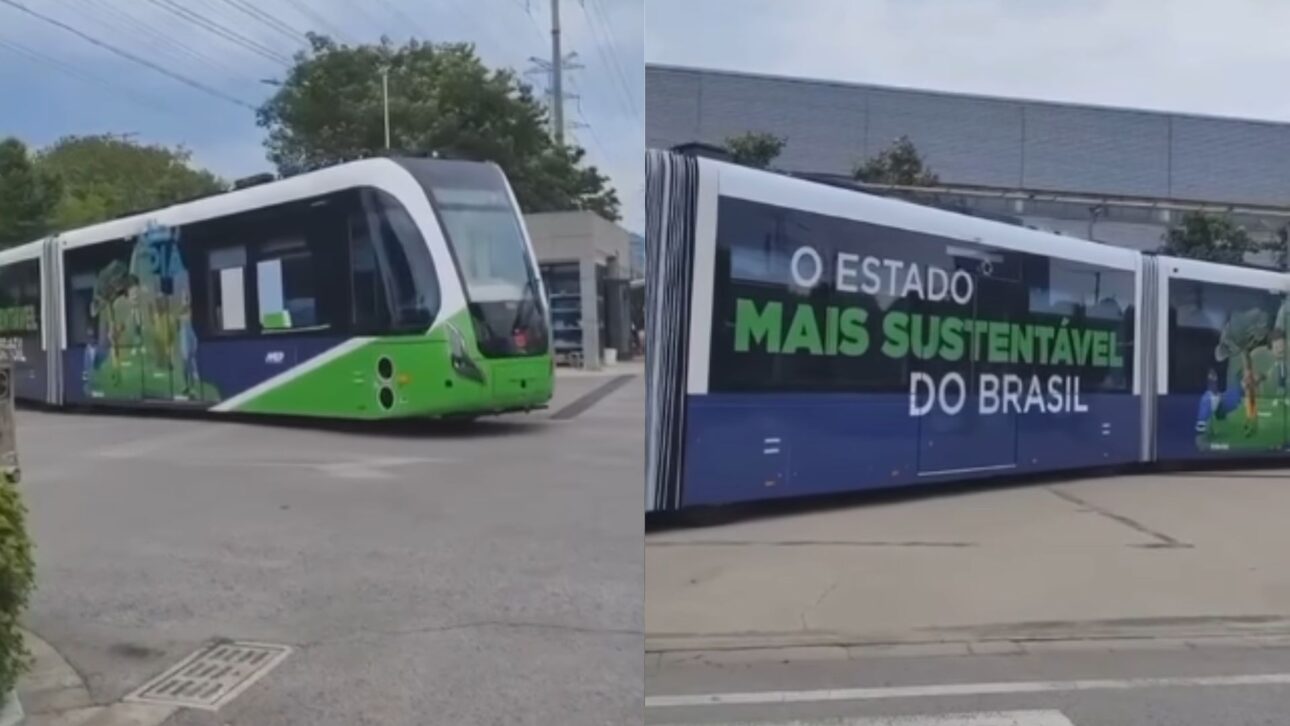
The Urban Digital Tram does not use traditional tracks, as is the case with subways or conventional trains.
Its operation is based on Digital Rail Transit (DRT) technology, which employs magnetic induction to guide the route over asphalt, similar to a surface subway, but without the need for physical tracks.
The model being tested, developed by the Chinese manufacturer CRRC Nanjing Puzhen, has three coupled cars, able to transport up to 400 passengers per trip and reach a maximum speed of 70 km/h, according to information from the manufacturer.
The state investment in this experimental phase is R$ 6 million, allocated for the implementation of infrastructure, signaling, transportation, and other auxiliary services necessary for the initial operation of the Urban Digital Tram.
The testing period has been set to last 15 months, a time considered sufficient to assess the technical and operational feasibility and the public’s reception of the innovation.
The Paraná Metropolitan Affairs Agency (AMEP) coordinates the project, working alongside state agencies to ensure integration with other modes and the safety of users.
Digital Tram Without Tracks: How the Innovative System Works
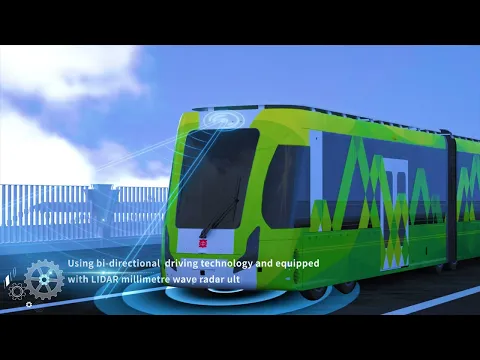
Unlike traditional subway or train systems, the Urban Digital Tram operates guided by sensors and cameras installed both on the vehicle and along the asphalt route.
The Digital Rail Transit technology allows for the precise movement of the vehicle along pre-determined routes, using magnetic lanes and advanced signaling on the asphalt.
There are no tracks, which reduces costs and facilitates implementation in already consolidated urban areas, minimizing structural impacts.
According to the manufacturer, the vehicle is designed to offer comfort, accessibility, and safety, with wide doors and space for people with reduced mobility.
Additionally, the DRT system contributes to the reduction of polluting gas emissions, as the Urban Digital Tram is fully electric.
The range, combined with the possibility of rapid charging, enhances the sustainable usage potential of the mode on urban routes.
According to industry estimates, the service life of the BUD can reach 30 years, making the initial investment more advantageous for public administrations interested in renewing their public transport fleets.
Curitiba and Innovation: Reasons for Choosing the Region
Curitiba is internationally recognized for its tradition in public transport innovation, especially for the pioneering implementation of the express bus system known as BRT (Bus Rapid Transit), a model that has served as a reference for cities in various countries.
The choice of the Curitiba Metropolitan Region to begin testing the Urban Digital Tram reinforces this history by seeking solutions that combine technology, efficiency, and sustainability.
As highlighted by Governor Ratinho Júnior in a recent post, “the arrival of the Urban Digital Tram is an important milestone, as it places Paraná at the forefront of intelligent and clean public transport.”
The selected stretch for the first experimental operation connects the Pinhais Terminal, a neighboring municipality of Curitiba, to the São Roque Terminal, in Piraquara.
This route has been planned considering the passenger volume and the need for new alternatives to relieve traffic and improve mobility in the region.
There is still no official definition regarding the expansion of the system to other metropolitan stretches or to the capital, as the continuation will depend on the results and technical evaluation after the testing period.
Benefits of the Urban Digital Tram for the Population
The main advantage for users lies in the modernization of collective transport, with quieter vehicles, free from pollutants and capable of traveling at speeds higher than most urban buses.
The BUD offers even greater transport capacity per trip and shorter wait times at boarding points.
The absence of tracks allows for rapid adaptation of routes, increasing operational flexibility.
For the population of the Curitiba Metropolitan Region, this innovation represents an important step towards a more efficient, safe mobility aligned with global trends in sustainable transport.
According to experts, the use of electric vehicles like the Urban Digital Tram significantly contributes to air quality and the reduction of noise pollution in urban centers.
Moreover, the investment in cutting-edge technology in public transport strengthens the city’s image as a reference in innovative solutions for major urban challenges.

Future of Mobility: Expectations for the Digital Tram
The implementation of the Urban Digital Tram is seen as a promising bet for the future of mobility in the Curitiba Metropolitan Region.
If the tests are successful, there is the possibility of expanding the use of the mode to other strategic axes, meeting the growing demand for sustainable alternatives to traditional transport.
The state government, through AMEP, is already studying scenarios for potential expansions, but emphasizes that all steps will be based on technical results and evaluation of the impact on the population.
The arrival of the BUD opens the space for discussion about the role of new technologies in redesigning collective transport systems in Brazilian cities.
The potential for replication in other regions of the country will depend on the performance achieved in the Curitiba Metropolitan Region and the interest of public managers in adopting similar solutions.
With the introduction of the trackless digital tram, a new horizon for sustainable urban transport in Brazil emerges, aligned with best international practices and a commitment to innovation.
The experience of Curitiba will serve as a reference for other municipalities seeking efficient and sustainable alternatives for the mobility of their populations.
Will this innovative initiative inspire other Brazilian cities to invest in sustainable technologies to revolutionize public transport? The future of urban mobility might be about to change.







Qual a vantagem em relação a um ônibus elétrico???
Valeu Francisco Fortes .
Poucas palavras , falou tudo .
República das BANANAS é aqui , nada se termina no prazo ,é uma cueca ralo que transborda dinheiro . ACORDA POVO BRASILEIRO .
O Brasil é um país difícil de se entender. Enquanto ficamos debatendo anos após anos sobre o modal ferroviário, vemos o tempo passar e ñ avançamos, pior, ficamos atrasados a cada dia.
Vamos analisar um problema q sempre se fala em falta de recursos. Temos o Plano Nacional de Ferrovias avaliado em 100 bilhões de Reais p/investir em cerca de 5 mil km de ferrovias.
Isto daria p/fazer cerca de 6 ferrovias do porte da Transnordestina c/cerca de 1.750km, com orçamento de cerca de 15 bilhões, que já se arrasta por cerca de 20 anos, q ainda ñ se concluiu sequer o 1° trecho de cerca de 1.200 km.
Ou seja, falta de recursos é pura balela. Temos as chamadas EMENDAS SECRETAS, c/valores de 50 bilhões. Isto dava para fazer em 2 anos, uma Transnordestina, uma Fico e uma Fiol, etc, ou seja, dava p/financiar o Plano Nacional de Ferrovias c/pelo nenos 5 mil km de ferrovias e assim, as futuras ampliações q/serão necessárias p/expansão das ferrovias e outros modais c/hidrovias p/atender um país continental c/o Brasil. Só p/lembar, a China tem cerca de 200 mil km de ferrovias modernas. Enquanto o Brasil só tem cerca de 15 mil km. Há um século tínhamos 30 mil.
Quanto às EMENDAS SECRETAS, se fosse dividir em valores iguais entre os estados, daria cerca de 2 bilhões p/cada, ou seja, é muito dinheiro jogado no ralo.
O POVO BRASILEIRO TEM O DIREITO DE SABER P/ONDE VÃO OS RECURSOS DA ALTA CARGA TRIBUTÁRIA QUE PAGAMOS C/NOSSO SUOR E Q/OS RECURSOS VÃO P/RALO.
ENQUANTO O POVO NÃO SE CONSCIENTIZAR QUE TEM QUE SER PROTAGONISTA DAS DECISÕES POLÍTICAS, FICAR ESPERANDO QUE OS POLÍTICOS VÃO FAZER AS TRANSFORMAÇÕES QUE O PAÍS E POVO PRECISAM, ISTO NUNCA VAI ACONTECER, PORQUE OS POLÍTICOS SÓ TÃO PREOCUPADOS EM DEFENDER SEUS PRIVILÉGIOS QUE NUNCA SE ESGOTAM E CONSUMEM QUASE TODOS OS RECURSOS PUBLICOS E O PAÍS NUNCA SAI DO ATRASO DE 5 SÉCULOS.