





 Portuguese
  English
  Spanish
  5 min of reading
  0 comments



Lula’s reaction to the United States report places Pix at the center of the debate on digital sovereignty, financial regulation, and market space in the payments sector, amid external criticism of the role of the Central Bank and the advancement of the system in Brazil.
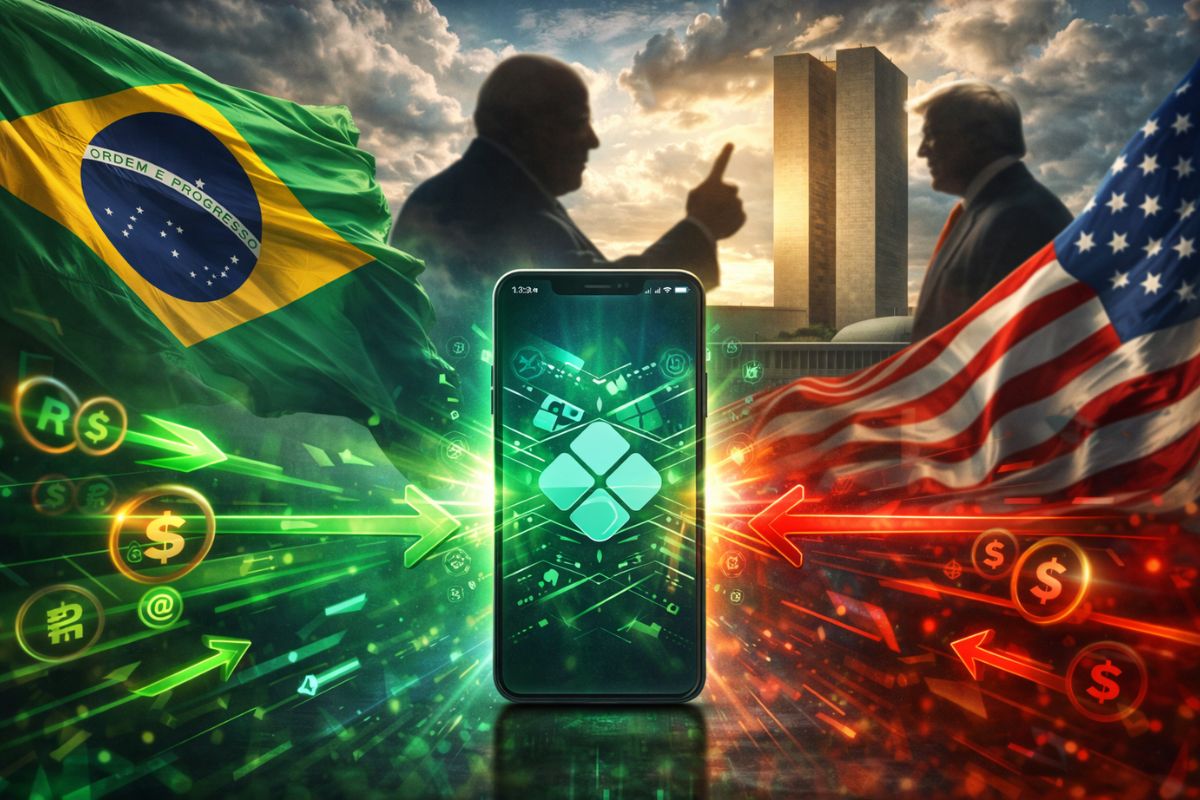
President Luiz Inácio Lula da Silva stated in Salvador that “no one is going to make us change Pix”, in response to U.S. criticisms of the Brazilian instant payment system.
The statement was made this Thursday (02), during an agenda related to the works of the VLT in the capital of Bahia, one day after the U.S. government included Pix in its annual report on trade barriers.
What motivated Lula’s reaction to Pix
Lula’s statement came after the release of the National Trade Estimate Report, a document from the Office of the United States Trade Representative, the USTR.
-
Lula responds directly to Trump and says that Pix is from Brazil and will not change under pressure from anyone, after a report from the United States pointed out the Brazilian payment system as an American trade barrier.
-
Amazon has just announced a new fee on all deliveries, and your online purchases will become more expensive starting April 17, including for those buying from the United States here in Brazil.

-
He sold his share for R$ 4 thousand, saw the company become a giant worth R$ 19 trillion, and missed the opportunity of a lifetime.

-
Elon Musk’s Starship megafrocket puts $8 billion at risk, raises alarms in the market, and could affect technology, mining, and space internet startups in the coming years.

In the section dedicated to Brazil, the report expresses concern from U.S. business sectors regarding the fact that the Central Bank created, operates, holds, and regulates Pix, in addition to pointing out alleged preferential treatment for the system compared to private electronic payment providers.
In response to the document, the president defended the public nature of the tool and stated that the system will continue to be managed by Brazil.
According to Lula, what the government needs to do is expand and improve the service, without giving up a model that, in the assessment of the Planalto Palace, has already consolidated itself in the daily life of the country and gained national scale since its official launch in November 2020.
The statement was direct.
“Pix belongs to Brazil and no one is going to make us change Pix, for the service it is providing to Brazilian society.”
He then added that the system can be improved to better meet “the needs of the women and men of this country,” indicating that the government is not considering discontinuing or altering the tool.
U.S. report cites trade barriers and electronic payments


The criticism from the United States comes at a time of broader trade tension.
In the report published on March 31, 2026, the USTR mentions Brazil on different fronts and argues that Brazilian regulatory measures and public policies may affect U.S. economic interests.
In addition to Pix, the document cites issues such as rules for digital platforms, data protection, regulatory requirements, and other areas considered sensitive in the bilateral relationship.
In the specific case of the payment system, the objection raised by the U.S. government is that the Central Bank accumulates functions as creator, operator, and regulator of the arrangement.
According to the authors of the report, this raises doubts about the competitive conditions faced by foreign companies operating in electronic payments, especially global private operators and intermediaries.
Brazilian government defends public model of the Central Bank
The Brazilian government, however, maintains an opposing interpretation.
The official assessment is that the Central Bank’s actions have ensured standardization, operational security, and broad access to the system, without discrimination against foreign companies.
The Brazilian defense also argues that the model has reduced transfer costs and increased financial inclusion, which has helped make Pix one of the main payment infrastructures in circulation in the country.
The numbers from the Central Bank itself reinforce this significance. The monetary authority reports that Pix has already reached more than 170 million registered individuals and surpassed 7 billion transactions just in January 2026.
The volume helps explain why the topic gained immediate political dimension in Brazil and why the president’s response sought to associate the system with regulatory sovereignty and public interest.
Pix advances in Brazil and increases the political weight of the tool
During the agenda in Salvador, Lula linked the external criticism to the relevance that Pix has gained in the payments market.
Without detailing companies or naming firms, the president stated that there is discomfort among U.S. economic interests regarding the advancement of the Brazilian tool.
The reading made by the government is that the system created a low-cost and high-reach alternative in a sector historically occupied by large private groups.
This is not the first time the topic has come onto the U.S. radar.
In July 2025, the United States had already announced a broader trade investigation into Brazilian practices considered allegedly unfair, including aspects related to digital trade and electronic payment services.
At that time, the Itamaraty responded that Pix was structured to ensure efficiency and security in the financial system, without discriminating against foreign agents.
Salvador becomes stage for political response on digital sovereignty
Lula’s reaction in Salvador also served to mark a political position on a subject that encompasses economic, technological, and diplomatic dimensions.
By treating Pix as a national asset, the president sought to reinforce the message that Brazil does not intend to review an instrument that is now used in transfers between individuals, retail purchases, bill payments, and receipts by companies of various sizes.
At the same time, the presidential speech avoided indicating any rupture in bilateral relations.
The tone was one of contestation to the content of the report, but accompanied by the defense of continuous improvement of the service.
In practice, the government’s message was that the tool will continue to evolve within Brazilian regulation, without yielding to external pressure on the central architecture of the system.
The context of the statement also gave additional visibility to the topic.
Lula was in Bahia to oversee deliveries and works of the New PAC in the area of urban mobility, highlighting the implementation of the VLT in Salvador.
Still, the repercussions of the U.S. commercial report shifted the political focus of the event and led the president to address the issue publicly in front of supporters and local authorities.
How Pix gained strategic dimension in the financial system
The centrality of Pix in the presidential response stems not only from its mass adoption but also from the symbolism that the tool has gained since its creation.
Officially launched on November 16, 2020, the system was conceived by the Central Bank as an open infrastructure for instant payments, available at all times.
Since then, it has become one of the main means of transferring resources in the country and has increased competition in parts of the financial sector.
In the government’s assessment, it is precisely this combination of widespread use, public control of the infrastructure, and capacity for innovation that explains the resistance to any attempt to classify Pix as a trade barrier.
Therefore, Lula reacted assertively, rejected the premise of the U.S. report, and reiterated that the priority will be to improve the tool, not to replace it or reduce its reach.









Seja o primeiro a reagir!