





 Portuguese
  English
  Spanish
  2 min of reading
  0 comments


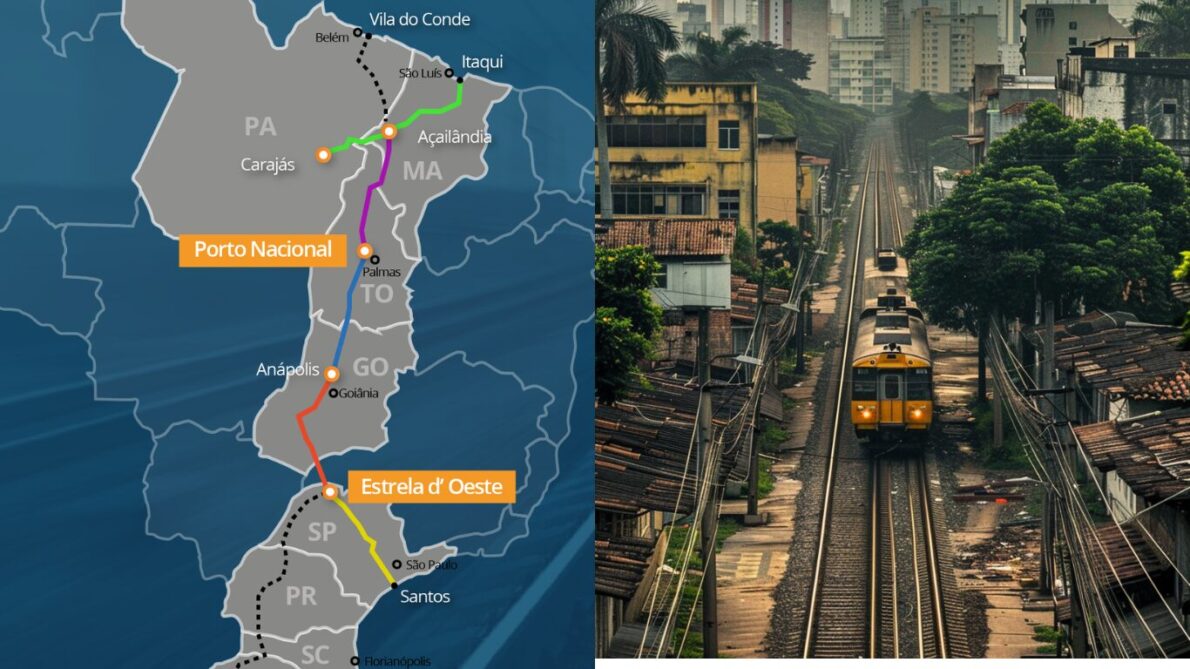
The Railway Is About 2,120 Km Long and Connects 9 Brazilian States with the Aim of Assisting in the Transportation of Agricultural and Mineral Products!
Brazil, with its vast territorial extent and geographic diversity, faces significant logistical challenges. However, to overcome these barriers and boost economic development, the country invests in the Northern-Southern Railway, an ambitious endeavor that connects nine Brazilian states. In this article, we will explore the details of this smart project and its impact on agricultural and mineral transportation, according to projetourbano.
The Northern-Southern Railway in Numbers
- With about 2,120 km in length, the Northern-Southern Railway is one of the largest in Brazil.
- Its total investment exceeded R$ 11 billion, demonstrating the country’s commitment to rail infrastructure.
- The construction of the railway began in 1987, but it has not yet been fully completed, highlighting the challenges faced in the process.
Draining Agricultural and Mineral Production
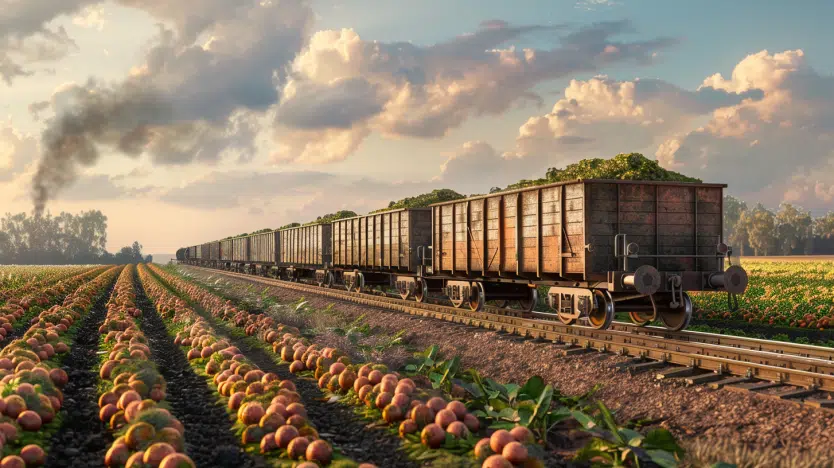
- The central aim of the Northern-Southern Railway is to enable the efficient transportation of agricultural and mineral production.
- Regions such as the Midwest and North, rich in commodities, will be able to access ports in the Northeast and Southeast more quickly and economically.
- The railway extends across 13 sections, connecting cities like Barcarena (PA) to Estrela do Oeste (GO), creating a strategic route for the drainage of these products.
Challenges and Opportunities
- The expansion of the railway network is crucial for Brazil’s development, but it faces obstacles such as bureaucracy and financing.
- The private initiative is taking on the high-speed train project that will connect São Paulo to Rio de Janeiro, thus showcasing the public-private partnership as a solution.
- Rail transportation is environmentally more sustainable, contributing to the country’s climate goals.
Would It Be a Good Option to Invest in This Project Again?
Therefore, the Northern-Southern Railway represents a milestone in national integration and logistical optimization. With appropriate policies and continuous investments, Brazil could have a modern and efficient railway system, uniting its regions and boosting economic growth.
Inscreva-se
Entrar
0 Comentários
Mais recente










Seja o primeiro a reagir!