





 Portuguese
  English
  Spanish
  5 min of reading
  0 comments


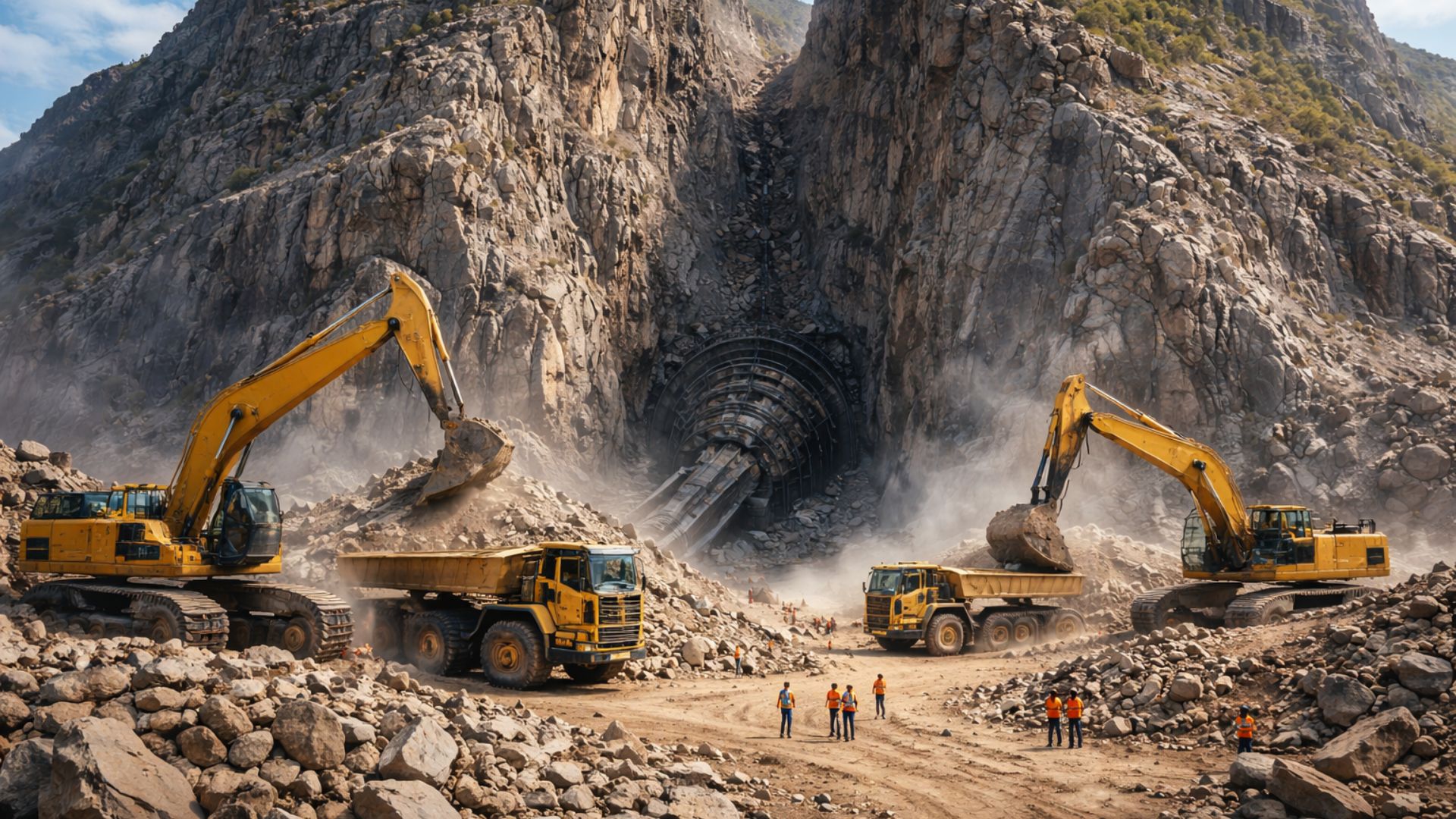
Unique Project on the Norwegian Coast Promises to Reduce Navigation Risks and Logistical Delays in a Notorious Stretch for Agitated Seas, But Faces Political Dispute and Budget Pressure.
The west coast of Norway concentrates an essential maritime corridor for the country’s economy, but an exposed stretch in the Stad region often imposes delays and risks that affect routes, schedules, and safety.
To alleviate this bottleneck, the Norwegian government planned to open a navigable tunnel that crosses the peninsula and bypasses the most battered sea by local winds and currents.
Maritime Bottleneck in Stad and Impact on Coastal Logistics
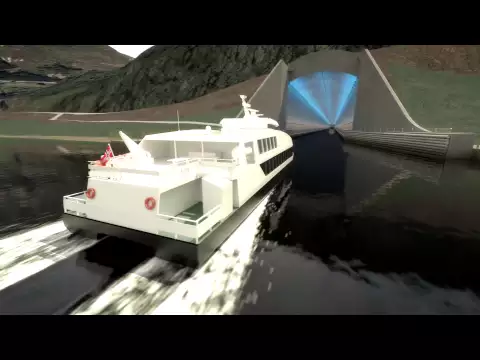
The project, known as Stad skipstunnel, was designed to create a controlled passage between two sides of the peninsula, avoiding the need to face a point where meteorological conditions and underwater terrain worsen the state of the sea.
-
With 55 km over the sea, a cost of US$ 20 billion, and enough steel to build 60 Eiffel Towers, China’s largest project has connected Hong Kong, Zhuhai, and Macau in a colossal bridge that defies the logic of engineering.
-
A trick with joint compound transforms a Styrofoam ceiling into a plaster-like ceiling: leveled panels, wires and mesh at the joints, sand, paint, and change the environment while spending little today.

-
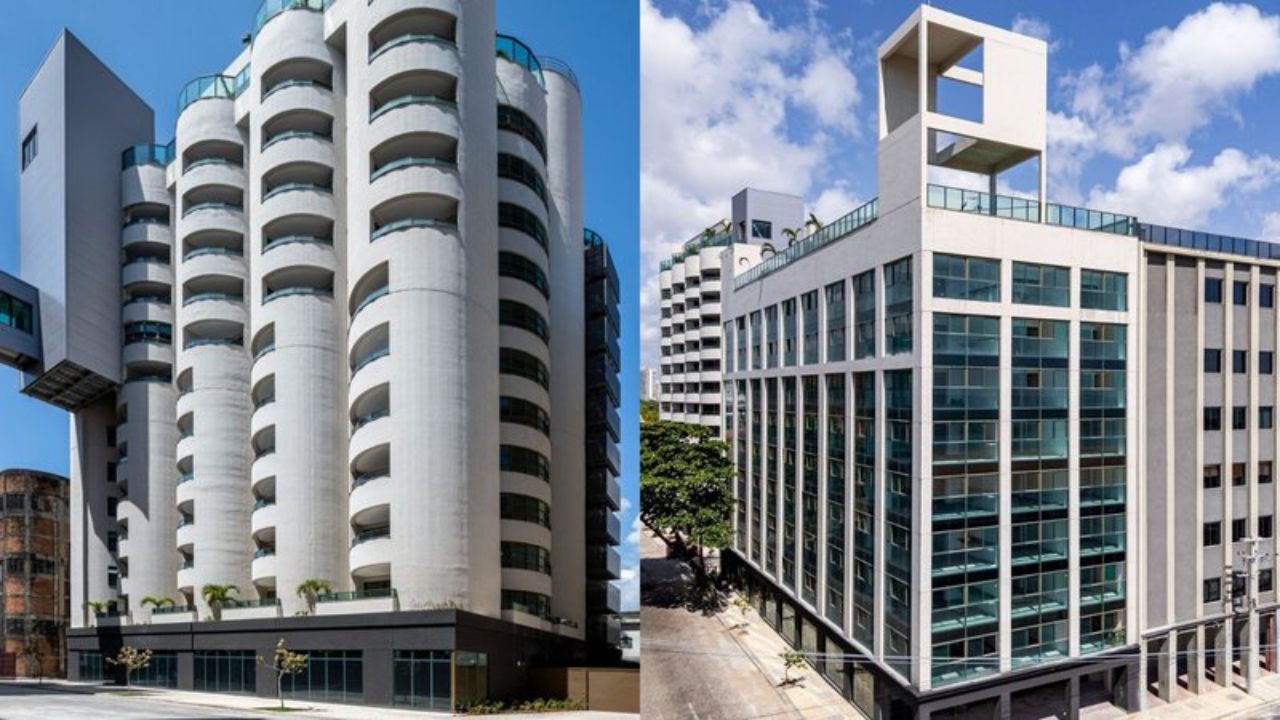
Abandoned for over a decade, century-old silos in the state of Recife have been transformed into 251 apartments with curved walls in one of the most complex retrofits ever done in Brazil.
-
Inspired by millennia-old structures, a “differentiated” roof with 463 levels and a capacity for 9,000 people was built on top of a building in India; the tiered roof is almost a kind of giant garden of 9,000 m², reducing energy consumption and promoting interaction among students of Prestige University.


The proposal is to operate as an “alternative route” on critical days, allowing more predictable crossings with less dependence on short windows of time.
Why the Stad Peninsula Challenges Navigation in Norway

The maritime area around Stad is described by Norwegian authorities as one of the most exposed along the coast, partly due to the lack of islands that serve as natural protection against wind and wave systems.
In practice, this can mean long waiting periods for coastal vessels and interruptions in routes that connect communities and production centers.
Technical and historical reports about the stretch also highlight a history of accidents and casualties over the decades since the post-war period, associated with rapid changes in sea conditions and complex currents.
Although the numbers vary depending on the scope and source, records compiled in public summaries mention dozens of deaths since the end of World War II.
What the Stad Ship Tunnel Will Be Like and the Dimensions of the Corridor
The solution discussed for years proposes to excavate a corridor with dimensions planned for the fleet serving coastal navigation, with an internal height of around 37 meters and a width close to 26 meters, according to recurring technical descriptions of the project.
The alignment was conceived to allow the passage of medium-sized vessels, within limits defined by the design.
To open this path, estimates released by authorities and reports associated with the project indicate the removal of approximately 3 million cubic meters of rock, a volume that turns the construction into a continuous operation of excavation, transportation, and stabilization.
The engineering plans to keep the tunnel dry during construction and only then carry out controlled flooding, with temporary barriers at the ends.

The method does not merely consist of “drilling” the mountain as in a simple boring process because the priority includes controlling the geometry of the channel and reducing irregularities that would affect water behavior and maneuverability.
Therefore, the plan involves layered removal steps and surface treatment, combining controlled explosions, large machinery, and cutting techniques for finishing.
Costs, Budget, and Political Impasse in the Project
Even before full execution, the budget became the main point of political and administrative tension, as estimates grew over the years due to inflation, geological complexity, and evolving requirements.
In October 2025, the Norwegian government announced, in the context of the national budget for 2026, the proposal to halt the project’s progress due to the cost leap, leaving the final decision to Parliament.
The figures disclosed at this stage indicated an increase to around NOK 9.4 billion, approximately 808 million euros, above a previous range close to 430 million euros in public references used in the debate.
The official guidance was to put the initiative on hold while the budget scenario was evaluated and its compatibility with the State’s priorities was assessed.

Nevertheless, the discussion did not conclude, as part of Parliament reacted to the attempt to freeze the project and pressed for continued negotiations, arguing that the construction meets a structural need for the coast.
Specialized coverage reported that the Legislature sought to keep the process alive, requesting that the coastal authority advance in negotiations to obtain a final price and cost-reduction measures.
Exports and the Importance of Norwegian Maritime Transport
Norway maintains a significant presence in international seafood trade, and logistical regularity is treated as a strategic factor, especially for routes that rely on coastal navigation.
Public data from the Norwegian sector council indicates that the country exported 2.8 million tons in 2025, with a record value, and presence in over 150 markets, which helps to gauge the impact of chain delays.
From this perspective, the tunnel is presented as infrastructure to reduce uncertainties, decrease waiting periods, and enhance predictability, especially for vessels operating along the coast and providing regional cargo and transport services.
The design, however, was not intended for large ocean-going ships of global scale, as the project sets width and size limits compatible with the coastal fleet.
The operational proposal includes traffic control and signaling, precisely because it is a confined corridor with specific circulation rules, similar to flow management in critical infrastructures.
In practice, this means that safety now depends not only on rock shelter but also on navigation protocols, monitoring, and real-time coordination.

Tradition of Underground Engineering and the Logic of the Tunnel
Norway already has a tradition of underground works linked to mobility, and this engineering culture helps explain why the country considers it plausible to transfer part of the traffic into the rock at a specific point.
Instead of “beating the sea” with exposed structures, the logic of the Stad skipstunnel is to remove the crossing from the more unstable environment and place it in a protected channel.
At the same time, the advancement of the project depends less on technical willingness than on fiscal balance and political decision-making, as costs have become the center of public debate.
With the announced pause in the 2026 budget cycle and the parliamentary reaction to maintain negotiations, the future of the schedule became dependent on the ability to settle on a justifiable price.
The recent history of the project shows how a construction designed to address a recurring risk can stall when costs rise and compete with other state priorities.







Seja o primeiro a reagir!