





 Portuguese
  English
  Spanish
  7 min of reading
  0 comments


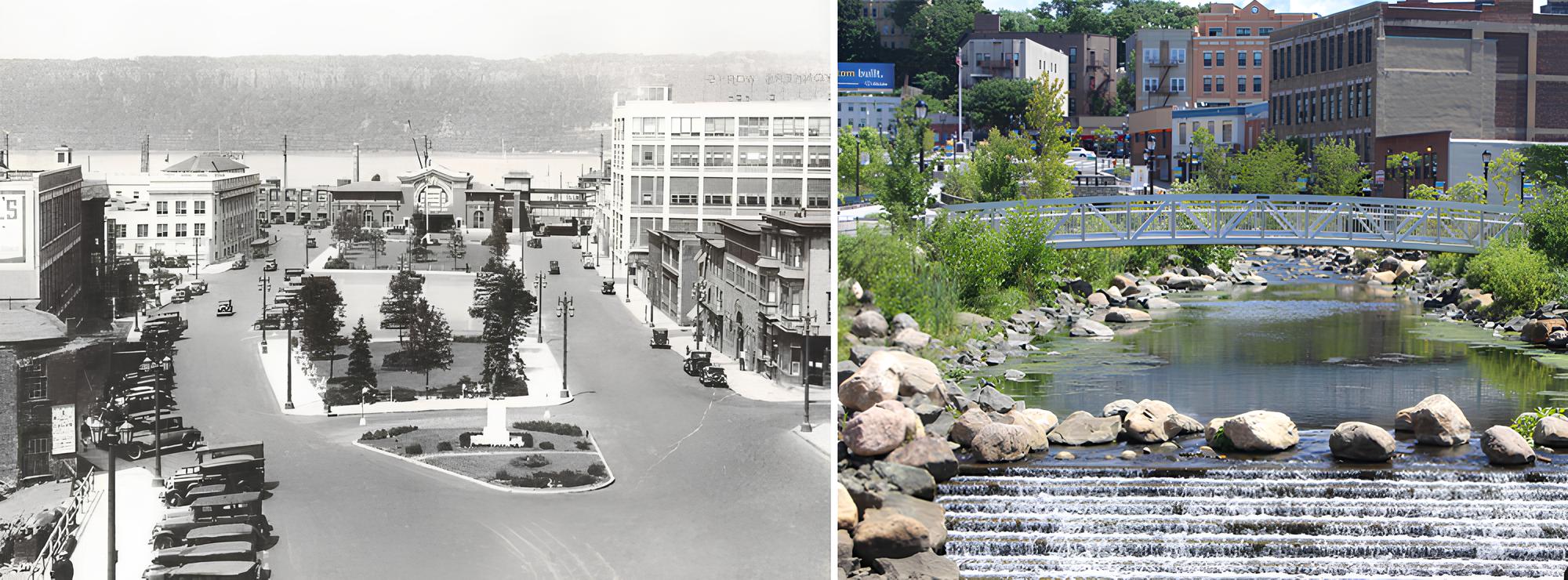
A River Buried for Nearly a Century in the USA Was Uncovered, Brought Wildlife Back to the City, and Became a Symbol of Urban Ecological Engineering.
For much of the 20th century, the idea of “urban progress” was often associated with various forms of nature suppression: rivers channeled and hidden under pavement, swamps drained, streams buried in concrete pipes, coasts straightened to become docks and avenues. In hundreds of American and European cities, waterways were swallowed by asphalt as transportation, industries, and the automobile dominated urban design. In the 1920s, this movement reached the city of Yonkers, New York state: a river then considered a “sanitary problem” would be channeled under a concrete structure and covered by parking lots, squares, and public buildings. The river that disappeared by force was the Saw Mill River, a modest watercourse in length (about 37 km), but deeply important in the historical geography of Westchester County.
Throughout the 19th century, it powered mills, fed small factories, and irrigated farmland. But, like many other urban rivers, it became a dumping ground for trash, sewage, and industrial waste as the 20th century approached. When local authorities decided to “hide” the river under concrete slabs in 1920, the goal was clear: to remove a visual and sanitary nuisance to accommodate the modern urban model.
The Restoration of the River That Disappeared
For decades, few remembered that a river flowed beneath the heart of Yonkers. In its place was a monolithic structure called Larkin Plaza, basically a complex of parking lots and asphalted spaces covering the natural bed.
-
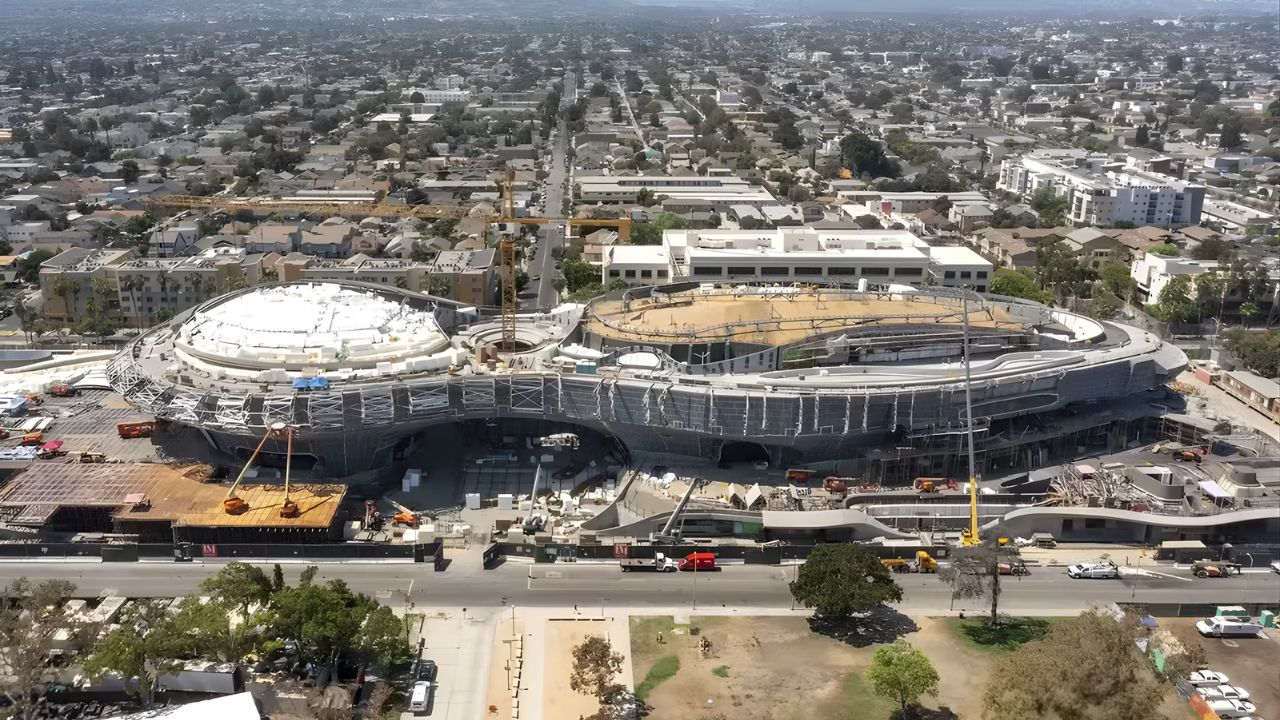
Created by George Lucas with over $1 billion, a futuristic museum in the shape of a spaceship with 1,500 curved panels is about to open in Los Angeles and will house one of the largest private collections of narrative art in the world.
-
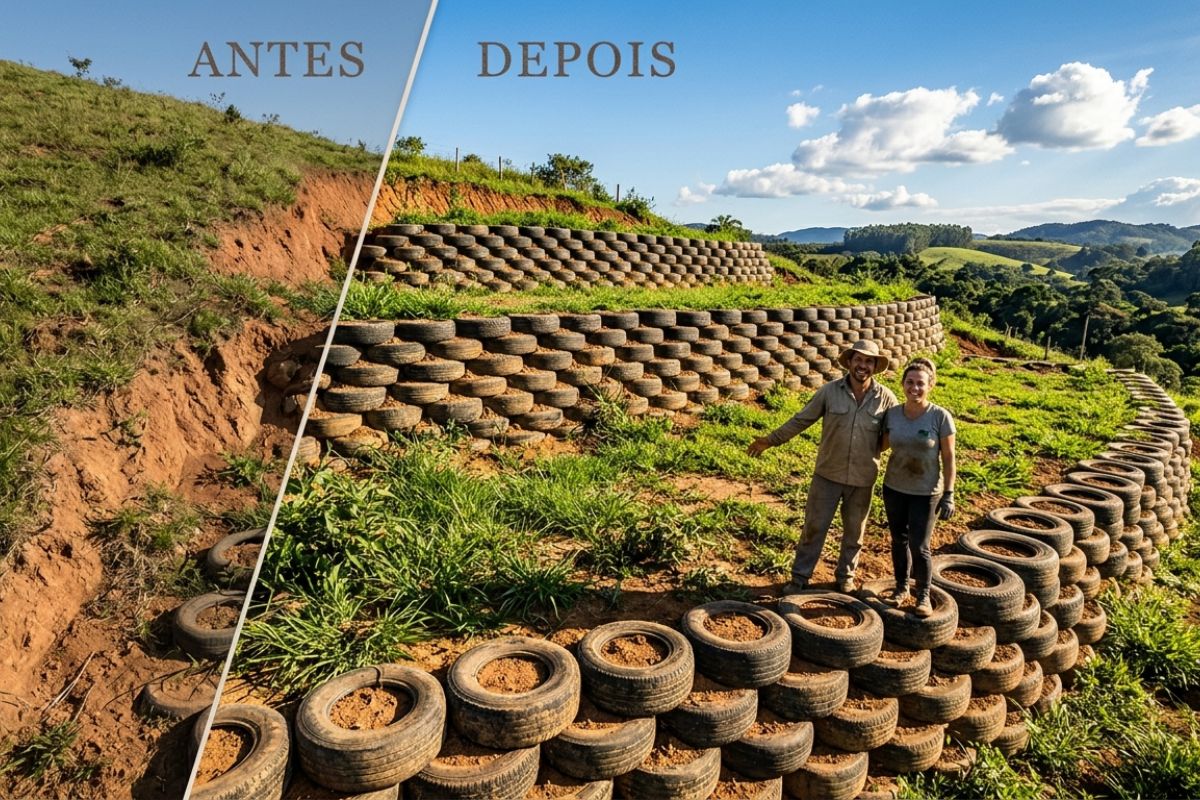
Couple shows how they built a retaining wall on their property using 400 old tires: sloped land turned into plateaus, tires are aligned, filled, and compacted with layers of soil, with grass helping in support and at almost zero cost.
-
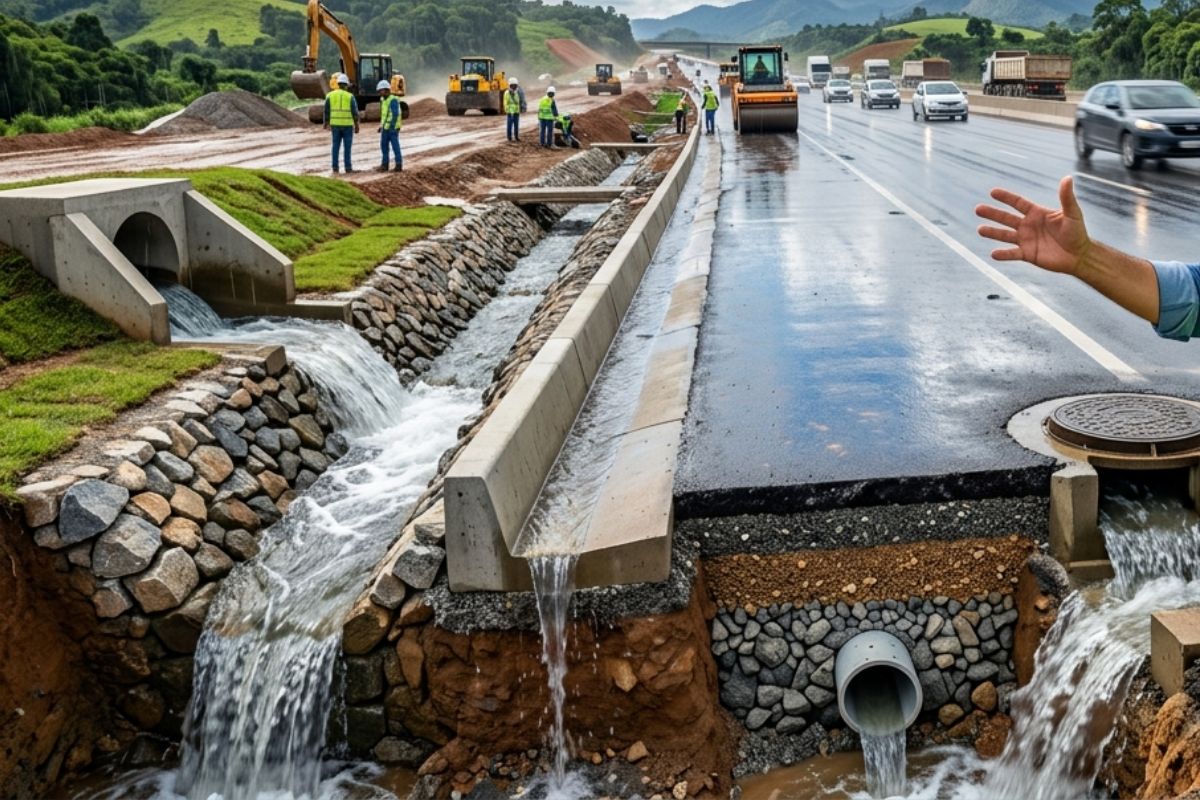
Engineer explains drainage during the rainy season: the difference between surface water and deep water, ditches, gutters, and water outlets on the road, as well as drains and drainage mattresses, to prevent erosion, aquaplaning, and flooding at the construction site today.
-
With 55 floors, 177 meters in height, a 15-meter walkway between the twin towers, ventilated facade, and 6,300 m² of leisure space, Ápice Towers already has one tower completed and another nearly at the top.

American eels, which historically migrated from the Sargasso Sea to the rivers of the East Coast, stopped arriving. Small fish, aquatic insects, birds, and amphibians disappeared. Without light, vegetation, oxygenation, and isolated from the ecosystem, the river turned into a functional pipe, and nothing more.

This story could have ended there — another urban river swallowed by modernity, but in the early 2000s, environmental movements, civic organizations, and municipal authorities began discussing an idea that sounded almost absurd by American standards at the time: unearthing the river.
Not to better channel it, not to bury it again, but to remove tons of concrete, demolish structures, and reconstruct the riverbed in the open air, recreating a stretch of ecosystem in the urban center. It was the concept of “daylighting”, a relatively recent practice in water management that consists of bringing hidden waterways back to the surface.
A Radical Idea in Technical, Logistical, and Political Terms
The “daylighting” proposal for the Saw Mill River was not just environmentalist; it was urban, strategic, and multifunctional. It implied altering the city’s drainage, reconfiguring parking lots, adapting traffic, redesigning public spaces, installing native vegetation, reconstructing aquatic microhabitats, revitalizing sidewalks, and treating an area that had been urbanistically degraded. Furthermore, it faced a political challenge: how to convince residents and merchants that demolishing structures and removing parking spaces would bring any real benefit?
The technical argument was decisive. According to local hydrologists and experts hired by the city, the buried river no longer met the drainage capacity required for contemporary flood events — a problem that would worsen with the increasing intensity of storms on the East Coast.

The concrete did not absorb water, the pipe was narrow, and the flow could overflow into urban areas. Unearthing the river would allow for the creation of a natural flood corridor, increasing urban resilience.
From 2010 onwards, the project began to take shape. It was a complex and symbolic work: excavators removed layers of slabs and pavements that had concealed the river for decades, revealing a dark and wet space known to local engineers but ignored by the population.
Where there were once parked cars, ancient retaining walls and the concrete channel through which the Saw Mill River flowed emerged.
Reconstructing a River is an Act of Engineering and Ecology at the Same Time
Unearthing a river is not simply about clearing space and letting water flow. It requires reconstructing substrates, banks, curves, retention pools, and riparian vegetation zones.
The natural course rarely coincides with urban geometry, so the engineering team had to design a semi-natural bed that included elements such as:
- rocks and boulders to create micro-turbulence and oxygenation
- native vegetation to stabilize banks
- shallow areas with slower flow for insects and fry
- deep pools for adult fish
- structures to accommodate seasonal flow variations
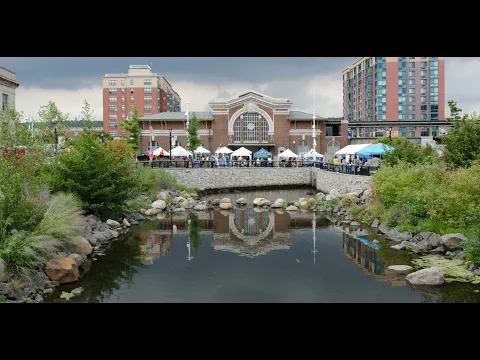
The city also took the opportunity to redesign the urban surroundings, creating a linear park that connected restaurants, sidewalks, and gathering spaces to the revived landscape. The goal was not only functional but also aesthetic and social: to make the river visible, visitable, and experienced again.

The “Van der Donck Park”, opened as part of the first phase of the project in 2012, became the first space in nearly a century where the Saw Mill River flowed openly in downtown Yonkers. The immediate transformation was visual: in place of a parking lot, a watercourse flowed bordered by stones, shrubs, small trees, benches, and public pathways.
But the most impressive transformation was not scenic — it was ecological.
When Life Returns to Where There Was Concrete
Few expected wildlife to respond so quickly. Months after the completion of the project’s first phase, technicians recorded what would become the symbol of this work: the return of American eels (Anguilla rostrata), a migratory species that completes its cycle between the waters of the North Atlantic and the rivers of the East Coast of the USA.
The eels had disappeared for nearly 100 years because they could not navigate the dark subterranean maze without resting points. With the river restored, they returned to follow their natural course, surprising even marine biologists.
In addition to them, the following appeared:
- small fish (like killifish and sunfish)
- aquatic insects indicating good water quality
- piscivorous birds like kingfishers
- ducks, herons, and turtles
The return of these organisms indicated that the reconstructed ecosystem was not merely aesthetic: it functioned biologically.
A New Type of Urban Infrastructure
The project also reduces the risk of flooding by creating space for water to expand during heavy rains. Instead of overflowing from a pipe and flooding streets, the river occupies zones of the park temporarily, draining the water more efficiently. This illustrates a modern trend in urban planning: the idea of “green infrastructure.”
Green infrastructure encompasses all that takes advantage of ecological processes to provide urban services, such as:
- flood control
- natural water filtration
- shading and reducing heat islands
- increasing biodiversity
- landscape and tourism quality
In recent years, cities worldwide have begun to look to the Saw Mill River as an example. Universities, engineering and urban planning departments, and environmental groups cite the project in conferences, reports, and climate resilience guides.
National and International Impact
The case of Yonkers helped popularize the concept of “daylighting” in the United States. Cities like:
- Seattle
- San Francisco
- Portland
- Chicago
- Providence
- Baltimore
started mapping their own buried rivers. In Europe, Zurich, London, Oslo, and Munich have also accelerated similar programs for unearthing waterways.
Some urban planning specialists claim that the Yonkers work represents a cultural shift: a period when cities stopped being enemies of rivers and began to see them as strategic assets. Instead of hiding water, the current trend is to display it, integrate it, and use it as a centerpiece of urban experience.
A Story of Back and Forth
The story of the Saw Mill River reveals something about how societies change their priorities. At the beginning of the 20th century, burying a river was progress; at the beginning of the 21st century, unearthing a river has become a symbol of a smart, resilient city that cares about environmental well-being.
Today, residents walk alongside the water, children feed ducks, tourists take pictures, biologists collect samples, and professors teach ecology on site. Something that disappeared for nearly 100 years has returned to shape urban daily life — and this was only possible because someone dared to imagine what seemed unfeasible.
The Questions That Remain
Projects like this provoke important reflections:
- How many urban rivers has the world buried?
- How many could be restored?
- How much biodiversity has been lost and could return?
- How can urban areas use ecosystems as infrastructure?
- How many urban problems originate from attempts to suppress nature?
These issues are particularly relevant in light of climate change, as extreme rain and heat events are expected to intensify throughout the 21st century. Buried rivers are vulnerable to flooding; restored rivers can be allies.
The unearthing of the Saw Mill River is not just a municipal work; it is a complete narrative about how cities treat nature, how ecology and engineering can converse, and how the past can return in a functional way.
In the end, a river that remained almost a century in silence, hidden beneath concrete, parking lots, and pipes, reappeared in the urban landscape, bringing migratory eels back to the city’s heart and becoming a symbol of an urban vision that reconnects water, life, and people.
A work that united biology, engineering, and public policy and reminded us that, in many cities around the planet, nature is not distant: it is just waiting to be released.







-

5 pessoas reagiram a isso.