





 Portuguese
  English
  Spanish
  3 min of reading
  0 comments


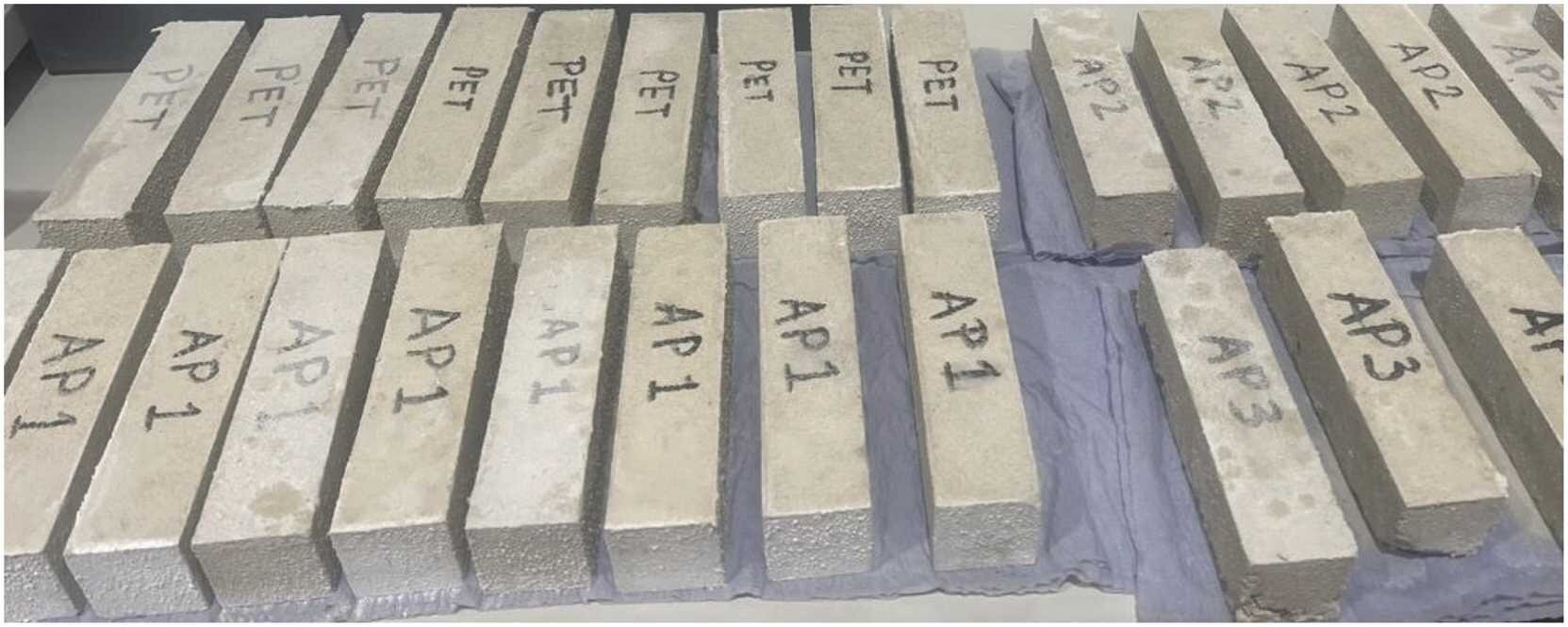
New Sustainable Mortar Uses Recycled Plastic, Offering Better Insulation and Contributing to Waste Reduction in Civil Construction
Researchers from Newcastle University have developed a new cement mortar that promises to stand out in civil construction. Made from recycled plastic and silica aerogel, the material provides better thermal insulation and helps reduce plastic waste.
The innovation, published in the journal Construction and Building Materials, could lower heating and cooling bills, offering an environmentally friendly solution.
Innovative Mortar Combines Lightness and Thermal Insulation
The new mixture was developed to replace conventional sand with silica aerogel and recycled PET plastic. The result is a lighter mortar that performs better in thermal insulation.
-
Created by George Lucas with over $1 billion, a futuristic museum in the shape of a spaceship with 1,500 curved panels is about to open in Los Angeles and will house one of the largest private collections of narrative art in the world.

-
Couple shows how they built a retaining wall on their property using 400 old tires: sloped land turned into plateaus, tires are aligned, filled, and compacted with layers of soil, with grass helping in support and at almost zero cost.
-
Engineer explains drainage during the rainy season: the difference between surface water and deep water, ditches, gutters, and water outlets on the road, as well as drains and drainage mattresses, to prevent erosion, aquaplaning, and flooding at the construction site today.

-
With 55 floors, 177 meters in height, a 15-meter walkway between the twin towers, ventilated facade, and 6,300 m² of leisure space, Ápice Towers already has one tower completed and another nearly at the top.


Aerogel is recognized for its insulating properties and has been increasingly used in sectors such as civil construction and the aerospace industry. The study showed that the innovative mortar reduces heat loss by up to 55% compared to traditional mixtures, maintaining the strength essential for masonry constructions.
This technology could transform sustainable construction practices, reducing heat loss in vulnerable areas of buildings, such as the spaces between bricks that require mortar.
Reduction of Plastic Waste and Energy Efficiency
Professor Lidija Šiller, a nanoscale science expert at the School of Engineering at Newcastle University and co-author of the study, highlighted the potential of the new formula.
“This study demonstrates that our formulation of recycled PET plastic waste can be used to produce cement-based mortars, and it is an effective way to reduce their impact on the environment. Wouldn’t it be wonderful to lower heating bills in all our new buildings while significantly reducing plastic waste in the world?,” she stated.
Seven Formulations Tested and Promising Results
The researchers tested seven different formulations of the new mortar, along with the traditional one. The most effective was composed of 7% untreated silica aerogel mixed with natural sand and 3% recycled PET plastic.
The PET particles, sourced from crushed plastic bottles, had irregular shapes and thicknesses between 2.5 mm and 3.5 mm. After the crushing process, they were washed with water and dried at room temperature for 24 hours.
The tests evaluated essential properties, including setting time, flowability, density, strength, and thermal conductivity. The new formulation reduces the thermal conductivity of the mortar by up to 55% compared to standard samples.
Future Challenges and Large-Scale Testing
Researcher Kaniaw Marof, Ph.D., the lead author of the study, emphasized the importance of the discovery. Improving the thermal performance of masonry buildings by reducing the energy needed for heating and cooling to ensure user comfort is a key topic in modern construction.
In his work, the modification of the surface of silica aerogel particles was a crucial step in successfully incorporating silica aerogel particles into the cement binder and PET plastic.
Now, the team aims to test the mortar in a real-world environment and at scale. According to Professor Šiller, the goal is to find construction industry partners to build a house using the new mixture.
With information from Tech Xplore









-

-

-

13 pessoas reagiram a isso.