





 English
  Francês
  Alemão
  Italiano
  Japonês
  Norueguês
  Portuguese
  Spanish
 5 min of reading
  0 comments


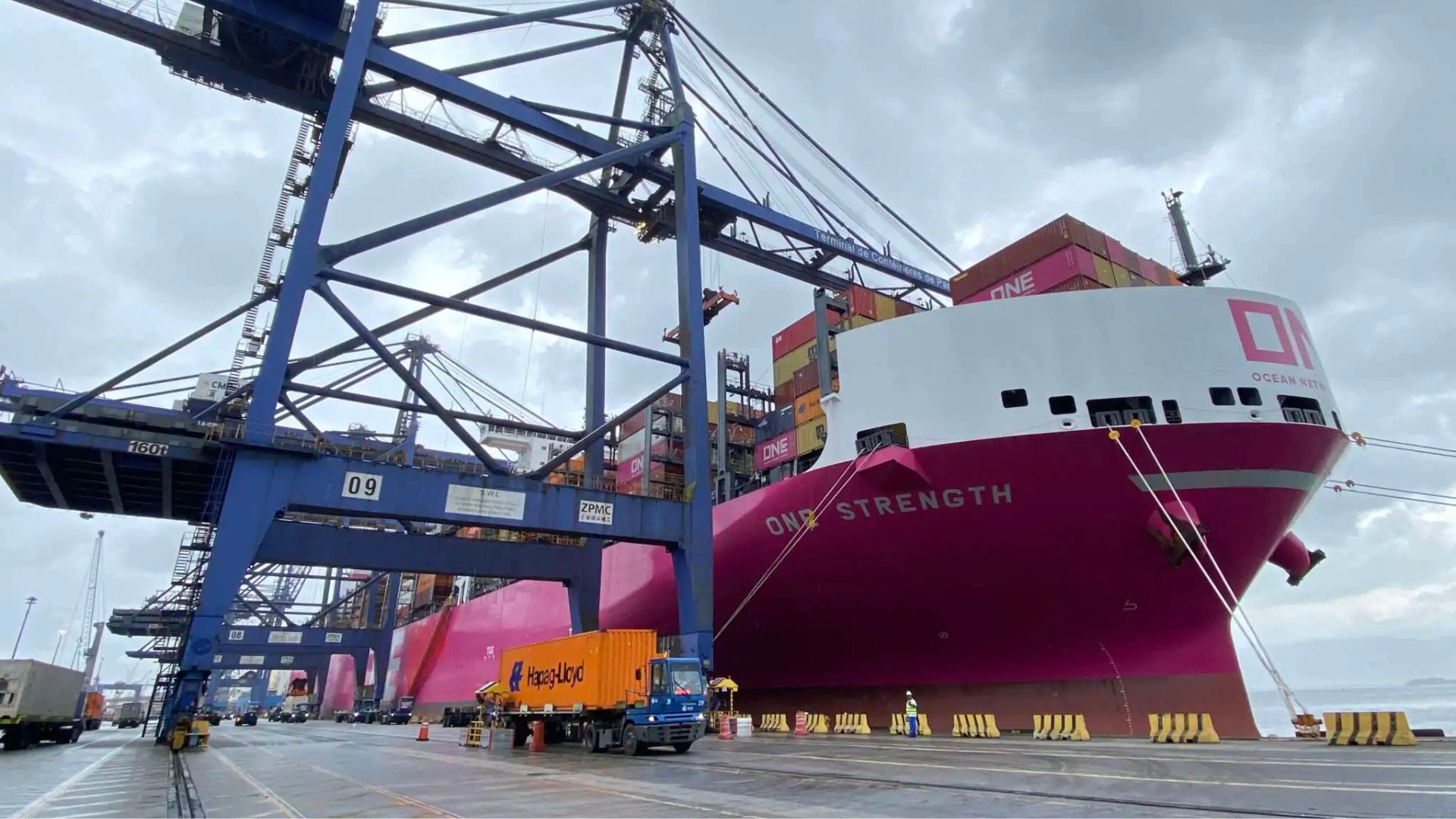
TCP Welcomes One Strength and Reinforces the Advancement of Sustainable Ships in Brazil, Highlighting Paranaguá as a Strategic Green Port in Environmental Efficiency and Global Connectivity
On November 13, 2025, TCP (Paranaguá Container Terminal) officially welcomed the ONE Strength, the first sustainable ship of the new generation from the Japanese company Ocean Network Express (ONE). This historic call marked an important advancement for the Brazilian maritime sector and consolidated Paranaguá as a reference in environmental innovation, international connectivity, and logistical efficiency.
Strategic Importance of ONE Strength for TCP
From the very beginning, the terminal emphasized that the arrival of the vessel symbolizes more than a port operation: it represents a decisive step in the transition to a green port, aligned with global decarbonization goals and the increasing demands of international trade.
The arrival of ONE Strength reinforces TCP’s capacity to serve large vessels with high environmental performance. With a length of 335 meters and an approximate capacity of 14,000 TEUs, the ship belongs to the Neo-Panamax category, designed to traverse the expanded Panama Canal and operate on long-haul routes with high cargo volumes.
-
With earth, bamboo, straw, and lime mortar, a specialist builds a house for just over $460 and draws attention for its cost being much lower than traditional construction.

-
Private ports increased by 14.1% in January 2026 and lead port activity with 66% of the cargo, driven by oil, agribusiness, and exports.
-
Rodrigo de Freitas Lagoon advances in environmental recovery with sanitation, elimination of irregular sewage, and the resumption of water sports in Rio de Janeiro.
-
Sustainable housing gains strength with a nationally awarded project in Campo Grande, highlighting innovative solutions that combine sustainability, urban integration, and efficiency in the use of natural resources.

The vessel is part of ONE’s new sustainable fleet, composed of 20 modern ships being delivered between 2025 and 2026. The program is part of the ONE 2030 Plan, which aims to significantly reduce carbon emissions and achieve increasingly cleaner maritime operations.
As a result, each new call represents greater efficiency, lower environmental impact, and a real contribution to the international logistics chain. According to TCP, the docking demonstrates the operational maturity of the terminal, which has been investing in infrastructure, technology, and sustainability to meet the growing demands of international shipowners.
Sustainable Technologies Highlighted in ONE Strength
ONE Strength is not just a modern ship: it was designed to be one of the most advanced in the global fleet in terms of sustainability. Among its key innovations are:
Preparation for Alternative Fuels
The ship is already ready to operate in the future with methanol and ammonia, fuels that significantly reduce pollutant gas emissions. This adaptation anticipates the changes expected to dominate the maritime sector in the coming decades.
Optimized Design for Energy Efficiency
The hull of the ship was developed with advanced geometry to decrease water resistance and improve hydrodynamic performance. This reduces fuel consumption and enhances propulsion efficiency.
Energy Saving Systems
ONE Strength utilizes intelligent energy control devices capable of automatically adjusting consumption during navigation, ensuring rational and sustainable use of resources.
Embedded Digital Technologies
The vessel features intelligent monitoring, automation, and data analysis systems, allowing for more accurate, predictable, and efficient operations.
Shore Power Connection
During docking, the ship can utilize energy from the port, eliminating the need for diesel generators. This reduces local emissions and improves air quality.
EGR (Exhaust Gas Recirculation) System
The ship meets the NOx Tier III standard, the strictest for air pollution control. This system significantly reduces nitrogen oxide emissions.
These characteristics demonstrate how the new generation of vessels is redefining the shipbuilding industry and contributing directly to reducing environmental impacts.
The Sustainable Evolution of TCP and the Port of Paranaguá
The arrival of ONE Strength is also directly related to a broader movement within TCP and the Port of Paranaguá. In October 2025, the company achieved ISO 50001 certification, becoming the first port terminal in Brazil—and one of the pioneers in Latin America—to implement a robust Energy Management System aligned with international standards.
This milestone resulted from a project initiated in 2024 by the China Merchants Port (CMPort) group, which controls TCP and reinforced investments in modernization and efficiency. Between January and August 2025, the terminal reduced its consumption by around 3 million kWh of electricity and decreased diesel use by 100,000 liters, even with increasing operation volumes.
These achievements reinforce TCP’s position as a leader in environmental practices in the Brazilian port sector, highlighting the terminal’s commitment to technological innovation, energy efficiency, and social-environmental responsibility.
Global Connections and Impact on International Logistics
ONE Strength arrived in Brazil via the “Ipanema Sul” service, a route operated by ONE that connects the Rio de la Plata to Asia, passing through strategic ports in Latin America. This route further strengthens the position of the Port of Paranaguá as a crucial logistical hub between continents.
The movement also brings direct benefits to Brazilian foreign trade:
- Increases the ability to serve more efficient vessels with higher cargo volumes.
- Reduces the carbon footprint in export and import operations.
- Creates competitive advantages, especially for refrigerated cargo and agricultural products.
- Enhances Brazil’s image as a country aligned with international environmental requirements.
As a result, Paranaguá increasingly consolidates itself as a strategic port for the flow of goods between South America and major Asian markets.
TCP and ONE Initiative: Challenges of the Transition to Sustainable Ships
Despite the evident innovations and advancements, the transition to a more sustainable maritime model faces several challenges, including:
Port Infrastructure
For clean fuels like methanol and ammonia to be widely used, the fueling infrastructure at Brazilian ports will need to be expanded.
High Costs
Building, converting, and maintaining sustainable vessels require significant investments. Similarly, port adaptations also represent significant costs.
International Regulation
Environmental standards vary between countries, requiring shipowners to constantly adapt and comply with different rules.
Expansion of the Green Fleet
For the change to be truly impactful, more companies need to adopt state-of-the-art vessels, strengthening the ESG trend in maritime transport. Although there are obstacles, the sector is making consistent progress.
What the Arrival of ONE Strength Represents for the Future
The docking of ONE Strength at the TCP terminal symbolizes a concrete transformation in Brazilian logistics and global maritime transport. The event demonstrates that Paranaguá is prepared to welcome modern, efficient, and sustainable ships, reinforcing the port’s role as a reference in innovation, connectivity, and environmental responsibility.
At the same time, it highlights that the global industry is increasingly committed to reducing emissions and developing clean technologies, ensuring competitive operations aligned with the environmental demands of the international market.






Seja o primeiro a reagir!