





 Portuguese
  English
  Spanish
  4 min of reading
  1 comment


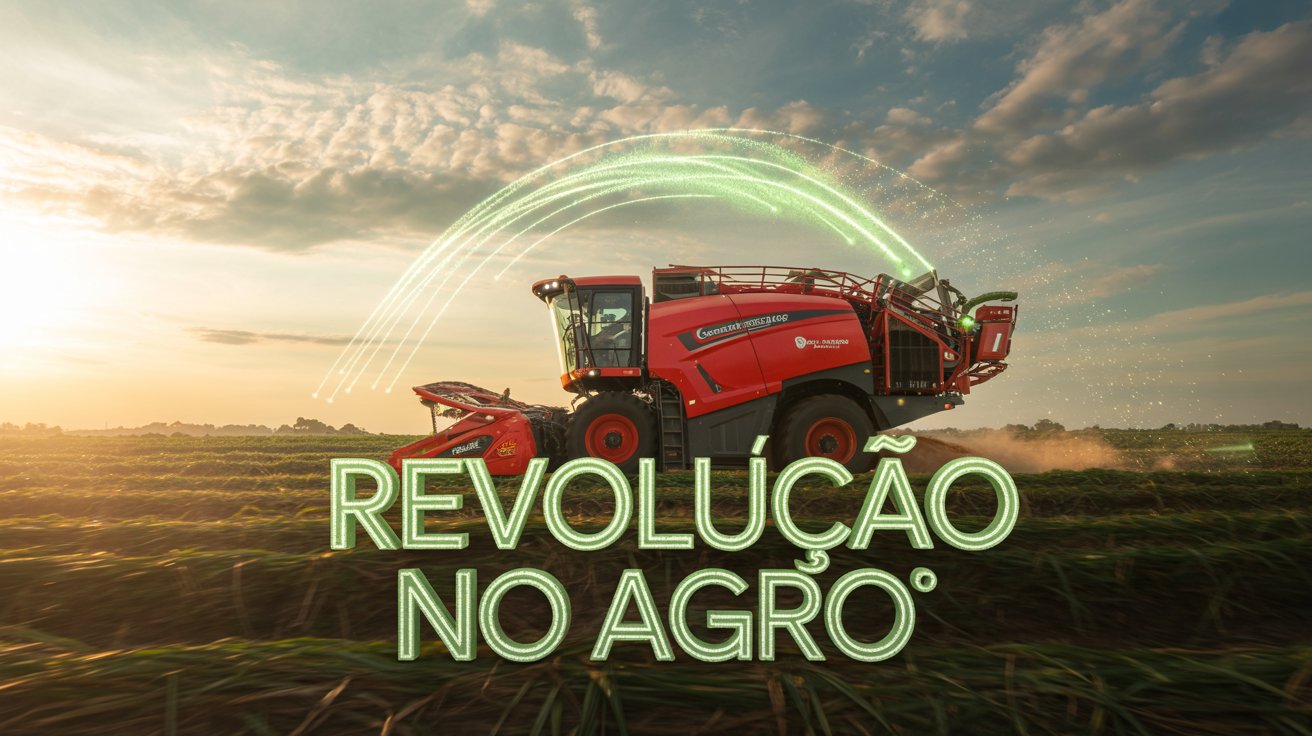

During One of the Largest Agricultural Technology Fairs in the World, an Innovative Machine Caught Attention by Using a Power Source That Promises to Transform the Field and Dramatically Reduce Emissions in the Brazilian Agriculture Sector.
The sustainable revolution in Brazilian agribusiness is getting closer to becoming a reality.
During the 30th edition of Agrishow, one of the largest agricultural technology fairs in the world, Case IH presented an innovation that could redefine industry standards: a sugarcane harvester powered by ethanol.
The prototype is based on the Austoft 9000, a two-row model, and was equipped with a Cursor 13 Otto Cycle engine from FPT Industrial.
The power achieved was 400 kW, very close to the 420 kW delivered by the conventional diesel engine.
This performance proximity surprised specialists, considering that ethanol has a significantly lower calorific value compared to diesel — about 60% lower.
-
Hidden marks on the walls of the site associated with the Last Supper of Jesus for centuries have been deciphered in Jerusalem, revealing medieval inscriptions left by pilgrims, European nobles, and travelers from the Middle East.

-
One of the most important lakes in the United States for birds, the balance of nature, and the climate has dried to historic levels, leaving boats stranded, revealing salt flats, and showing how the lack of water can transform an entire landscape.

-
It’s not Cristiano Ronaldo or Messi: the richest football player in the world is only 27 years old, has a fortune of 100 billion reais, and is the nephew of a sultan from an Asian country that few people know about.

-
At 77, the king of one of the most famous and powerful crowns on the planet is said to be under pressure to leave the throne, while behind the scenes there are already talks of a new coronation that could cost R$ 260 million.



Field Performance: Over 5 Thousand Tons Harvested
The ethanol-powered harvester was tested in a real field by São Martinho, one of the largest sugarcane producers in Brazil.
According to data revealed by the manufacturer, the machine has already harvested over 5 thousand tons of sugarcane, with promising technical performance.
Even without having its power curve completely optimized, the equipment showed robustness and efficiency.
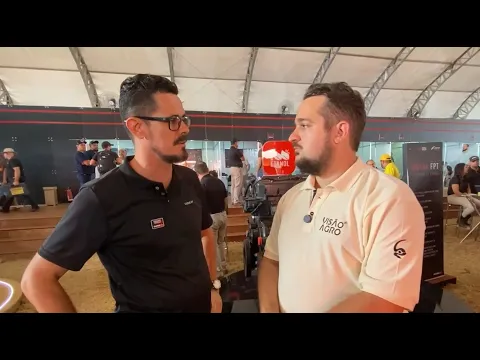
“It is meeting the operational demands very well,” said Ednilson Novello, Case IH product specialist.
According to him, one of the major differentiators of the technology is allowing the producer to use the ethanol they produce, within a cleaner and closed energy cycle.
Sustainability Allied to Productivity
Replacing diesel with ethanol is not just a matter of energy efficiency, but also a crucial step towards decarbonization.
The central idea of Case IH is to allow rural producers to be self-sufficient in energy, reducing costs and environmental impact.
“The concept is viability with sustainability,” emphasized Novello.
According to him, the use of ethanol in the harvester represents a way to add value to the producer’s own product and to align agribusiness with global carbon emission reduction targets.
The initiative follows the trend of various other fronts in the global agricultural sector, which seek cleaner solutions to maintain productivity amid increasing environmental pressures.
Technical Challenges: Autonomy and Performance
Despite advancements, there are still obstacles to overcome before the commercial launch of the ethanol-powered harvester.
The main challenge is the machine’s autonomy, as ethanol consumption tends to be higher than diesel to achieve the same performance.
“There is still a lot to develop in terms of energy efficiency and continuous operating capacity,” admitted Novello.
The expectation is that the product will go through several phases of testing and adjustments over the next few years, with no launch forecast for 2025.

New Projects: Ethanol-Powered Tractor is Also in Development
The bet on ethanol as a renewable energy source does not stop there.
In addition to the harvester, Case IH revealed that it is developing a tractor from the 230 line with similar engine technology, also based on the Otto Cycle engine.
This tractor, however, is still in the initial project phase and should begin field testing throughout 2025.
The initiative reinforces the company’s commitment to sustainable technologies adapted to the energy reality of Brazilian rural producers.
Robust Base: The Austoft 9000 as a Technological Platform
The base model of the prototype is the Austoft 9000, a two-row harvester launched in 2023 that already incorporated significant improvements.
There were more than 20 technical updates, including the 420 hp FPT Cursor 11 engine, new hydraulic system, and a more robust rear axle.
The machine also features Intelligent Feed Rate Control, which automatically adjusts the harvesting speed according to the density of the sugarcane.
This technology allows for gains of up to 10% in productivity, with a 10% reduction in fuel consumption.
Additionally, the Austoft 9000 is equipped with the AFS Connect telemetry system, which allows the operator and management team to monitor machine performance in real-time, increasing operational efficiency.
National Production and Training
The harvester is manufactured in Piracicaba (SP), a facility that has already produced over 9 thousand machines from the Austoft line.
The development of the 9000 involved over R$ 100 million in investments and more than 180 thousand hours of field testing.
Another highlight is the training offered by Case IH.
The company has already trained over 20 thousand people in Brazil to operate its harvesters, promoting technological inclusion and regional development.
This large-scale training ensures that new technologies are adopted effectively and that producers get the most out of their machines.

Path to the Future of Agriculture
The ethanol-powered harvester represents a milestone in the energy transition of agribusiness.
The technology offers a concrete alternative to the use of fossil fuels, leveraging an abundant and renewable input: ethanol.
Although still in the testing phase, the Case IH project points to a future where energy autonomy and sustainability go hand in hand, with the potential to transform Brazilian agricultural operations.
The expectation is that, with advancements in the coming years, the technology will be ready for commercial launch with complete reliability and efficiency.
And You?
Do you believe that ethanol-powered machines can replace diesel in the field? How could this change impact the future of Brazilian agribusiness? Share your thoughts in the comments and spread this sustainable idea!







Confiança total, a caminho de colher resultados com colhedora sustentável