





 Portuguese
  English
  Spanish
  3 min of reading
  0 comments


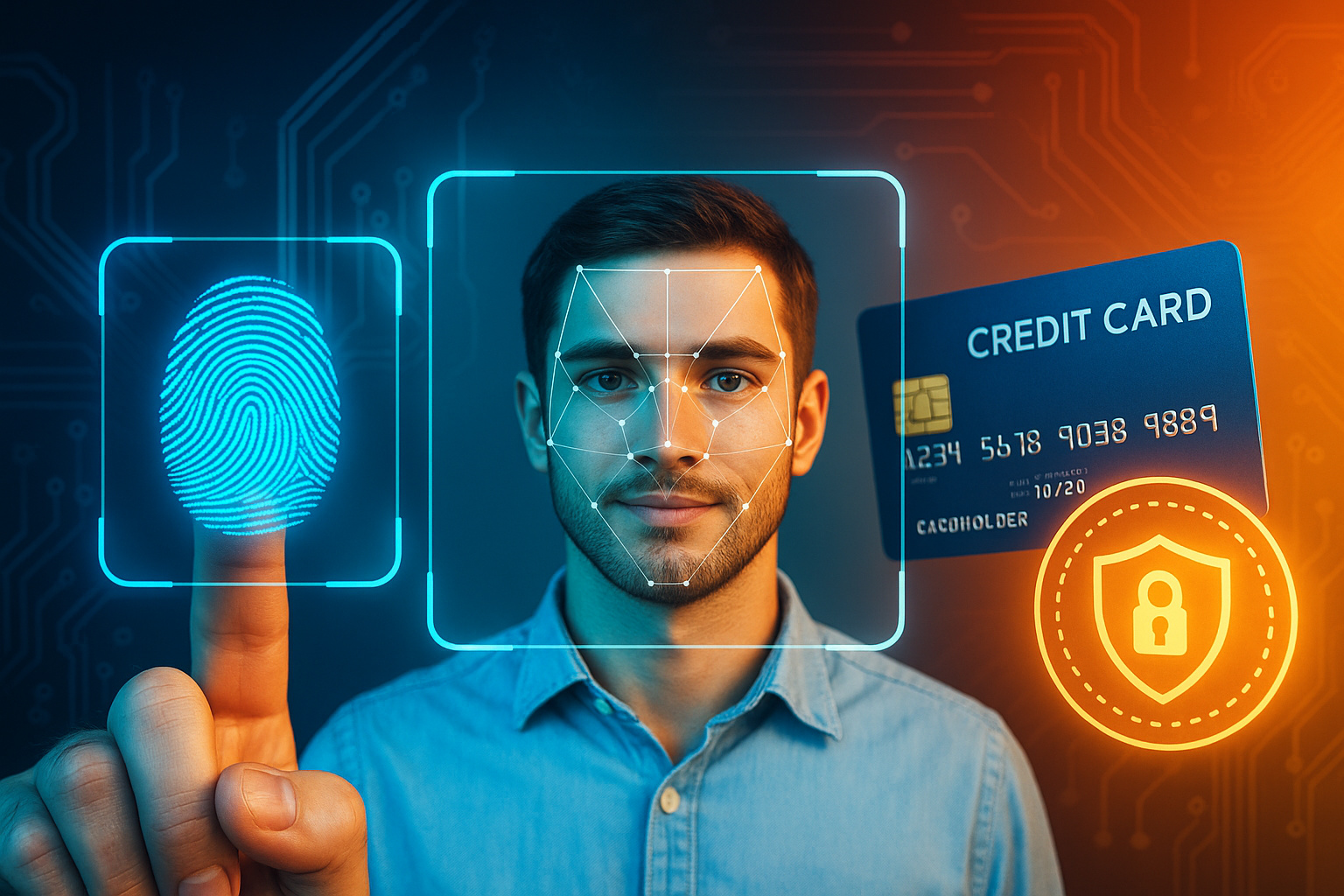
Understand Why Passwords And Cards Will Disappear
In an increasingly digital world, technology giants and payment sectors are heavily investing in solutions that should retire passwords and physical cards by 2030.
Meanwhile, consumers and establishments are preparing to adopt new forms of authentication that are safer, faster, and more practical.
Biometrics Gain Ground In Devices
First of all, it is worth noting that biometrics has already established itself as a protagonist in data protection.
Since 2015, companies like Microsoft, Google, and Apple have been betting on the use of fingerprints, facial recognition, and iris scanning.
Additionally, behavioral biometrics, which analyzes typing patterns or movements, further strengthens security.
To top it off, specialists estimate that by the end of this decade, more than 80% of digital payments will adopt some level of biometric authentication.
- Facial Recognition: Popularized in smartphones since 2017. Today it authorizes payments in real-time.
- Fingerprint: Present in laptops, ATMs, and physical stores. It facilitates unlocks and confirms transactions.
- Iris Scanning: Appears in advanced devices, such as premium smartphones, since 2016.
- Behavioral Biometrics: Monitors individual usage. Makes fraud even more difficult.
With all this, the use of traditional passwords is becoming more restricted. Physical characteristics become the key to access information and services.
-
An engineer designs a solar plane to fly on Mars at an altitude of 1,000 meters and a speed of 300 km/h, covering 16,000 kilometers in a Martian year, 900 times the distance traveled by the Ingenuity helicopter in three years on the planet before experiencing a rotor failure, and NASA is already funding the feasibility study.

-
A new phenomenon of contactless magnetic friction intrigues scientists and questions a theory that has been valid since the 17th century.

-
An impressive phenomenon in Northern Brazil causes rivers of different colors to flow side by side, revealing secrets about sediments, currents, and biodiversity.

-
While many schools are still struggling with the basics, a teacher in China went viral for having elementary school students build a two-stage rocket using plastic bottles, water, and pressurized air in a science class that caught the attention of the entire world.


Tokenization Reinforces Layers Of Protection
In addition to biometrics, tokenization presents itself as an essential pillar in the evolution of payment systems.
Since 2019, brands like Mastercard have heavily invested in unique tokens that replace sensitive information.
This means that, in a purchase, the card number does not circulate. Only a unique code is used.
Because of this, if a transaction is intercepted, there is no way to reuse the data. Thus, cybercrimes face more robust barriers.
This trend accompanies the significant increase in online shopping since 2020.
- Each token is generated per transaction.
- After use, it becomes invalid immediately.
- Merchants and customers benefit from fewer frauds.
To ensure expansion, companies like Visa and Mastercard plan to completely replace fixed card numbers by 2030.
Additionally, specialized startups are developing token versions for niches such as public transport and voice payments.
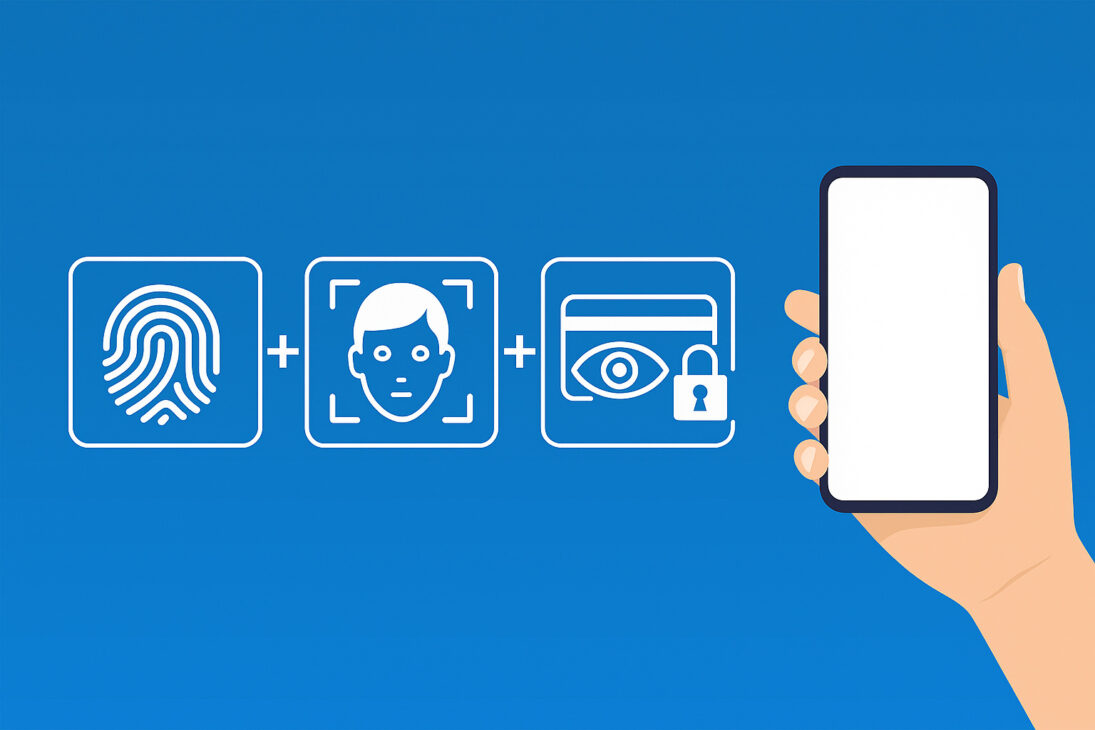
Passkeys Emerge As A Real Alternative
As biometrics and tokenization advance, passkeys reinforce the proposal to eliminate weak passwords.
Since 2022, Apple, Microsoft, and Google have launched solutions that dispense long passwords, adopting short PINs or biometric data for login in digital platforms.
These digital keys sync with various devices. They allow quick access without compromising privacy.
In April 2023, Google announced the expansion of passkey login for millions of Gmail users.
This move reinforces the commitment to abandon traditional passwords.
- PINs are easy to remember and more secure.
- Biometrics validate access in seconds.
- User experience becomes smooth and uninterrupted.
Thus, passkeys unite security and practicality. They eliminate bureaucratic steps in online authentications.
Direct Impacts For Users And Businesses
While consumers enjoy more comfort, as well as speed, merchants and companies, on the other hand, reduce financial fraud.
Between 2020 and 2024, losses from card cloning dropped 40% where biometrics and tokens were adopted.
As a result, establishments process transactions quickly, which consequently improves the entire shopping experience.
Additionally, for customers, there is no longer a worry about remembering long passwords or carrying multiple physical cards.
Therefore, as banks, fintechs, and companies accelerate the replacement of old methods, the expectation is clear.
By 2030, passwords and physical cards should become disposable in many places.
For example, Mastercard plans to use only biometrics for global payments by 2030.
Similarly, Microsoft and Google are expanding logins with passkeys, still in 2023, for more security.
Meanwhile, startups are creating solutions with voice and facial recognition for demanding niches.
Thus, the future of digital authentication is near, uniting biometrics, tokenization, and passkeys to safeguard data and facilitate routines.






-

Uma pessoa reagiu a isso.