





 Portuguese
  English
  Spanish
  4 min of reading
  11 comments





Chamber Approves Bill That Resumes Direct Bank Deductions From INSS Benefits, Reigniting Debate on Indebtedness Among Retirees and Changes in Social Security Policy. Text Goes to the Senate After Heated Voting.
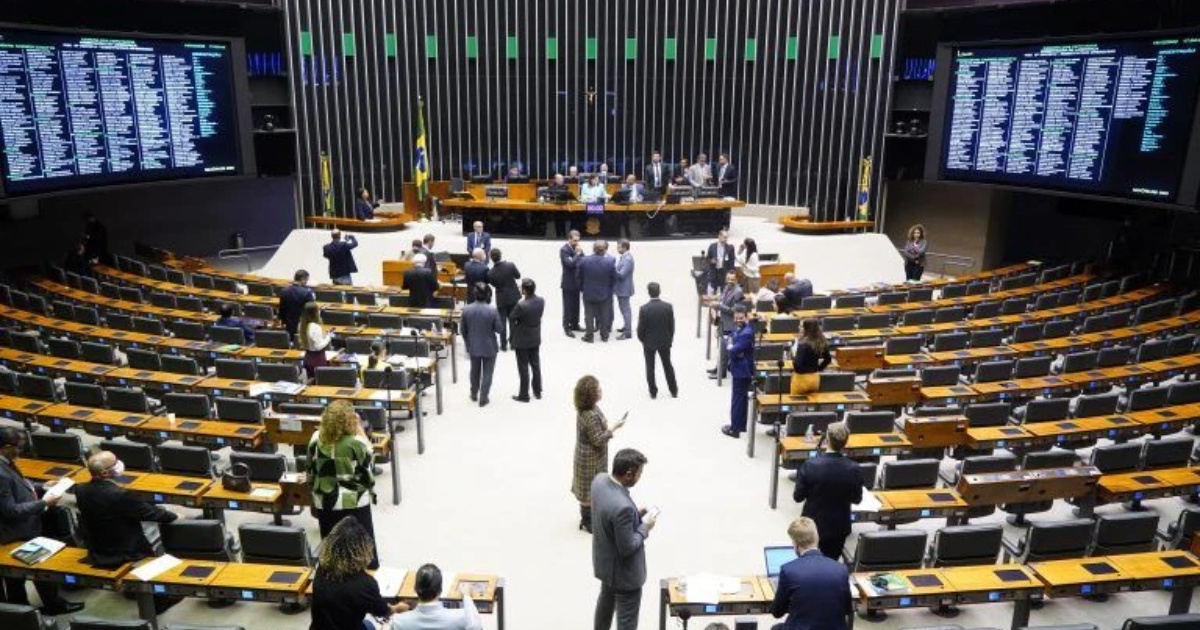
The Chamber of Deputies approved this September a provision that authorizes direct deductions from INSS benefits to amortize “anticipation operations of the social security benefit.”
The attempt to suppress this point was defeated by 259 votes to 126, and the text goes to the Senate.
This proposal was attached to a broader bill against fraud in social security and had the support of centrão parties and the opposition, despite resistance from the governing base.
-
“No one will make us change the Pix,” says Lula after the US report.

-
Lula responds directly to Trump and says that Pix is from Brazil and will not change under pressure from anyone, after a report from the United States pointed out the Brazilian payment system as an American trade barrier.

-
Amazon has just announced a new fee on all deliveries, and your online purchases will become more expensive starting April 17, including for those buying from the United States here in Brazil.

-
He sold his share for R$ 4 thousand, saw the company become a giant worth R$ 19 trillion, and missed the opportunity of a lifetime.


Measure Rescues Model Criticized by Experts and Banking Associations
According to the text, deductions for union dues and associations from the INSS are prohibited even with the beneficiary’s authorization.
However, the possibility for banks to deduct amounts advanced directly from retirement or pension returns.
The substitute also transfers the competence to set the ceiling for consigned loans from CNPS to CMN.
The approved version does not bring in the body of the law an explicit limit on interest or fees for anticipation, a point that motivated the main controversy.
What Changes in Practice
The authorization resumes, in another format, a mode similar to the “voucher” operated in the recent past by INSS itself.
The Chamber states that the bank deduction would occur in anticipation operations with discount, that is, receiving today for a lower amount than what is owed, with settlement in payment.
Critics warn that, without clear limits on charges, the modality could become more expensive than consigned loans and increase retirees’ indebtedness.
How the Voting Went
The authorization for the bank deduction was preserved by rejecting a highlight from PSB that aimed to exclude the clause on the anticipation of benefits.
The score of 259 to 126 consolidated the victory of the rapporteur, Danilo Forte (União-CE), and the parties that supported the measure. Thus, the project will now proceed to the Senate.
Arguments in the Plenary
Deputy Rogério Correia (PT-MG) argued that, as it stands, “it will become another credit, much worse than consigned credit”.
He argued that there is no limit in the text tied to income, as is the case with consigned loans, nor mention that the payment occurs the following month.
According to him, this would leave room for longer terms and higher costs. Correia also pointed out that Meu INSS Vale+ had already been discontinued.
The Rapporteur’s Position and the Government’s Role
Danilo Forte defended the substitute and said he had dialogued with the Civil House during the drafting.
In a speech recorded in the transcript, he stated that he received from the ministry a version with the expression “without financial charge for the beneficiary”, but acknowledged that the final arrangement approved by the majority does not specify this limit.
He also argued that the definition of the ceiling for consigned loans should remain with the Monetary Council, as it involves a technical decision on credit policy.
Frauds and the History of INSS “Vouchers”
The legislative offensive occurs after Operation Without Discount, by the Federal Police and CGU, pointed out R$ 6.3 billion in irregular associative deductions between 2019 and 2024.
The case triggered a review of the automatic debit policy on benefit rolls.
The Meu INSS Vale+ was officially launched in November 2024 with an advance of R$ 150, without interest, deducted the following month.
In February 2025, the limit was increased to R$ 450.
In light of reports of fee charging by authorized institutions, the INSS suspended the program in May 2025.
The decisions and changes are recorded in official communications and contemporary reports.
What Banks and Sector Entities Are Saying
During the Vale+ crisis, Febraban brought to the government complaints about fees of up to 5% charged by banks on anticipation, which helped precipitate the suspension.
Now, the federation states that it did not act for the inclusion of the new product in the project that passed in the Chamber.
The ABBC, in turn, released a statement advocating for the complete suppression of the provision, citing the risk of over-indebtedness and lack of proper controls on credit operations.
Why the Topic Concerns Experts
Without a specific cost ceiling for anticipation and without mandatory linkage to the following month of the benefit, experts consulted by Congress evaluate that banks could offer a product with total effective cost higher than consigned loans.
Furthermore, there would not be the same limits on the consignment margin. In the plenary, this was the tone of the criticisms from deputies who tried to overturn the clause — without success.
Next Steps in the Senate
The Senate will analyze the project that, while banning associative deductions, opens space for advances deducted from the rolls and tightens the requirements for new consigned loans, such as biometric authentication and automatic blocking of the benefit after each operation.
Senators may maintain, adjust, or remove the provision on anticipations.








Já basta o que nos é roubado, não aceito pagar nada para sindicato de ****
EU CONCORDO COM O ADIANTAMENTO DO BENEFÍCIO, PEGA QUEM QUER E QUEM PRECISA, QUEM NÃO PRECISA, ÓTIMO, MAS NÃO ATRAPALHA QUEM PRECISA.
Eu nem voto mais, me recuso. Quem são os verdadeiros criminosos no Brasil?