





 Portuguese
  English
  Spanish
  5 min of reading
  0 comments



MEC Announces Historic Expansion: New Government Law Creates Thousands of Jobs in Education and Rekindles Hope for Federal Exams
Education has once again taken center stage in Brasília. At a time when public school teachers and employees are pressing for better working conditions and more robust examinations, the Federal Government has authorized the creation of 8,600 positions in the educational sector through new legislative projects.
This move, in addition to expanding the number of teachers and administrative technicians, signals an important turning point for the MEC and for those closely following the future of higher education in Brazil.
For many experts, this decision acts as a “breath of fresh air” for institutions that have been dealing with years of tight budgets and reduced teams.
-
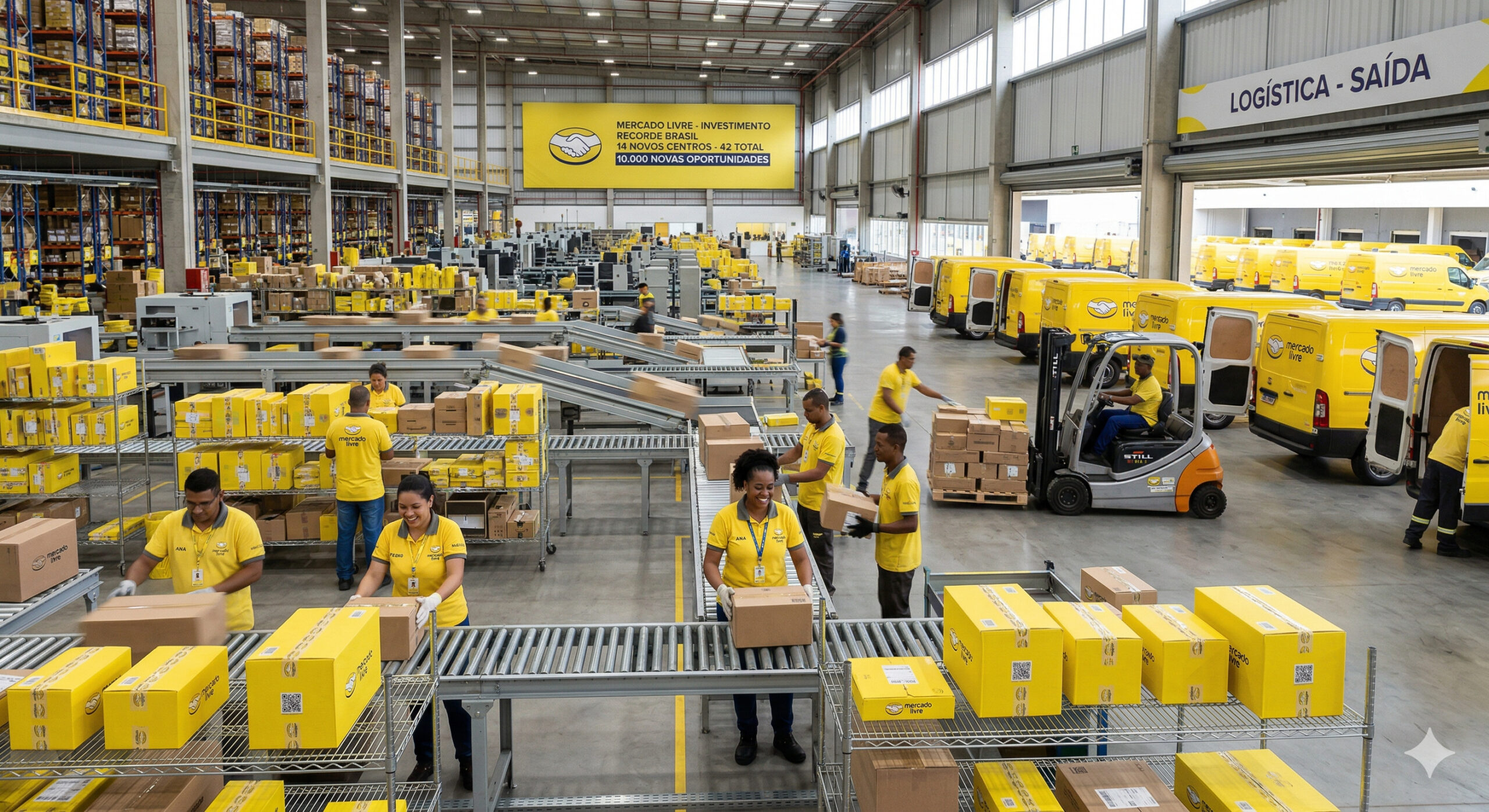
Mercado Livre “opens the vault” and announces a record investment of R$ 57 billion in Brazil in 2026, a value 50% higher than the previous year, with an expansion plan that includes 14 new logistics centers, totaling 42 units in the country and hiring an additional 10,000 employees.
-
How investment in technology can revolutionize the national economy and enhance industrial gains, according to a study that highlights the direct impact on productivity, innovation, and wealth retention within Brazil.

-
The largest food company on the planet, JBS, has just opened a 4,000 square meter laboratory in Florianópolis to develop customized proteins that modulate muscle mass gain, immune response, and metabolic performance.

-
After nearly 30 bids and competition among industry giants, a Spanish company purchases one of the largest airports in Brazil for almost R$ 3 billion and takes over the management of Galeão in a concession that will last until 2039.

A Historic Expansion That Promises to Change the Education Landscape in Brazil
Last Friday (14), President Luiz Inácio Lula da Silva signed two legislative projects authorizing the creation of new positions, raising the total envisioned by the government to 29,804 vacancies.
The measure, officially announced by the Ministry of Education, reinforces the strategy for restructuring the Federal Education Network, which includes universities and federal institutes.
The demand for more staff had been growing for years. Various institutions reported the direct impact of staff shortages in areas such as laboratories, libraries, student assistance services, and administrative support.
According to data from Andifes, several universities were operating with a deficit exceeding 30% in their staff, as a result of continuous declines in public exams since 2017.
The new law represents a step forward: it renews the workforce of teachers and administrative technicians and improves the operational capacity of institutions that need to maintain, update, and expand courses, research projects, and extension programs.

The Ceremony Marking the Announcement
The signing of the projects occurred during the delivery event of the Order of Educational Merit, held in Brasília, which also celebrated the 95th anniversary of the MEC.
Among tributes and speeches, President Lula emphasized the strategic role of education in the country’s development.
One of the statements that resonated the most was this:
“It is cheaper to finance education for children than to keep a young person in prison due to lack of opportunities.”
The declaration echoed among those present and went viral on social media, especially among educators advocating for greater investment in basic education and public higher education.
During the ceremony, Lula also criticized the historical neglect of education in Brazil:
“Many people never wanted the Brazilian people to be educated. It’s as if it were shameful to allow the people access to education.”
This statement reinforces the government’s vision of reversing years of cuts and rebuilding discontinued educational policies.
Who Were the Honorees of the Order of Educational Merit
The event recognized 262 personalities who contributed to Brazilian education, among them:
- Ailton Krenak – writer, environmentalist, and indigenous reference
- Ana Maria Gonçalves – award-winning writer
- Gilberto Nogueira (Gil do Vigor) – economist and influencer
- Felipe Neto – influencer who has broadened debates on education and citizenship
The complete list can be found on the MEC’s own portal, which highlighted the relevance of figures who contributed to democratizing knowledge and bringing society closer to educational debates.
Gil do Vigor Moves the Audience by Speaking About Social Transformation
One of the most talked-about moments of the ceremony was the speech by Gil do Vigor, who recalled his journey marked by inclusion policies, such as the Bolsa Família Program and the quotas system.
He shared a phrase from his mother that became symbolic:
“She told me we had a sledgehammer to break through the wall capable of transforming lives. And that sledgehammer is education.”
Gil also revealed that he will pursue a post-doctorate at the University of Chicago, reinforcing how inclusion and student retention initiatives can change entire families’ stories.
To contextualize, experts like professor and researcher Claudia Costin, former director of the World Bank, emphasize in recent interviews with g1 that investments in education are crucial for reducing inequalities and raising the average salary of the population in the long term.
Posthumous Tributes and the Weight of Educational Memory
The event also featured tributes to personalities who left an important legacy:
- Antonio Bispo (Nego Bispo) – Quilombola intellectual
- Elisabeth Tenreiro – teacher killed in a school attack in 2023
Both represent, in different areas, fundamental struggles: the defense of territory, culture, and safety in the school environment.
New Law Approved: What Do the 8,600 New Positions Represent in Practice?
The creation of new positions can be seen as a structural reinforcement, with a direct impact on the functioning of federal institutions. Among the most immediate effects are:
More Teachers and Technicians to Accompany the Expansion of the Federal Network
The increase in vacancies will allow for the opening of new classes, reinforcement of laboratories, expansion of scientific projects, and improvement in student assistance.
Universities such as UFRJ, UFBA, and UnB have already indicated in public statements that the arrival of new staff will be crucial to balance areas that have been operating at their limits.
Improvement of Public Service Quality
Administrative technicians are essential for the functioning of key sectors such as infrastructure, IT, contract management, and libraries. They ensure continuous support for teachers and students.
Recovery of Lost Capacity
The lack of public exams left entire areas understaffed. The MEC acknowledges that, in some institutions, replacement is not only necessary — it is urgent to ensure minimum standards of service.
Open Doors for Public Exams
With the new positions, expectations for national exams are growing for 2025 and 2026. Specialized sites like Concurso Nacional indicate an increase in demand for information about upcoming selections in the educational sector.
New Law Approved Puts Education Back at the Center of Brazil’s Priorities
The Federal Government signals that this is just one of the movements in a broader agenda. The MEC has talked about:
- restructuring universities and institutes;
- resuming investments in research;
- expanding student retention policies;
- strengthening programs such as the New PAC Education, detailed on the Planalto portal.
The reconstruction of educational policies depends on staff, human infrastructure, and planning. Therefore, the new positions represent more than just numbers: they represent the chance to enhance the work of those who sustain public education every day.
If you’ve made it this far, please leave your comment or share this article with someone who is also following the changes in Brazilian education. The more people informed, the stronger the debate about the future of our education.









-

-

2 pessoas reagiram a isso.