





 Portuguese
  English
  Spanish
  4 min of reading
  2 comments


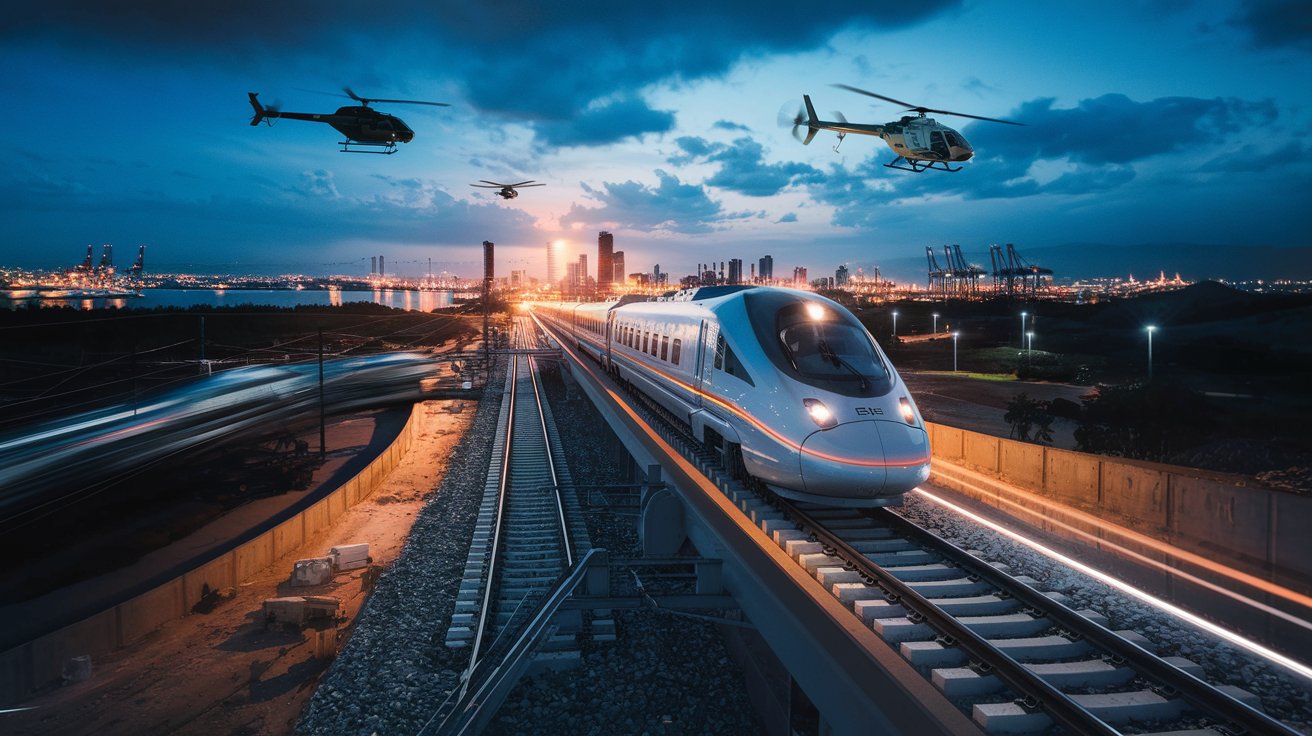


A New Railway Could Transform Logistics Between RS and PR! But Will It Go Beyond the Paper or Is It Just Another Empty Promise? Russian Investors Are Behind the Project, While a New Port in RS Could Change Everything. Discover the Challenges, Uncertainties, and Impacts of This Billion-Dollar Project That Could Redefine Transportation in Brazil!
The proposal, which foresees a new railway line connecting the Rio Grande do Sul to Paraná, aims to revolutionize the transportation of goods and passengers between the two states.
However, despite the initial excitement, the initiative faces regulatory and structural challenges that may delay its realization.
An Ambitious Project with Foreign Investors
The proposal was presented by Doha Investimentos e Participações and has the backing of Russian investors.
The initial plan envisions a route of 1,549 kilometers, connecting the city of Arroio do Sal, in Rio Grande do Sul, to Terra Roxa, in Paraná.
-
Lula responds directly to Trump and says that Pix is from Brazil and will not change under pressure from anyone, after a report from the United States pointed out the Brazilian payment system as an American trade barrier.

-
Amazon has just announced a new fee on all deliveries, and your online purchases will become more expensive starting April 17, including for those buying from the United States here in Brazil.

-
He sold his share for R$ 4 thousand, saw the company become a giant worth R$ 19 trillion, and missed the opportunity of a lifetime.

-
Elon Musk’s Starship megafrocket puts $8 billion at risk, raises alarms in the market, and could affect technology, mining, and space internet startups in the coming years.


If approved, the railway could represent a significant advancement in regional logistics, offering a viable alternative to the road mode, which currently dominates transportation in the region.
The idea has already gone through several evaluation stages with the National Agency for Land Transportation (ANTT), but has not yet received final approval.
According to information, the ANTT temporarily suspended the processing of the project to reevaluate legal impacts and clarify questions regarding the concession.
If authorized, the control of the railway will be managed by Doha Investimentos for a long period: 99 years.
This term has sparked discussions about the feasibility of the enterprise and the company’s ability to oversee a project of this magnitude over the coming decades.
The Entry of Foreign Capital: An Opportunity or a Risk?
The involvement of Russian investors in the project has been one of the most prominent points.
The entry of foreign capital into the Brazilian railway sector raises curiosity and debate, as it may accelerate the modernization of infrastructure but also raises questions about national control over the transportation system.
Experts point out that international participation could be positive, ensuring financial resources for the project’s implementation.
However, there is also the concern that favorable conditions may be offered to foreign investors at the expense of Brazilian autonomy over the railway network.
Critical Situation of the Railway Network in Rio Grande do Sul
Rio Grande do Sul faces a serious problem with its railway network.
Currently, the state has about 1,700 kilometers of tracks, but 800 kilometers need urgent repairs.
The abandonment and damage caused by the 2024 floods have further aggravated the situation, rendering some routes inoperative.
The costs to recover the damaged railways may exceed R$ 3 billion, an amount that should be financed by both the public and private sectors.
While improvements are not made, logistics in the state remains compromised, with a growing dependence on road transport, which has higher costs and greater environmental impact.
Economic and Environmental Impacts of the New Project
The construction of the new railway line could bring a series of economic and environmental benefits.
Among the main positive impacts are:
- Reduction of logistics costs, making the transportation of goods cheaper and more efficient.
- Decreased truck traffic on highways, which could result in fewer accidents and less wear on roads.
- Reduction of pollutant gas emissions, contributing to environmental sustainability.
- Greater economic integration between states, facilitating the flow of agro-industrial production from Southern Brazil.
On the other hand, there are also challenges to be faced, such as the need for land expropriation, environmental impacts that may arise from construction, and the high initial costs of the project.
Next Steps for Approval
ANTT will still need to complete the analysis of legal and regulatory impacts before allowing the construction of the railway.
Additionally, Doha Investimentos will have to present concrete guarantees of technical and economic viability to obtain final approval.
In the meantime, the project remains a great promise for the development of rail transport in Brazil.
If implemented, the railway could represent a historic advancement in the infrastructure of the South of the country, reducing logistics costs and making train travel more attractive for passengers and companies.
We will have to wait for the next developments and see if the railway will go beyond the paper or become just another of the many railway projects shelved in Brazil.





Ao Empresarial…quando a obra tiver no final!! Aí VCS publicam!… Che de usa dinheiro do povo em obras faraônicas!!
O país deveria ser cortado de norte/sul e leste/oeste, por ferrovias. Isso, iria levar o país a um desenvolvimento mais rápido e sustentável. Risco de perder autonomia sobre o setor? É, só regular!!!