





 English
  Francês
  Alemão
  Italiano
  Japonês
  Norueguês
  Portuguese
  Spanish
  3 min of reading


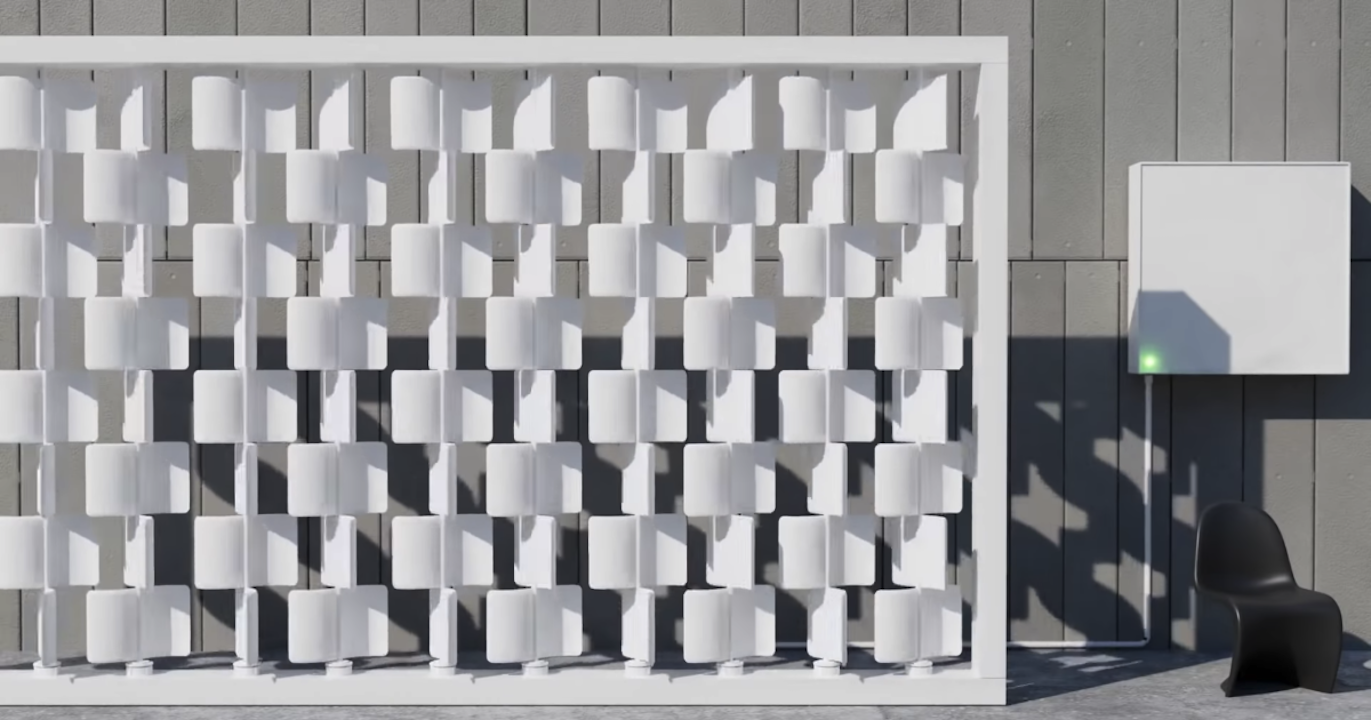
Wind Energy: Wind Turbine Wall Is Safe for Animals and Children and Can Function as a Standalone System or Be Paired with a Solar Panel to Generate Energy During Overlapping Hours
Wind energy has played a crucial role in helping national grids around the world reduce their dependence on fossil fuels for power generation, but residential wind turbines have seen very slow adoption, partly due to their not very attractive structure.
Read Also
- Neoenergia Starts Assembly of 103 GE Turbines, 125 Meters Tall, Equivalent to a 40-Story Building, at Its Largest Wind Farm in Northeast Brazil
- Construction of Statkraft’s Wind Farm Begins in June in Bahia; Complex Will Feature 163-Meter Nordex Turbines, Create Jobs, and Supply 190,000 Homes in the Northeast
- Nordex Scores New Million-Dollar Contract with Norwegian Statkraft, Europe’s Largest Renewable Energy Producer, to Manufacture and Install 14 Turbines at the Morro do Cruzeiro Wind Farm, 80 MW, in Bahia
- Siemens Gamesa Outshines Giant General Electric and Celebrates Incredible Milestone: The Largest and Most Powerful Wind Turbine in the World at 14MW with a 222-Meter Rotor Begins Generating Power
- With the Price of a Cell Phone, You Can Have Your Mini Wind Turbine for R$ 2,500 and Generate Energy at Home with a Functioning Just Like Large Wind Farms
In this regard, thanks to technological advancements in recent years, wind energy is beginning to gain more prominence, from large generators designed to be placed offshore to small solutions focused on buildings, where designers and architects have much to say about it.
They Are Undeniably Impressive to Look At! The Discreet Wind Turbine Wall Can Hide in Plain Sight and Produce Over 10,000 kWh
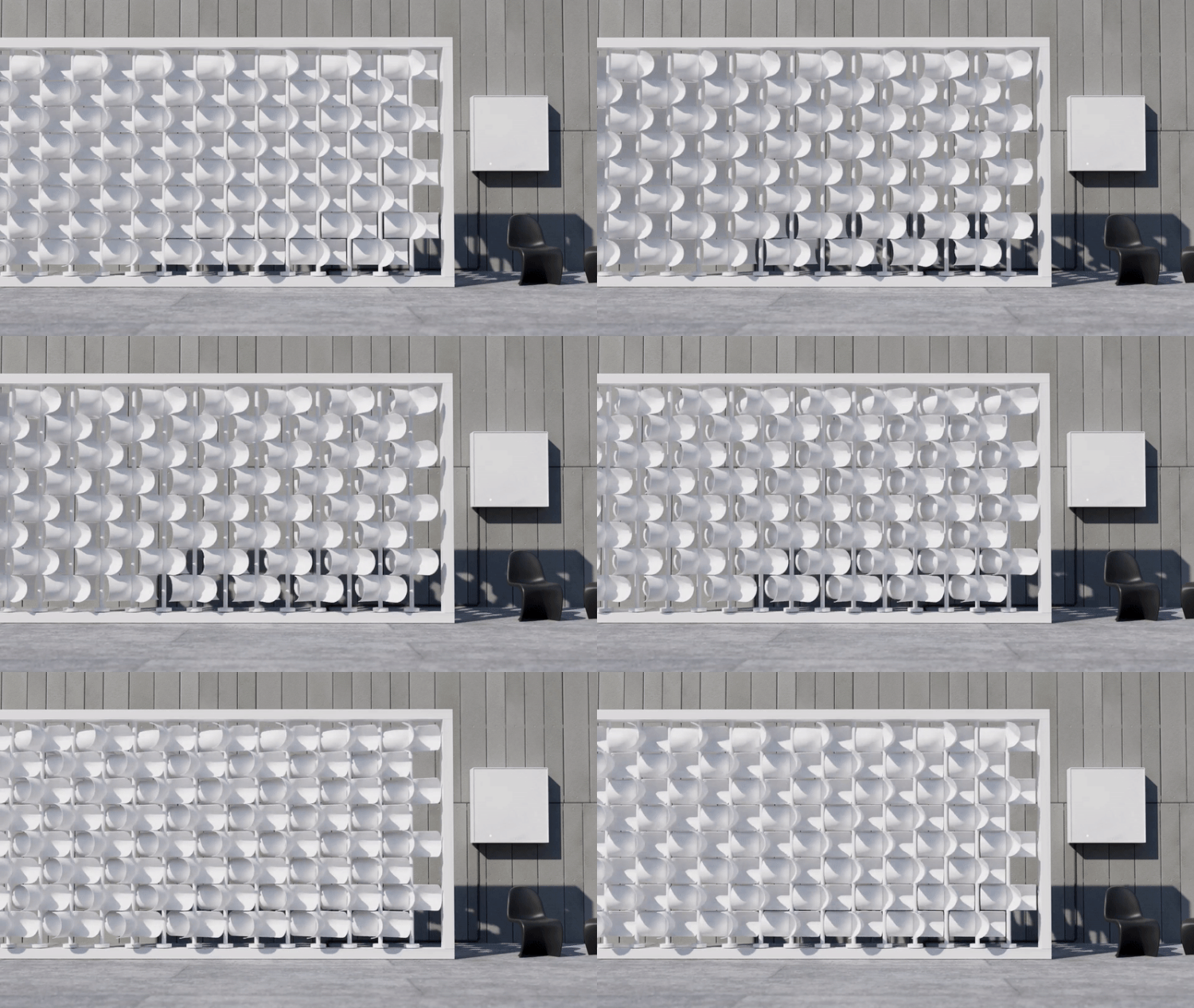
According to the designer, the discreet wind turbine wall can hide in plain sight and produce over 10,000 kWh per year, enough to power an American home.
-
Government unlocks R$ 554 million for a highway that has been requested for decades and accelerates the duplication of BR.
-
Without bricks, without cement, and without endless construction: the cardboard house that is assembled in modules and can be moved.
-
Billions of barrels on the equatorial margin could lead Amapá to double its oil production in Brazil — the state aims to enter the route of companies in the Campos Basin, attract investments, and boost jobs and businesses in the oil and gas sector.

-
Without bricks, without cement, and without endless construction: the cardboard house that is assembled in modules and can be moved.

New Turbine Perfectly Integrates with Current Urban Environments and Has Nothing to Do with Traditional Wind Generators
Based in New York, the design studio led by Joe Doucet created a wall made up of small wind turbines that can be placed both on fences and on the front of a wall to generate electricity. A solution that perfectly integrates with current urban environments and has nothing to do with traditional wind generators.
One of the reasons pointed out by this design studio is precisely the appearance of this type of generator. Unlike solar panels, which are often camouflaged on roofs, wind turbines have a very significant visual impact that cannot be wasted on top of a house.
To make electricity generation from wind less intrusive, the designers created what they call the “kinetic wall”. It consists of a matrix of rotating blades that spin individually, in turn driving a mini generator that provides electricity. The wall “is designed to be pleasing both aesthetically and functionally,” they point out.
Kinetic Wall Can Function as a Standalone System or Be Paired with a Solar Panel to Generate Energy During Overlapping Hours
Each wall would feature about 25 vertical turbines, each connected to a 400-watt generator for a total peak power of 10 kW. Like a rooftop solar setup, they can be connected to the grid or go through a battery system for storage. Doucet says they will be “almost silent,” producing “no more noise than a gentle spin,” and they are safe for environments with animals and children, as there are no pinch points in the rotation, and even a small child could easily prevent the light blades from spinning.
Capable of capturing wind from any direction except vertical, they could function as a standalone system or be paired with a solar panel to generate energy during overlapping hours. Doucet says he wants to keep these walls “very accessible.”
Doucet envisions a structure made of aluminum, which can be covered with any lightweight material. The designer also mentioned that he is in negotiations with manufacturers who could see the product launched to market sooner than expected. An ingenious design that could be an ecological response when it is impossible to implement a traditional wind turbine.







Seja o primeiro a reagir!