





 Portuguese
  English
  Spanish
  4 min of reading
  0 comments


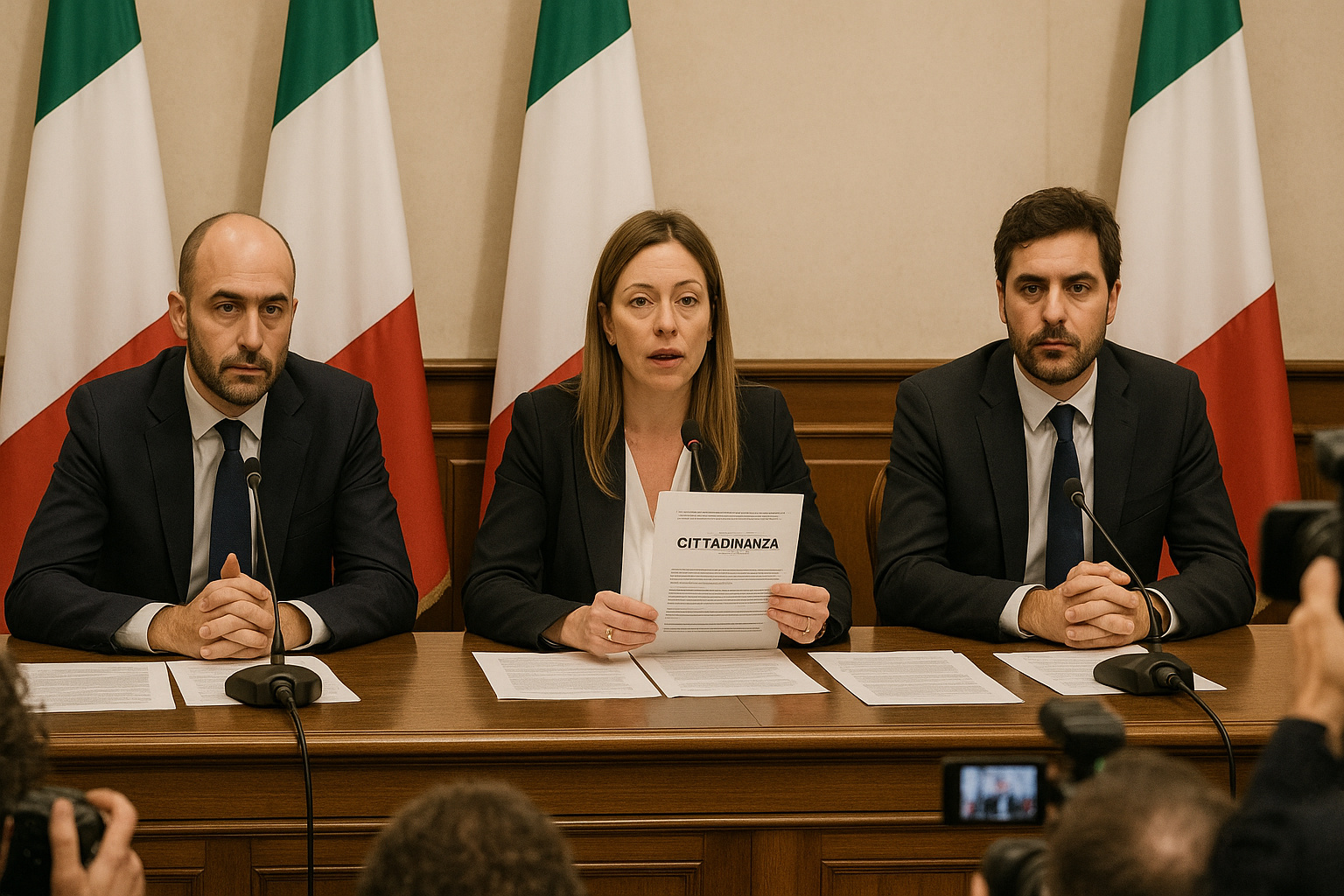
Proposal Rekindles Discussion on Italian Citizenship Rules and Establishes New Criteria for Descendants Living Abroad, Opening the Way for an International Debate on Language, Identity, and Cultural Ties That Could Redefine Entire Generations
The proposal presented by the Associative Movement of Italians Abroad (MAIE) in Rome has reignited a debate that has been intensifying in recent months: the future of Italian citizenship for descendants born outside Italy. The text, filed this Wednesday (19) by Congressman Franco Tirelli, elected in South America, establishes that great-grandchildren and future generations can only obtain recognition if they present a B1 level Italian proficiency certificate, which represents a significant change in the traditional rules of jus sanguinis.
Changes in the Citizenship Process and Focus on Cultural Ties
As previously noted by the Italianismo portal, the proposal was officially presented in the Chamber of Deputies in Rome, with the presence of key figures from the movement, such as Ricardo Merlo, Mario Borghese, and Antonio Iachini. The intention of the project is to reformulate essential points of the current legislation, especially after the Italian government approved a decree that restricted the recognition of citizenship for descendants born abroad.
The MAIE text emerges as an alternative that seeks, according to its authors, to balance the need to preserve cultural ties with the demographic reality faced by Italy. According to the president of the movement, Ricardo Merlo, the country is facing a population crisis that makes it essential to maintain ties with its global diaspora. “I believe this is a balanced proposal and I believe it is a proposal that Italy should accept,” he stated during the press conference. For him, the B1 level requirement strengthens this bond in a fair and coherent way.
-
New vaccination and mandatory testing rules in Brazil raise alarms, redefine public health regulations, and spark debate on sanitary control and individual rights.

-
The noise ban in Germany will no longer be at 10 PM starting in June with a new rule valid during the 2026 World Cup.

-
New vaccination rules and mandatory exams in Brazil raise alarms, redefine public health regulations, and spark debate on sanitary control and individual rights.

-
In Portugal, a boss who sends messages outside of working hours may violate the law, as the country has turned digital rest into a legal obligation and prohibited professional contact outside of working hours.

Rules Maintained for Children and Grandchildren, but Profound Changes from the 3rd Generation Onwards
Despite the stricter requirement for great-grandchildren, the MAIE ensures that children and grandchildren of Italians will continue to receive citizenship automatically, regardless of whether they were born in Italy or whether the family has maintained exclusively Italian citizenship over generations. This preserves the acquired rights of the first two generations, but radically alters the scenario for subsequent descendants.
Congressman Franco Tirelli explained that, for the third generation onward, the process will require a B1 certificate proving knowledge of the Italian language and culture. According to the politician, the aim is to ensure that new citizens maintain a real relationship with Italy. He also emphasized that the proposal could serve as a legal response to the government’s decree, which, in his view, will be declared unconstitutional by the Constitutional Court.
The information was originally disclosed by Italianismo, which reported in detail the presentation of the project, the justifications of the parliamentarians, and the possible repercussions of the measure. The text currently has only one congressman and one senator directly supporting it, but the expectation of the MAIE is to build a parliamentary base that allows for the advancement of the proposal in the coming months.
Impact on Italian Communities Abroad and Political Reaction in Rome
Senator Mario Borghese reiterated that the project is “balanced” and drew attention to the positive role that the B1 certificate requirement could play. He highlighted that there is a wide network of bilingual schools, cultural institutes, and Italian associations spread around the world, which would facilitate access to language study for descendants interested in citizenship.
However, the reform of the Italian government continues to face criticism, especially among families from South America who are struggling to recognize their minor children’s citizenship. For many of them, the MAIE proposal could represent a fairer alternative, although it imposes a linguistic barrier that did not exist before.
Even with limited parliamentary support — only one senator and one congressman — the MAIE is betting on broader articulation to bring the project to the Senate and public debate. For the authors, the new legislation would protect the historical bond between Italy and its vast diaspora spread across South America, North America, and other continents.
With increasing restrictions and growing concern for the preservation of the language, the discussion promises to dominate the agenda in the coming months, involving citizenship experts, Italian associations, jurists, and families awaiting clearer and more stable changes in the rules.
Follow the Next Steps
The proposal will now proceed for analysis in the Italian Parliament, where it may be subject to amendments, adjustments, and public hearings. For those closely following the topic, the Italianismo portal will continue to update the developments of the initiative, including voting, party articulations, and possible government reactions.








-

-

3 pessoas reagiram a isso.