





 Portuguese
  English
  Spanish
  4 min of reading
  0 comments


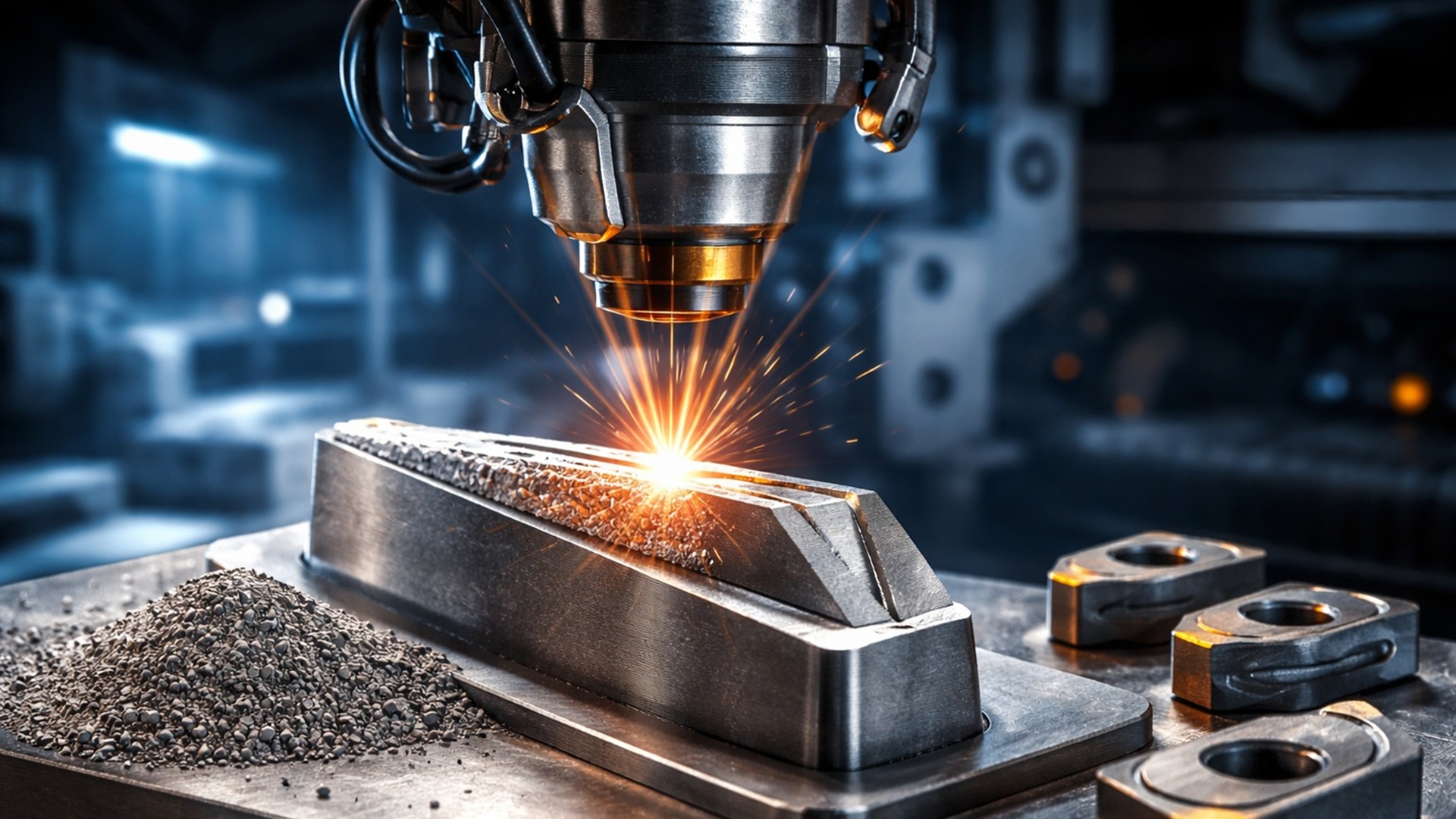
Research Published in the International Journal of Refractory Metals and Hard Materials Demonstrates That It Is Possible to 3D Print Tungsten-Cobalt Carbide Using Hot Wire Laser and Intermediate Nickel Alloy Layer, Preserving Hardness Above 1400 HV and Reducing Waste of Expensive Raw Materials
Researchers investigated how to 3D print tungsten-cobalt carbide (WC-Co), a material widely used in industrial tools. The study analyzed a technique based on laser and hot wire to reduce waste of expensive raw materials without compromising hardness.
Tungsten-cobalt carbide is known for its extreme hardness and wear resistance. These properties make it essential in industrial applications such as cutting tools and components used in construction. At the same time, this same resistance makes conventional manufacturing processes challenging and increases raw material consumption.
Traditionally, the production of these cemented carbides occurs through powder metallurgy. In this process, WC and Co particles are compressed under high pressure and then heated in sintering equipment, forming solid structures of cemented carbide.
-
Brazil has quietly developed an electric tactical drone that takes off and lands vertically without needing a runway, flies at 140 km/h in a fully autonomous manner, and can operate in forests, conflict zones, and remote areas.

-
Novo drone Guardian debuts in the United States with an 8-mile range, robotic battery swapping, and Starlink connectivity for continuous response.

-
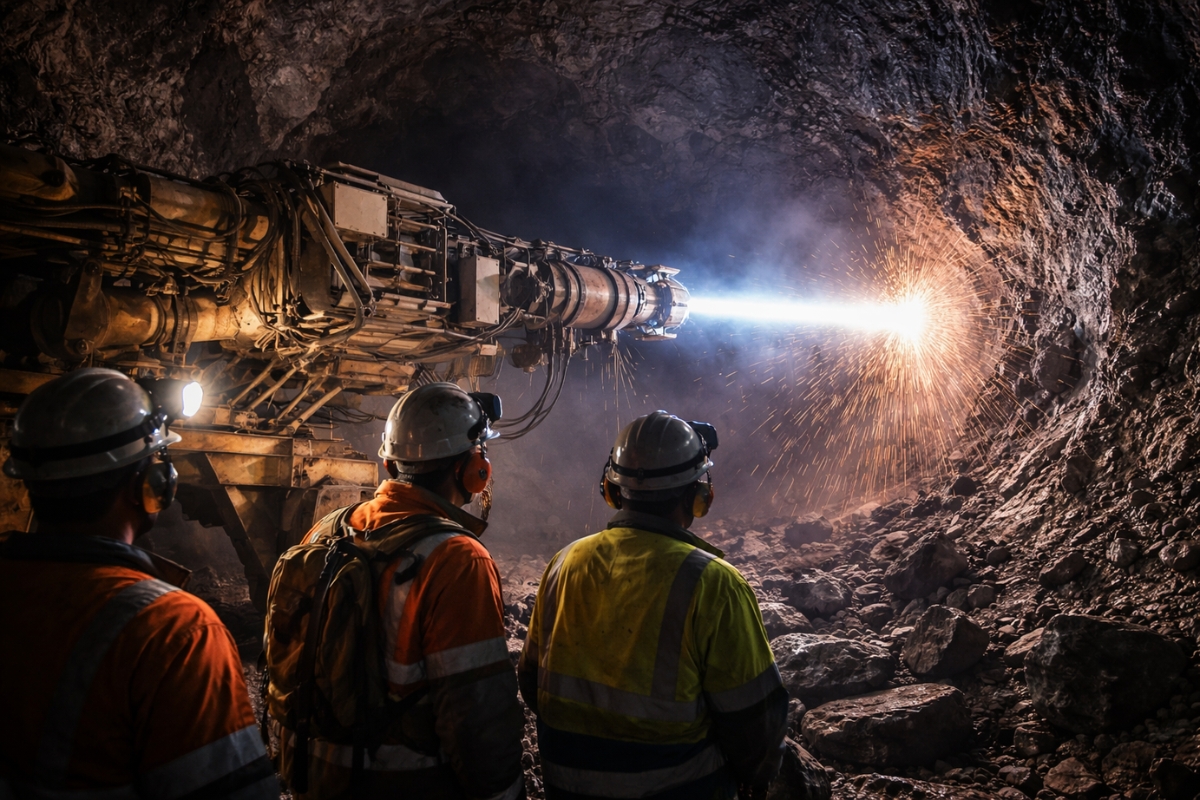
100 kW megalasers are already pointing to a new industrial phase, with enough power to cut thick steel, drill through rocks, accelerate mining, and increase productivity in operations previously considered too difficult.
-
Thousands of people in poor countries are paid cents to film household tasks, label images, and operate systems remotely all day long, and this invisible work fuels a $17 billion market that trains the artificial intelligences of Google, Tesla, and Meta.


Although this technique produces highly durable materials, it uses significant amounts of tungsten and cobalt. As these raw materials are expensive, researchers have been seeking ways to reduce waste and improve manufacturing efficiency.
In this context, the possibility of 3D printing cemented carbide emerges as an alternative to produce components only in the necessary areas.
The approach was investigated in a study published in the International Journal of Refractory Metals and Hard Materials, with a print publication expected in April 2026.
How the Attempt to 3D Print Cemented Carbide Works
The study evaluated an additive manufacturing technique that combines laser irradiation with a heated metal wire. This method, called hot wire laser welding, increases the material deposition rate and improves process efficiency.
When 3D printing using this approach, the heated wire is fed alongside the laser beam. This allows metal to be deposited in a controlled manner while the material softens during manufacturing, without the need for complete melting.
The researchers tested two distinct strategies during the experiments. Both aimed to form cemented carbide structures while maintaining properties similar to those obtained by traditional industrial methods.
In the first strategy, a bar of cemented carbide guides the direction of the process while the laser is applied directly to the top of that bar. In the second, the laser directs energy between the base of the cemented carbide bar and a base iron material.
Hardness and Resistance Results of the Produced Material
The tests showed that the 3D printing strategy for cemented carbide can preserve important mechanical properties. The manufactured material exhibited hardness levels exceeding 1400 HV, a value used to measure penetration resistance.
Materials with this hardness are among the most resistant used in industrial applications. They rank just below superhard materials, such as sapphire and diamond, in terms of resistance.
Another relevant result was the ability to produce cemented carbide molds without structural defects. This goal represented one of the main focuses of the research conducted by the involved scientists.
However, the results varied depending on the manufacturing method used. Each approach presented specific challenges related to material integrity and maintaining the necessary hardness.
Problems Identified During the Experiments
In the method where the cemented carbide rod guided the process, researchers observed decomposition of the WC near the top of the formed structure. This phenomenon generated defects in the final produced material.
In the method where the laser directly guided the manufacturing, difficulties arose in maintaining hardness levels deemed adequate for industrial applications. These results indicated that additional adjustments would be necessary.
To overcome these limitations, researchers introduced an intermediate layer based on nickel alloy. This layer helped stabilize the structure during the manufacturing process.
Additionally, it was necessary to carefully control temperature conditions. The process was maintained above the melting point of cobalt but below the temperature that causes excessive grain growth in the material.
With these changes, it became possible to 3D print cemented carbide while preserving hardness and reducing structural defects. The result demonstrated that additive manufacturing can be used to produce this type of extremely hard material.
Possible Applications and Next Steps in Research
The results are considered a starting point for new investigations. Researchers intend to work on reducing cracks during the process and in producing more complex geometries.
The study also indicated that forming metals through the softening of the material, instead of complete melting, could represent an innovative approach for manufacturing industrial components.
In addition to continuing to explore ways to 3D print cemented carbides, researchers plan to investigate the application of the technique in other metallic materials. Another line of work will involve manufacturing cutting tools using the method.
The research was conducted by Keita Marumoto and Motomichi Yamamoto, from the Graduate School of Advanced Science and Engineering at Hiroshima University. Takashi Abe, Keigo Nagamori, Hiroshi Ichikawa, and Akio Nishiyama from Mitsubishi Materials Hardmetal Corporation also participated.
The scientists aim to deepen studies to improve the durability of parts manufactured with this technique. The advancement could contribute to production methods that use fewer expensive raw materials and allow for the manufacturing of industrial components only where necessary.
This article was based on information from the study published in the International Journal of Refractory Metals and Hard Materials, conducted by researchers from Hiroshima University and Mitsubishi Materials Hardmetal Corporation.






Seja o primeiro a reagir!