





 English
  Francês
  Alemão
  Italiano
  Japonês
  Norueguês
  Portuguese
  Spanish
  4 min of reading


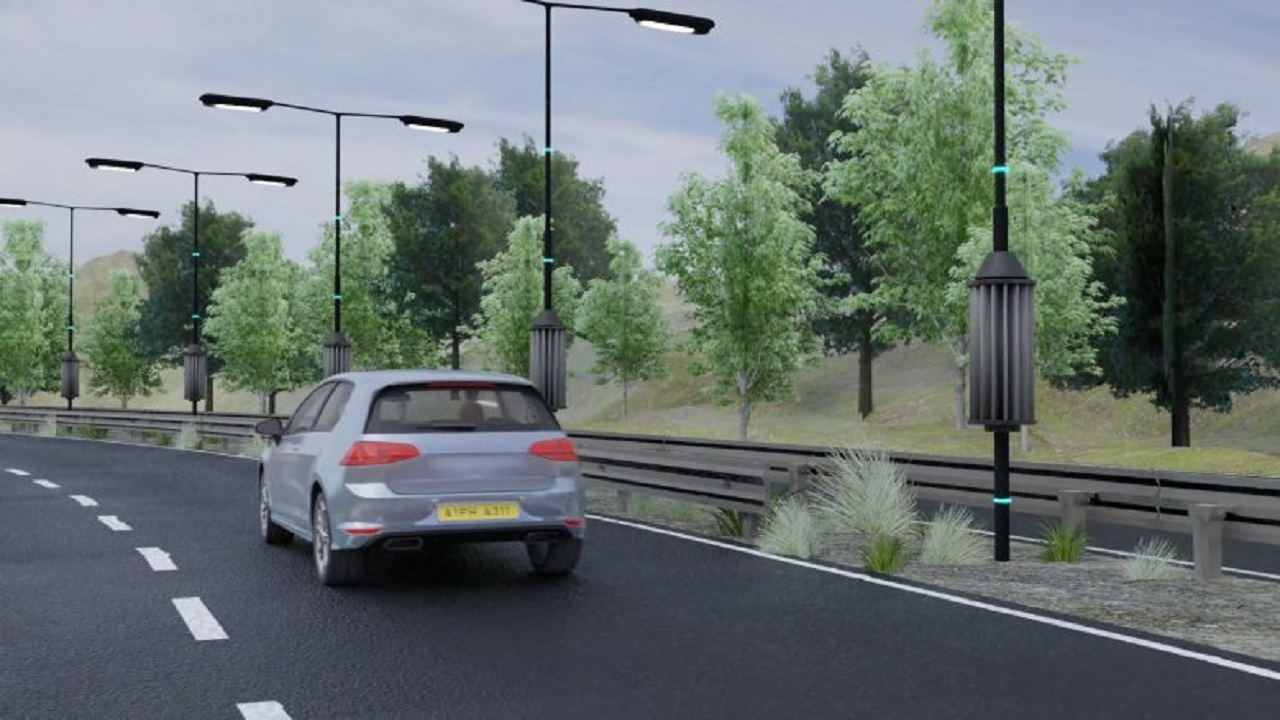
Alpha 311 Aims to Innovate in the Renewable Energy Sector with a Project Involving Wind Turbines That Rotate with Vehicle Movement and Can Produce Energy Equivalent to 100 Solar Panels
The new era of renewable energy has arrived, and with it, come bladeless wind turbines. The current highlight is a wind turbine that generates energy through the movement of vehicles on the road, meaning an invention that does not depend on natural winds. Wind turbines are already being installed on road poles in some countries. Check all the details about the road wind turbine.
Read Also
Find Out How the Wind Turbine That Does Not Depend on Natural Winds Works
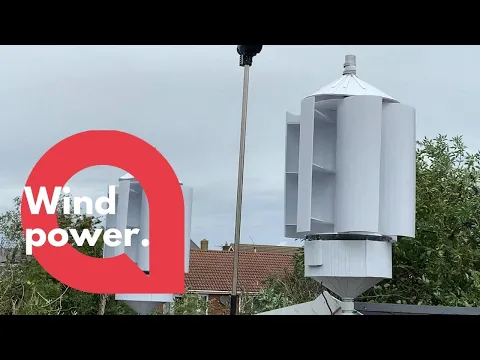

Each wind turbine stands about 2 meters tall, but Alpha 311 stated that the size of the new wind turbine may vary depending on the project’s development. To reduce installation costs for the wind turbine, the renewable energy turbines are connected to existing lighting columns that are already installed and located near the roads where vehicles pass.
As vehicles pass by, the wind turbine captures the air produced by their speed, causing the blades to rotate and thus generating energy. According to the CEO of the company that developed the wind energy equipment, Barry Thompson, this is a unique idea in the renewable energy market.
-
Renewable energy advances over protected areas in Brazil, and a survey by the Energy Transition Observatory reveals silent impacts that challenge environmental conservation and pressure sensitive traditional territories.

-
Rio Grande do Sul accelerates energy transition: State invests in renewable technologies and consolidates decarbonization strategies and pathways to attract billions in new industrial investments.

-
With 160,000 m² of collectors, an area larger than 20 football fields, Silkeborg, in Denmark, hosts a solar thermal plant that heats 19,500 homes and could become the largest solar heating plant in the world.

-
A study reveals the expansion of renewable energy procurement in Brazil and shows how companies are taking advantage of opportunities to reduce expenses, ensure energy efficiency, and strengthen strategic environmental commitments.


He stated that his home is fully powered by the prototype of the new wind turbine, which will be able to generate energy in its final phase equivalent to that produced by 21 square meters of solar panels.
Alpha 311 claims that the new wind turbine can generate approximately 6 MW when attached to poles on a highway, but it greatly depends on vehicle flow. This amount of energy, according to the company, could supply a small community.
The Innovative Project for Renewable Energy Utilizes Local Resources
Thompson also mentioned that the wind turbine will only use the infrastructure that already exists on-site, eliminating the need to fill the landscape with giant wind turbines. He mentioned a road in Kent County, England, which is less than 30 kilometers long, where turbines could be installed in the center of the roadway, capturing the wind energy from vehicles passing in both directions.
The new model of the wind turbine has several benefits, such as its small size and weight. Being small and inexpensive, it is easier to install. Additionally, wind turbines come equipped with sophisticated sensors that collect atmospheric data in the area. The blades of the renewable energy wind turbine have a 360° span, allowing them to capture wind from all angles.
The Search for New Renewable Energy Solutions Worldwide Involves Much More Than a New Wind Turbine

In addition to the new wind turbine, in recent years, companies have been tirelessly seeking ways to produce renewable energy to reduce CO2 and other gas emissions into the atmosphere, transforming the world into a sustainable place. A few years ago, students created a model of a vehicle powered by wind energy.
Students from the IED Barcelona Design School designed a model inspired by the automaker Tesla, a giant in the industry. The vehicle was named T1 and operates through 4 individual wind turbines that were 3D printed. The turbines were installed on the four wheels of the vehicle and are funneled to a fifth turbine located at the back.
The vehicle’s motor has a power output of 1341 hp and can reach speeds of 410 km/h. Furthermore, the prototype can accelerate from 0 to 100 km/h in just 2.5 seconds.
The students developed the prototype for Michelin’s new technologies competition, which encourages innovations in renewable energy. Thus, it serves as a great example that many ideas are still to come in the renewable sectors, and that there is always a way to create a more efficient and sustainable means of generating energy, whether it be wind, solar, or biomass energy.










Seja o primeiro a reagir!