Portuguese
  Spanish


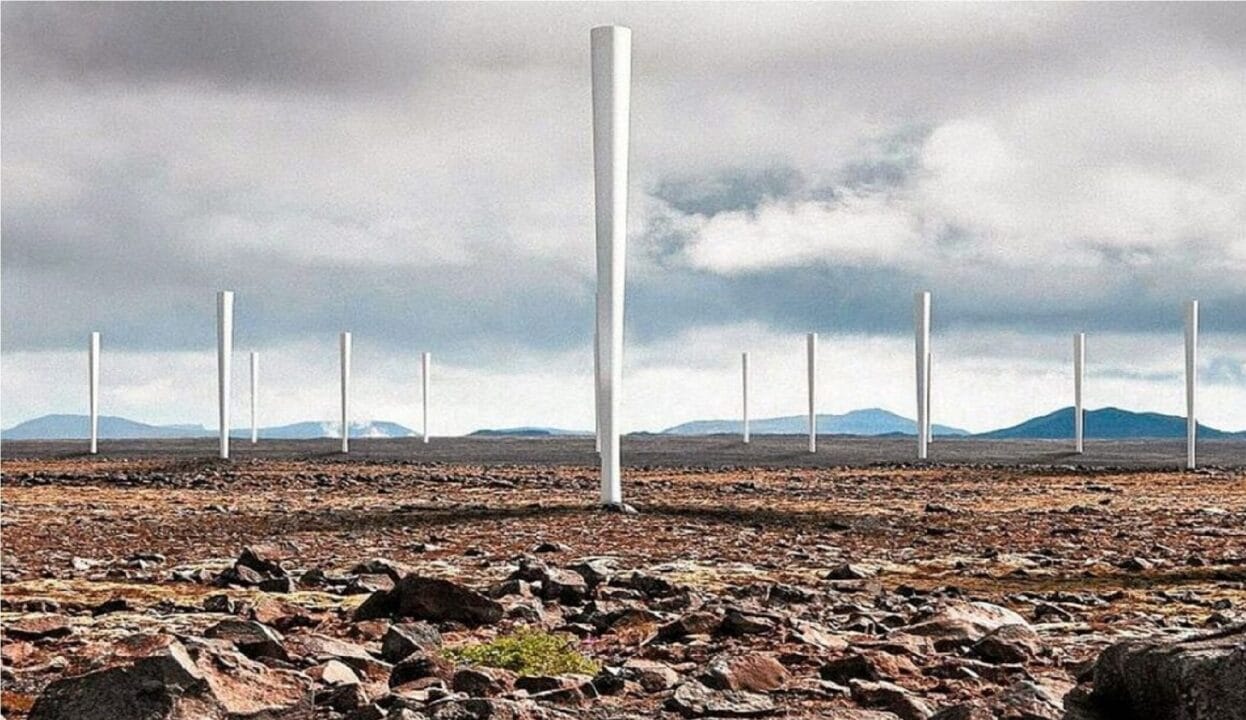


Meet The Innovative Bladeless Wind Turbine Created By A Visionary Startup That Promises To Revolutionize The Renewable Energy Sector
Vortex Bladeless, a major Spanish company, surprised the market by launching a revolutionary wind turbine that does not require traditional blades. This new technology promises to be quieter, cheaper, and equally efficient in generating clean energy, according to Petrosolgas.
Completely Bladeless Wind Turbine, Meet The New Creation Of A Spanish Startup
Named Vórtez, the new bladeless wind turbine operates vertically, moving with the wind flow. Unlike conventional turbines, which use blades to capture wind energy, the Vórtez utilizes vibrations generated by its movement to produce electricity. Initial tests showed that this technology can be up to 30% cheaper than traditional wind turbines, thanks to reduced installation and maintenance costs.
Brazil is one of the leading countries in wind energy generation, and this new technology could further boost this market. Wind energy is generated by converting the kinetic energy of the wind into electricity through wind turbines. In the case of the Vórtez, its innovation lies in the absence of blades, making it a viable option even in areas with lower wind speeds.
-
Brazilian scientists are simultaneously advancing two research projects on clean hydrogen and driving solutions that could transform the energy matrix, enhance industrial competitiveness, and accelerate large-scale emission reduction targets.

-
Advancement in renewable energy: A R$ 150 million project launched by Petrobras and Finep aims to create state-of-the-art electrolyzers for green hydrogen, strengthening national research and preparing Brazil to compete in a billion-dollar energy market.
-
Illiterate or semi-literate grandmothers were trained to repair solar systems, open rural workshops, and light up homes that still depended on kerosene.
-
The world has bet on green hydrogen as the fuel of the future, but now faces the side effect: producing 1 kilogram requires about 9 liters of ultrapure water, and the largest projects on the planet are precisely in the driest regions of the Earth, where water is already scarce for people.





Advantages And Challenges Of Wind Energy
Wind energy is a clean and renewable energy source, but it also presents challenges. Among the advantages are reduced dependence on fossil fuels, diversification of the energy matrix, and job creation. On the other hand, reliance on consistent wind, the visual and noise impact of turbines, and interference with wildlife are challenges to be considered.
This new approach from Vortex Bladeless could represent a significant advancement in the field of wind energy, opening doors for a more efficient and accessible generation of clean energy.
How Does A Traditional Wind Turbine Work?
Conventional wind turbines have large blades designed to capture the kinetic energy of the wind. The blades are positioned to capture as much wind as possible. When the wind hits the blades, it exerts aerodynamic force that causes the blades to rotate around a central axis, similar to a helicopter rotor.
As a result, the motion of the blades is transferred to a central axis connected to a generator. This axis transfers the mechanical energy to the generator. The generator converts the mechanical energy received from the axis into electrical energy. This process occurs through electromagnetic induction, where the rotation of the axis generates a magnetic field that, in turn, induces electric current in the generator’s cables.
The electricity generated is then transmitted via cables to a substation, where the voltage is adjusted and electricity is distributed to the power grid. Wind turbines are equipped with control and monitoring systems that adjust the orientation of the blades to optimize wind capture.