





 Portuguese
  English
  Spanish
  4 min of reading
  0 comments


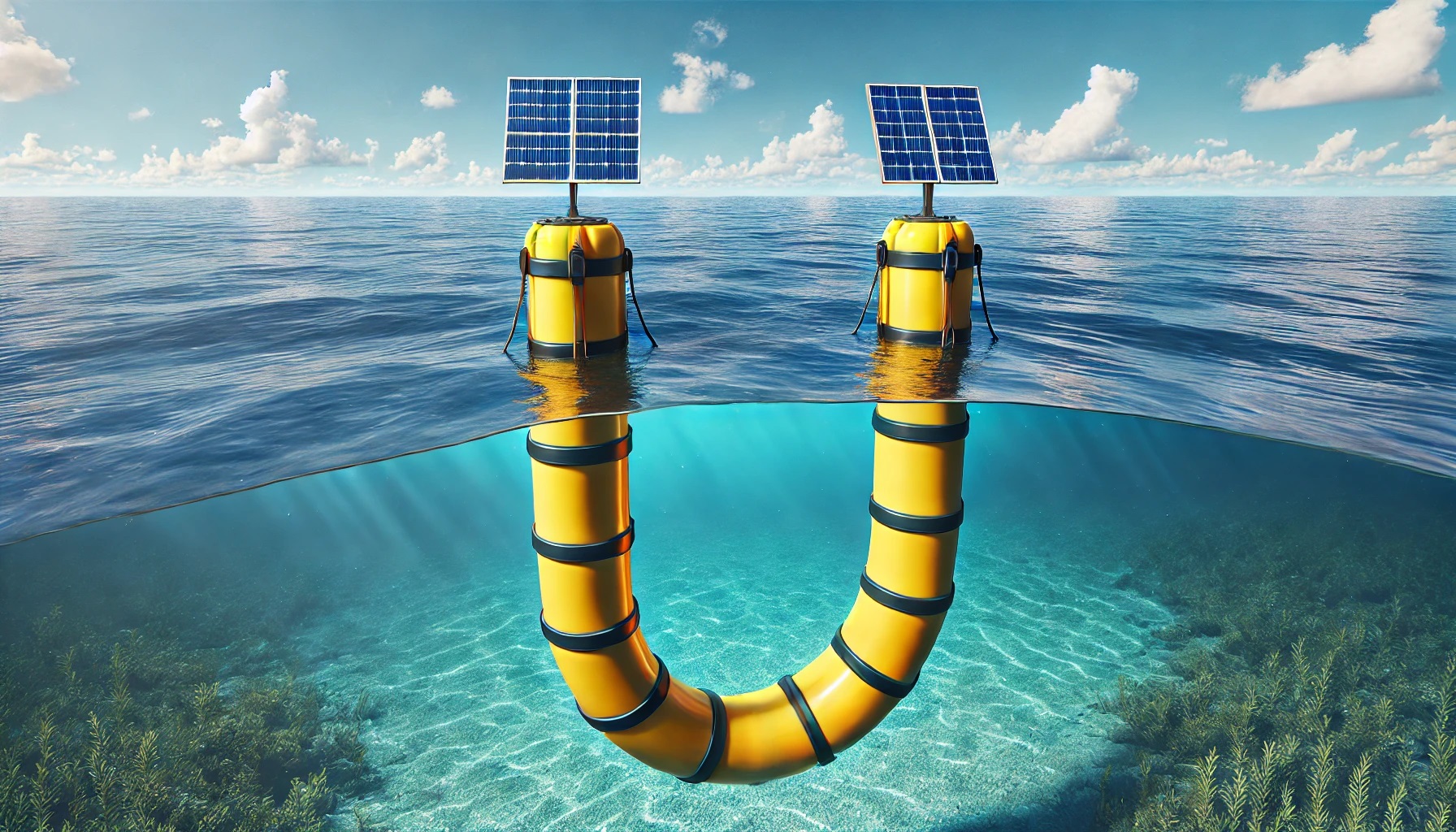
A revolutionary ocean wave energy plant has been created, operating without the need for fixed structures or mooring systems, offering a clean and sustainable solution.
The world is searching for renewable energy sources, and the ocean, with its vast potential, presents itself as one of the greatest promises. However, harnessing this resource remains a significant challenge.
Most current technologies face limitations in efficiency and high costs. It is in this context that Kinowave emerges as an innovation that can transform the way we generate electricity from ocean waves.
What Is Kinowave?
Kinowave is an innovative system for converting ocean wave energy into electricity. Its main feature is the use of interconnected cylinders filled with fluid, which capture the movement of the waves in a highly efficient manner.
-
An engineer designs a solar plane to fly on Mars at an altitude of 1,000 meters and a speed of 300 km/h, covering 16,000 kilometers in a Martian year, 900 times the distance traveled by the Ingenuity helicopter in three years on the planet before experiencing a rotor failure, and NASA is already funding the feasibility study.

-
A new phenomenon of contactless magnetic friction intrigues scientists and questions a theory that has been valid since the 17th century.

-
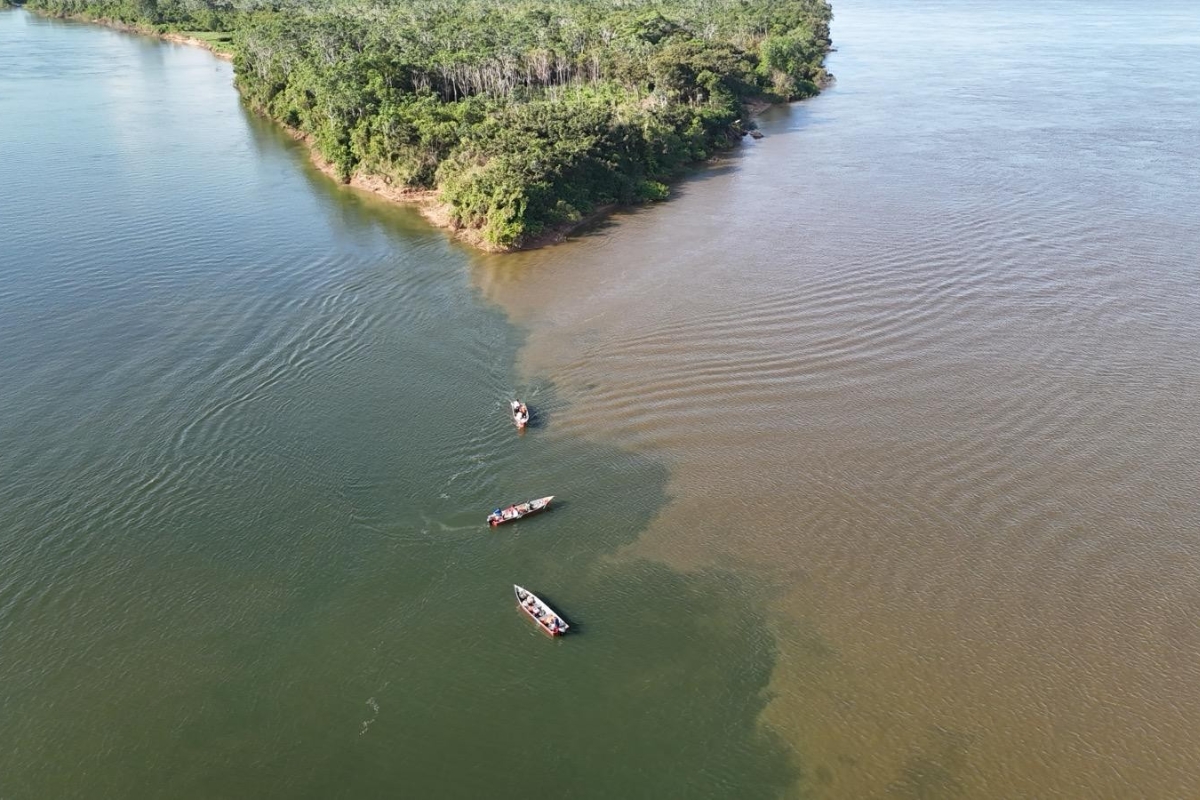
An impressive phenomenon in Northern Brazil causes rivers of different colors to flow side by side, revealing secrets about sediments, currents, and biodiversity.
-
While many schools are still struggling with the basics, a teacher in China went viral for having elementary school students build a two-stage rocket using plastic bottles, water, and pressurized air in a science class that caught the attention of the entire world.


Unlike other systems that rely on large fixed structures or mooring systems on the seabed, Kinowave does not require these permanent infrastructures, making it a more cost-effective and sustainable solution.

How Does Kinowave Work?
Based on Pascal’s principle, Kinowave uses vertical cylinders connected by flexible tubes that float on the ocean’s surface. The waves move these cylinders up and down, creating a relative movement of the internal fluid. This movement is converted into electricity by energy conversion mechanisms, such as Wells turbines, which are highly efficient in transforming dynamic motion into electrical energy.
This innovative system addresses the complexity and cost of other solutions that rely on fixed and expensive anchoring systems, while also improving the efficiency of wave energy conversion.
The Inspiration Behind Kinowave
The idea to create Kinowave arose from the realization of the vast untapped potential of waves, which could generate up to 41,300 MW of energy, just in India.
However, the challenge was to create an efficient relative movement between the waves and the energy capture systems. Inspired by Pascal’s principle and ancient water leveling devices, Kinowave was designed and tested in a wave tank, where it was demonstrated that the interconnected cylinders could generate the necessary movement to capture wave energy.

The Development Process
The development of Kinowave began with the ambition to create a simple and efficient system. The first prototype used plastic bottles connected by tubes to validate the concept. While promising, the water flow between the tanks was slow.
As a result, the system was optimized, replacing the plastic bottles with tanks and tubes of equal diameter, which significantly improved the fluid flow.
Throughout the process, the design was refined, and floaters were added to convert movement into energy. The system achieved an efficiency of over 65% in its initial tests, outperforming many existing wave energy generators.
Collaboration with companies like Mocean resulted in the incorporation of Wells turbines, further increasing the efficiency of the system.


Kinowave Differentials
Kinowave stands out for several reasons. Firstly, it eliminates the need for permanent structures on the seabed, significantly reducing installation costs and complexity. Secondly, the efficiency of the system is much higher compared to traditional technologies, such as Pelamis, which rely on inefficient hydraulic systems.
Additionally, Kinowave’s design is modular and adaptable, making it easy to implement in different oceanic conditions. This makes it a viable solution for various regions around the world, with the possibility to scale as needed.
Advantages Compared to Existing Technologies
Compared to other wave energy technologies, Kinowave offers several advantages. It overcomes the problems of wave height and direction variation, common in traditional systems. Its lack of anchoring on the seabed reduces the need for large, expensive, and hard-to-maintain infrastructures.
Unlike systems such as Point Absorbers or Attenuators, which can be costly and inefficient, Kinowave offers a low-cost and high-efficiency solution.
It also addresses the durability and mechanical complexity issues found in other wave energy conversion devices, such as Oscillating Water Column Converters.
The Future Impact of Kinowave
Kinowave aims to establish itself as a significant solution in the transition to a more sustainable energy model. Among its goals for the coming years are the validation of the Wells turbine prototype in a wave simulation tank and the manufacturing of a 100-watt prototype for testing in real ocean conditions.
Furthermore, the aim is to scale the system to 10 kW within three years, which would be sufficient to power five homes, a crucial step toward the commercial viability of the project.








-

-

-

9 pessoas reagiram a isso.