





 Portuguese
  English
  Spanish
  3 min of reading
  4 comments


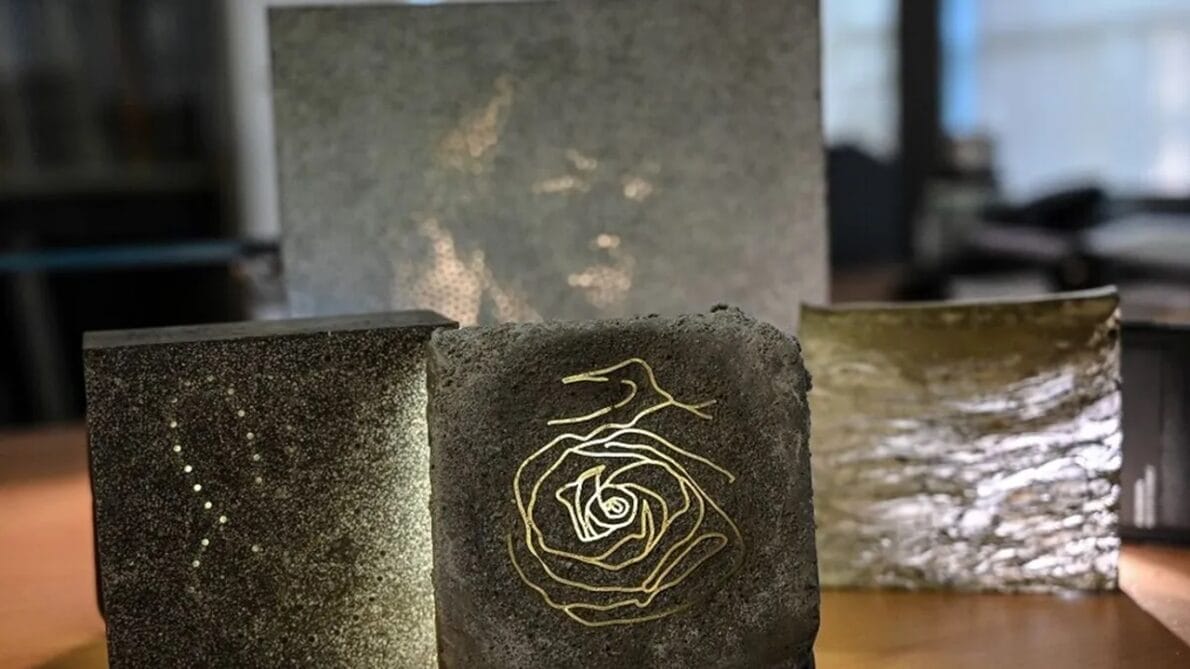

Researchers Create Translucent Concrete With 3D Printing at 80% Lower Cost Than Traditional Concrete. Technology Is Set to Revolutionize the Construction Industry.
They promise to revolutionize the construction sector with the HTRANS, a world-first translucent concrete that allows for the incorporation of 3D printed designs and the creation of facades or pavements on demand. Its designers are José Ramón Albiol Ibáñez and Miguel Sánchez López, two researchers from the Universitat Politècnica de València (UPV).
“Any project we can imagine can be 3D printed and incorporated into the facade construction process. With HTRANS, we can create structures including innovative images, in many different shapes: from our company’s logo to reproducing a piece of art, the face of a person, or the skyline of a city. We can also include light devices, such as LEDs, to illuminate the structure”, says José Ramón Albiol, a professor at the School of Building Engineering at Universitat Politècnica de València.
Check Out the Video Below of the New Concrete That Promises to Revolutionize the Construction Industry
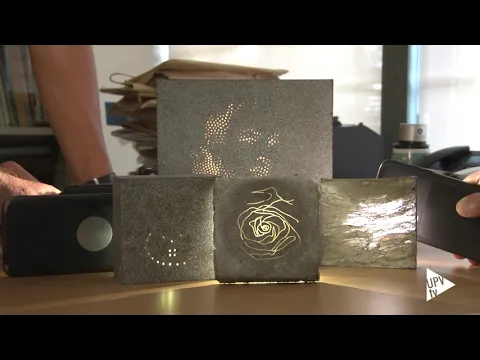

HTRANS Has Permanent Lighting
This innovative concrete can incorporate permanent or intermittent lighting in any area, using batteries that are charged through an external feeder, as well as wireless charging devices.
-
Only 37 meters remain for Brazil and Paraguay to “close” the bioceanic bridge on the Bioceanic Route: the project worth R$ 575 million is at 89% completion, uses 14,000 tons of steel, and aims to finish the connection by the end of April.
-
Scientists have recorded 12 sunken vessels on the seabed around the port of Santos: seven have already been studied, with highlights including the Casador from 1828, the Questrel that appears at low tide, and the Professor Besnard, which capsized after a recent heavy rain.

-
The time when astronauts traveled the farthest in space happened now: Artemis II took Orion to 406,771 kilometers from Earth, surpassing the Apollo 13 milestone by 6,600 kilometers.

-
The rare emergence of triple cyclones in the Pacific can unleash extreme rainfall on islands, form twin storms, and even strengthen a stronger El Niño on the planet.

“The 3D printed pieces with the design we want to show also incorporate an internal substructure that ensures the structural stiffness of the piece”, adds José Ramón Albiol. This configuration and the materials used help ensure that the quality and definition of the facade images are excellent, enhancing the three-dimensional appearance of the final product.
3D Printed Translucent Concrete Is 80% Cheaper Than Traditional Concrete
In the production process, the UPV researchers emphasize its simplicity: on one hand, they have 3D printed pieces with the designs they want to incorporate into the product, whether it’s a facade or a pavement.
These pieces are included in the formwork, concrete is poured, and once inside them, both sides are polished to achieve the final product with the image or design chosen. “All of this is done in record time and at a much lower cost than today”, conclude the researchers from UPV.
All of this is at a much lower cost than conventional translucent concrete. Translucent concrete is not a new thing, but it has to be handmade, which directly impacts its high final cost.
“This is where one of HTRANS’s main advantages lies. What makes our invention stand out is the inclusion of 3D printed transparent resin pieces within the concrete. Thanks to this, and the use of non-fiber optic filaments, we can automate production and significantly reduce production time, which translates into a cost savings of about 80% in the final product”, says Miguel Sánchez, a professor in the Department of Computer Engineering (DISCA) at the Universitat Politècnica de València.
I would love to know what you think of this new concrete. Let us know in the comments section if you are a construction professional and your experience in the field. Don’t forget to turn on notifications from CPG to keep up with all the news from the automotive world. See you next time!






Oii estava navegando em seu blog e encontrei diversos artigos interessante como este. Zap Ferreira Costa
Que matéria mais sem pé nem cabeça. Concreto nos lembra uma peça estrutural, mas se fala de transparência, iluminação LED,… Não tem informação técnica alguma, tudo isto foi só para atrair clicks. Somos todos otários!?
Artigo muito pobre, do ponto de vista técnico. Não apresentou nenhuma informação sobre a composição ou o processo de produção do concreto.