





 Portuguese
  English
  Spanish
 5 min of reading
  0 comments


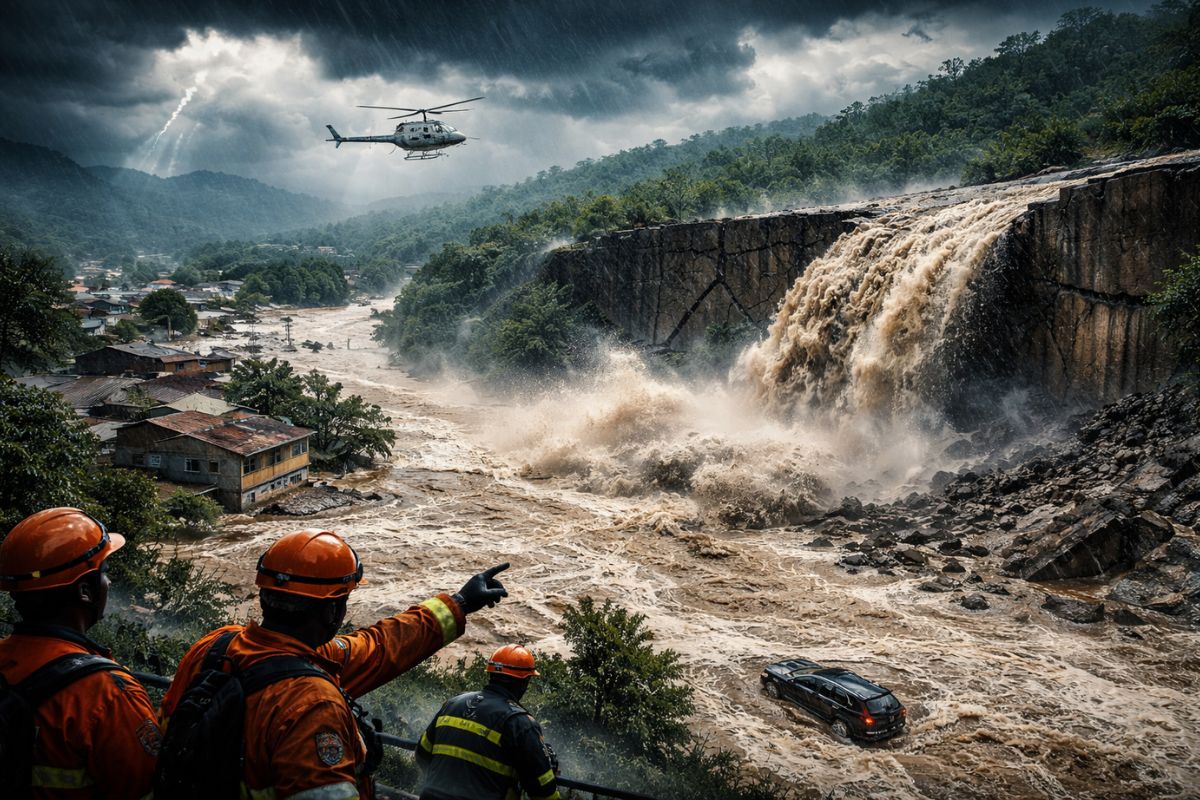
The Rio Lajes Dam, in the rural area of Porteirinha, in northern Minas Gerais, entered critical condition after registering a risk of breach, overflowing after more than 100 millimeters of rain, and leading firefighters, Civil Defense, and the federal government to declare an emergency with evacuations and flooding throughout the entire region.
The dams of the Rio Lajes put Porteirinha at the center of a severe alert after overflowing under heavy rain and being treated by state and federal authorities as a structure with imminent risk of breach. The fear ceased to be a distant hypothesis and turned into an urgent response scenario.
Although there was no total breach, the rapid rise of the Mosquito River level caused flooding in urban and rural areas and led to the issuance of extreme alerts to the population. In just a few hours, the situation transformed the dams into a critical point of a crisis that mixes heavy rain, structural vulnerability, and direct human threat.
How The Dam Entered Critical Condition
According to the Military Fire Brigade of Minas Gerais, the dams overflowed after rainfall in the municipality exceeded 100 millimeters.
-
The narrowest house in the world is only 63 centimeters wide, but inside it can accommodate a bathroom, kitchen, bedroom, office, and even two staircases.

-
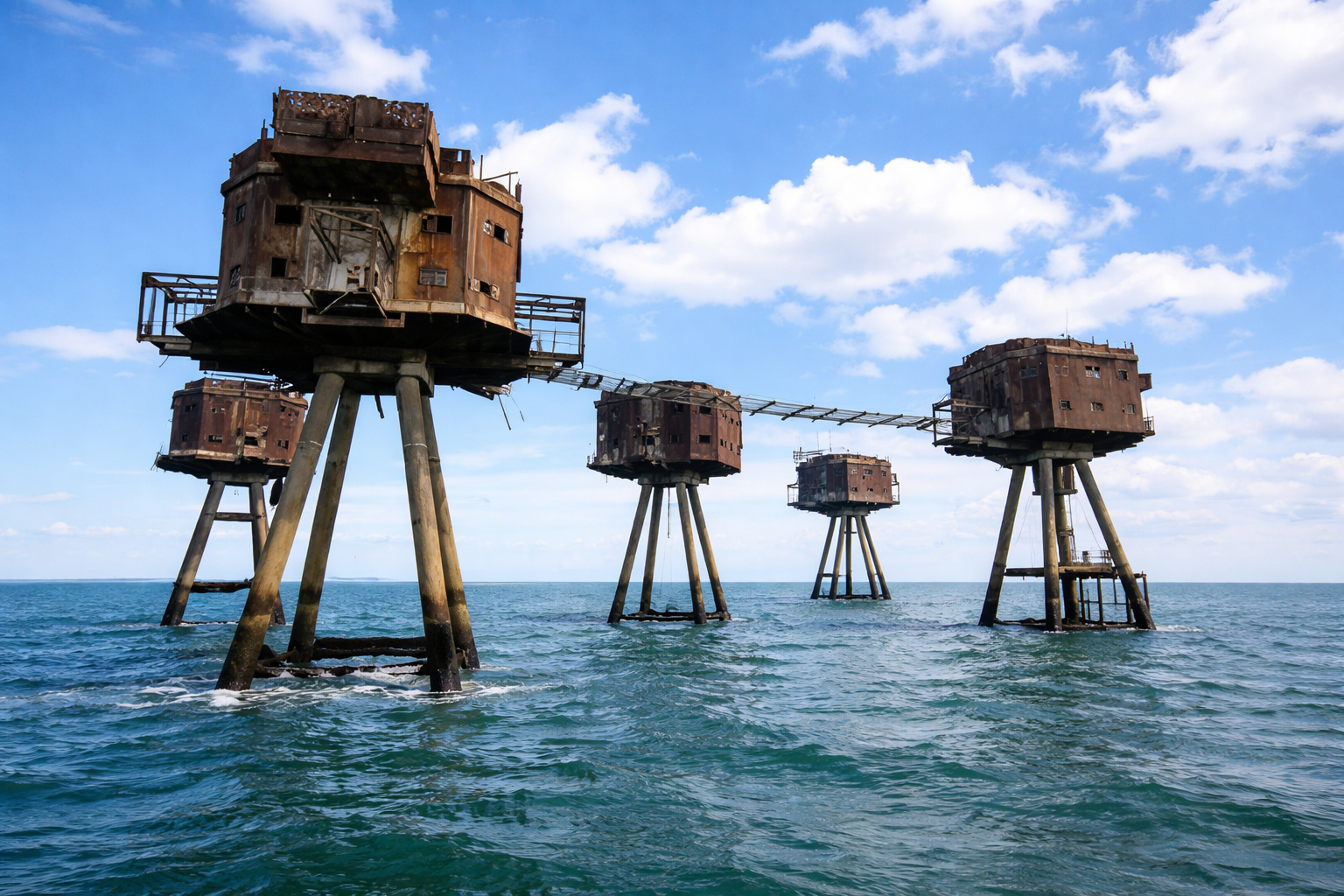
In the middle of the sea, these enormous concrete and steel structures, built by the British Navy to protect strategic maritime routes, look like they came straight out of a Star Wars movie.
-
For years, no one could cross a neighborhood in Tokyo because of the tracks, but an impressive solution changed mobility and completely transformed the local routine.

-
With 15 floors, an unusual building in Curitiba uses concrete, pilasters, and exposed roofs to create the effect of stacked houses.


This accumulation quickly raised the level of the Mosquito River and increased the effects on inhabited areas, affecting both urban stretches and rural zones. When water rises at this pace, the safety margin shrinks very quickly.
The gravity of the situation led to the activation of the Civil Defense Alert tool, which issued two extreme-level alerts with evacuation orders for residents of vulnerable areas.
What weighed in the decision was not just the overflow itself, but the combination of excessive rain, the possibility of structural failure, and the risk that the problem could turn into a broader disaster.
What Has Already Happened In Porteirinha And Why The Risk Has Not Been Discounted
The most important data so far is that there was no total breach of the dams. Still, this did not mean normalcy.
The waters began to recede throughout the day, but the scenario continued to be treated as an emergency because the structure had already entered a zone of instability considered serious by authorities.
Lowering the water level does not automatically erase the risk when the main threat continues to be the integrity of the dam.
This point helps to understand why the case gained such rapid dimension. In disasters related to dams, the interval between the first critical signal and more serious deterioration can be too short for improvised decisions.
Therefore, even without a confirmed rupture, the municipality began to operate under maximum prevention logic, trying to avoid having a technical alert being treated too late.
The Emergency Mobilized Firefighters, Civil Defense, And The Federal Government
The situation began to be monitored by the Federal Dam Safety Group, which includes National Civil Defense, regulatory agencies, and representatives from state and municipal bodies.
This articulation shows that the problem is no longer just local and has begun to require coordination among different levels of government.
When the dam enters imminent risk, the response cannot depend on a single agency or isolated reading.
The Ministry of Integration and Regional Development summarily recognized the emergency situation in Porteirinha, with publication expected in an extraordinary edition of the Official Gazette of the Union.
This measure paves the way for the city hall to request resources for humanitarian assistance, support for displaced and homeless people, and emergency actions aimed at reducing the risk of dam breach.
What Changes For The Population Of The Most Vulnerable Areas
In an official statement, the city hall reinforced the alert for residents of the Lages community and neighboring regions, asking for exclusive monitoring of the municipality’s and Civil Defense’s official channels.
The guidance makes sense because, in situations like this, rumors spread fear, hinder movements, and can lead to dangerous decisions.
In an emergency scenario, incorrect information also becomes a risk factor.
The municipal administration recommended that residents of threatened areas immediately seek safe places and avoid approaching riverbanks, dams, and already flooded areas.
The plea to remain calm does not diminish the gravity of the case; on the contrary, it tries to prevent panic from replacing attention to correct instructions.
When a dam is at the center of an emergency, discipline and speed are just as important as technical monitoring.
Why The Case Reignites A Greater Fear In Minas Gerais
Minas Gerais carries a traumatic memory whenever a dam enters critical condition.
For this reason, the Porteirinha case transcends the limit of an isolated occurrence and evokes an immediate collective fear, especially when the official alert speaks of imminent risk of breach and when there are already flooding events underway.
The fear does not arise only from what has happened now, but from what the state has already witnessed happen before.
At the same time, the episode also exposes a practical issue: disasters do not only begin at the moment of rupture. Many times, they start earlier, when rain accelerates, the level rises, the structure enters stress, and the population needs to leave hastily.
It is at this point that Porteirinha became a real test of preventive response, monitoring, and the capacity to act before the worst.
In the end, the crisis of the dams of the Rio Lajes is still open and depends on the behavior of the structure, the evolution of the rains, and the speed of emergency measures. In your view, has Minas Gerais learned to react before collapse or is it still too close to repeating tragedies when a dam alert reaches the extreme level?







-

4 pessoas reagiram a isso.