





 Portuguese
  English
  Spanish
  3 min of reading
  0 comments


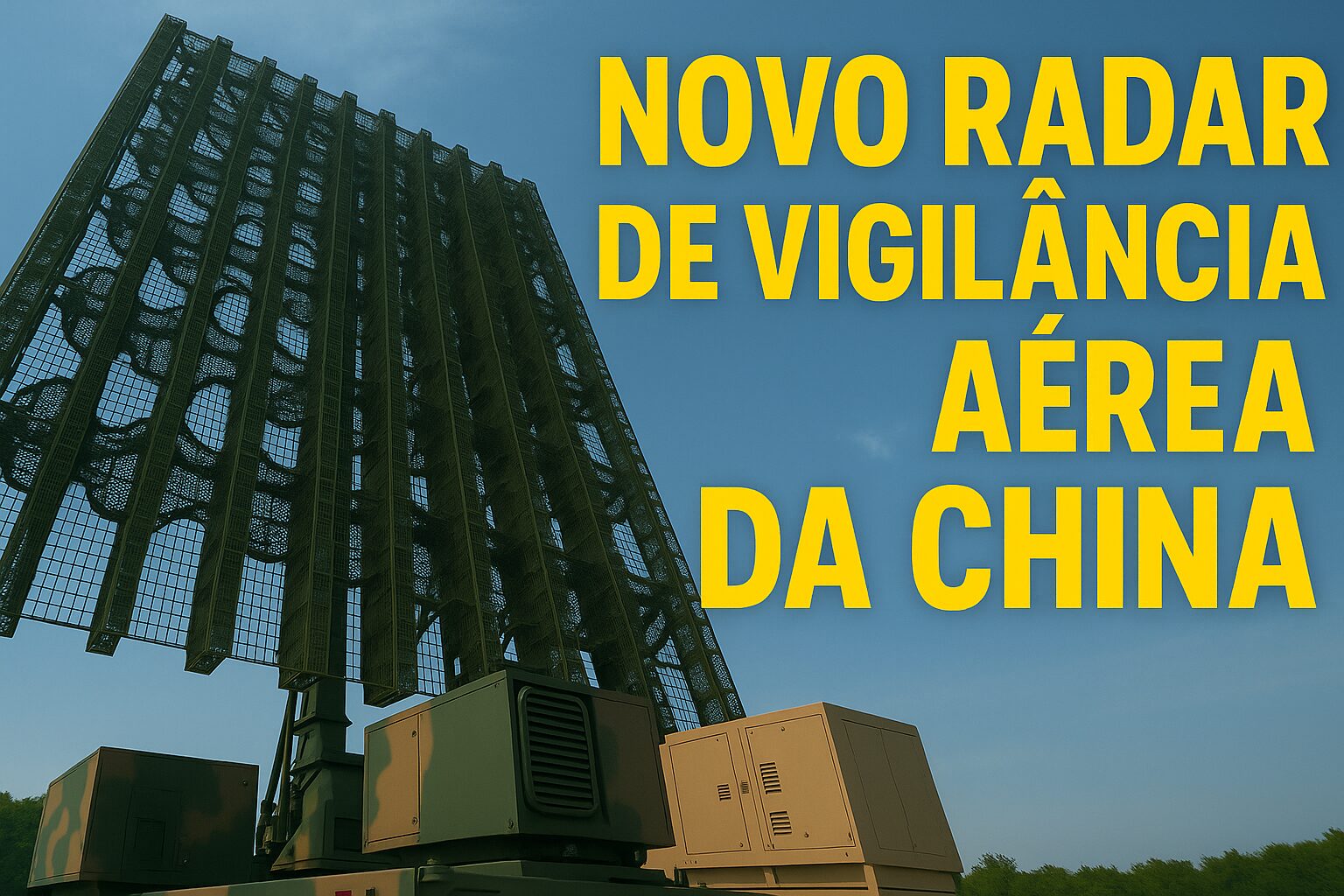
China Unveils Advanced Radars Capable of Detecting Stealth Fighters, Drones, and U.S. Submarines, Challenging American Technological Superiority in Strategic Areas
China has revealed a new generation of radars capable of detecting stealth fighters, advanced drones, and even U.S. nuclear submarines United States.
The presentation took place during the 11th World Radar Expo, which began on Saturday in Hefei, Anhui province.
The systems showcased signal a clear attempt by Beijing to combat American strategic superiority based on platforms that are invisible to conventional radars.
-
Expedition 501: Scientists drill into the ocean floor and discover a giant reserve of fresh water hidden beneath the sea, extracting nearly 50,000 liters and revealing an invisible system that could reshape the map of water scarcity.

-
Archaeologists find an intact tomb over 2,500 years old, with more than 100 preserved objects, weapons, jewelry, and human remains never touched.

-
Volcanic lava transforms into threads as fine as human hair that travel over 30 kilometers by wind and fall like cutting rain on roofs and backyards in Hawaii and Iceland.

-
NASA issues a warning for the feared Godzilla El Niño that could change the planet’s climate in 2026 with extreme warming of the Pacific capable of causing devastating droughts in some regions and historic floods in others simultaneously.

JY-27V Radar: The “Master Artist” of Stealth Detection
Among the main highlights was the aerial surveillance radar JY-27V, developed by the state-owned China Electronics Technology Group Corporation (CETC).
The system uses low-frequency meter waves combined with advanced signal processing algorithms, allowing it to detect aircraft with stealth technology.
The state newspaper Global Times classified the radar as a “master artist,” capable of exposing aircraft such as the F-22 Raptor, F-35 Lightning II, and B-2 Spirit bomber.
These models represent the most advanced in U.S. stealth technology.
The JY-27V also features an expandable and retractable structure, which can be assembled or disassembled in just ten minutes, enhancing its mobility and resilience on the battlefield.
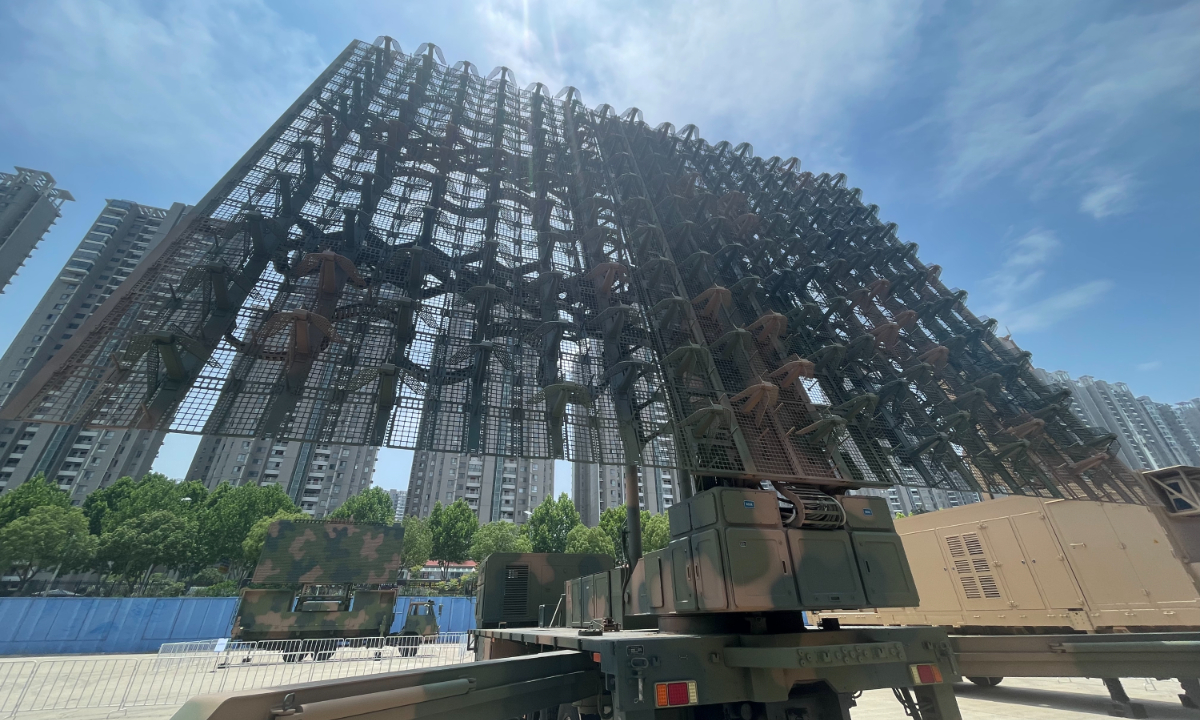
According to CETC, this type of radar can track aircraft that avoid high-frequency radars, which was previously a limitation in traditional air defenses.
The showcasing of these systems represents a significant advancement in combating stealth platforms that have long dominated the U.S. military landscape.
YLC-8E: Digital Technology Against Stealth Targets
Another notable radar was the YLC-8E, also from CETC. Operating in the UHF band, the system is mounted on a single vehicle and employs a fully digital phased array.
It performs 2D phased scanning combined with directional mechanical scanning, which increases its range and accuracy.
With digital transmission and reception modules, the YLC-8E provides early warnings against stealth threats, including drones and invisible fighters.
Additionally, it has resistance to interference and high reliability, important features for operation in both fixed bases and mobile structures.
The company claims that this radar significantly enhances China’s detection capability both inside and outside its airspace.
SLC-7: The Multifunctional “Overall Champion” Radar
The SLC-7 radar also gained prominence at the expo. Considered a fourth-generation solution, it combines simultaneous tracking of multiple targets with adaptive defense capabilities. This means it can operate efficiently even in high electronic interference scenarios.
According to the Chinese, the SLC-7 can identify not only stealth fighters but also helicopters, drones, artillery, and even short-range ballistic missiles. A relevant feature is its supposed ability to detect stealth drones like the RQ-170 Sentinel and nuclear submarines in shallow positions or while operating drones at sea.
These capabilities represent a direct threat to U.S. air and naval superiority, especially in strategic regions such as the South China Sea and the Western Pacific, where American military presence is often significant.
Shift in Military Balance
The new generation of radars presented by China indicates a shift in the global strategic landscape. By challenging the invisibility capability of U.S. military systems, this equipment could alter the balance of power in potential future conflicts.
The U.S. armed forces have stealth technology as one of the pillars of their global reach strategy. China’s ability to identify and track these assets with greater accuracy represents a new technical and military challenge for Washington.
With this advancement, China makes it clear that it is heavily investing to balance forces in the air and naval theater, making the battlefield more transparent for its defenses.









-

Uma pessoa reagiu a isso.