





 Portuguese
  English
  Spanish
  6 min of reading
  10 comments





More Space, More Power and More Car for Less Money: GAC GS4 Challenges the Corolla Cross and Delivers Twice the Power at the Price of a Compact SUV
Imagine a hybrid SUV that delivers more power than the Toyota Corolla Cross, has the size of a mid-size model like the BYD Song Plus and GWM Haval H6, but costs the same as a fully equipped compact SUV. Sounds impossible? Well, the GAC GS4 is directly competing with the giants, promising performance, technology, and a package of equipment that will make many expensive competitors envious.


Goodbye Toyota Corolla Cross: GAC GS4 Arrived with Two Feet in the Door Bringing Large SUV Power at Compact Pricing
The GAC GS4 arrived with two feet in the hybrid segment, bringing a strong engine, technology developed with Toyota, and an aggressive price. While rivals like Hyundai Kona, Kia Niro, Corolla Cross and Haval H6 HEV2 are priced between R$ 215 thousand and R$ 220 thousand, the GS4 comes in at R$ 189,990 for the Premium version and R$ 199,990 for the Elite version.
Even priced as a compact, the GS4 has midsize dimensions: it measures 4.68 meters in length, 1.90 m in width, and has a wheelbase of 2.75 m. For comparison, the Toyota Corolla Cross is 4.46 m long. In other words, the GAC delivers more space, more power, and more car for less money.
-
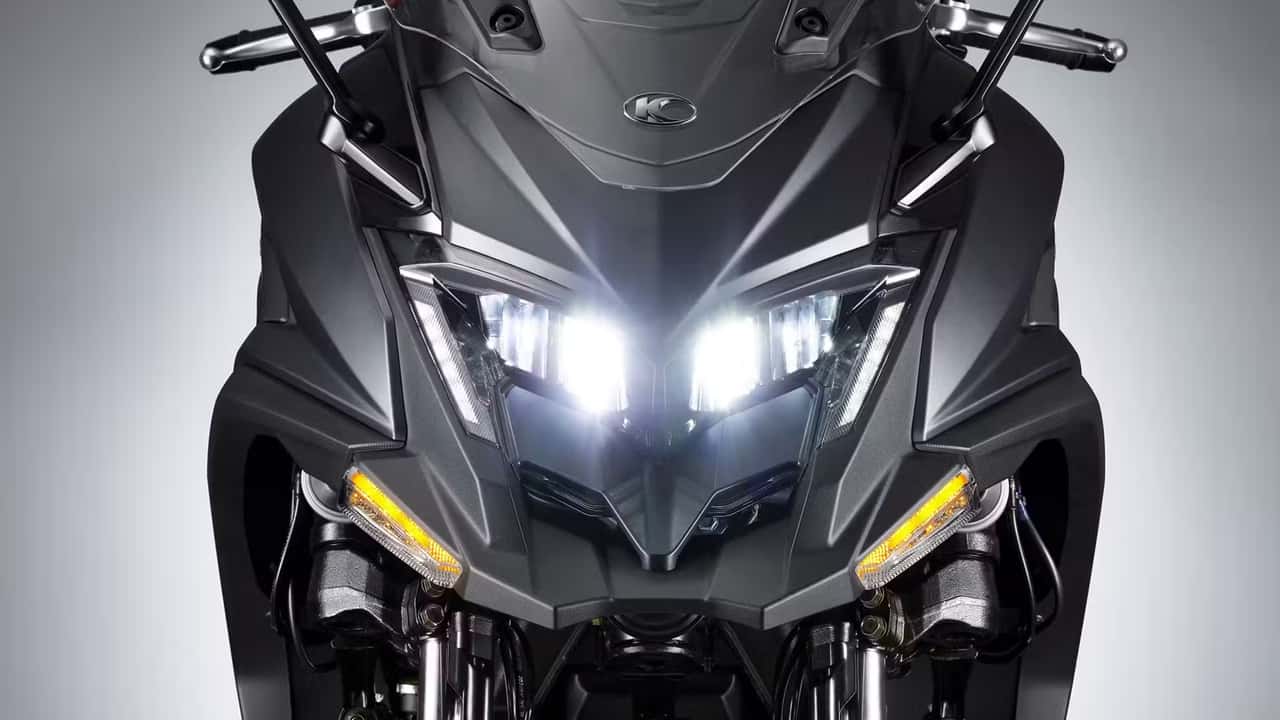
Kymco launches a 3-wheeled scooter with a 52 hp engine, a tilting front, and an audacious proposal to address one of the biggest fears of those who want to ride a motorcycle but still do not trust two wheels.
-
Most drivers make a big mistake on the road without knowing: there is an exact speed that makes the engine work with minimal effort and saves much more fuel, and it is neither 80 km/h nor 100 km/h as many imagine.

-
Mechanic explains: Ferrari 296 has a hybrid system management failure that can drain the high-voltage battery to an “irrecoverable” point in the car; recovery requires charging cell by cell on a bench, is risky, and the battery can cost R$ 250,000 imported.

-
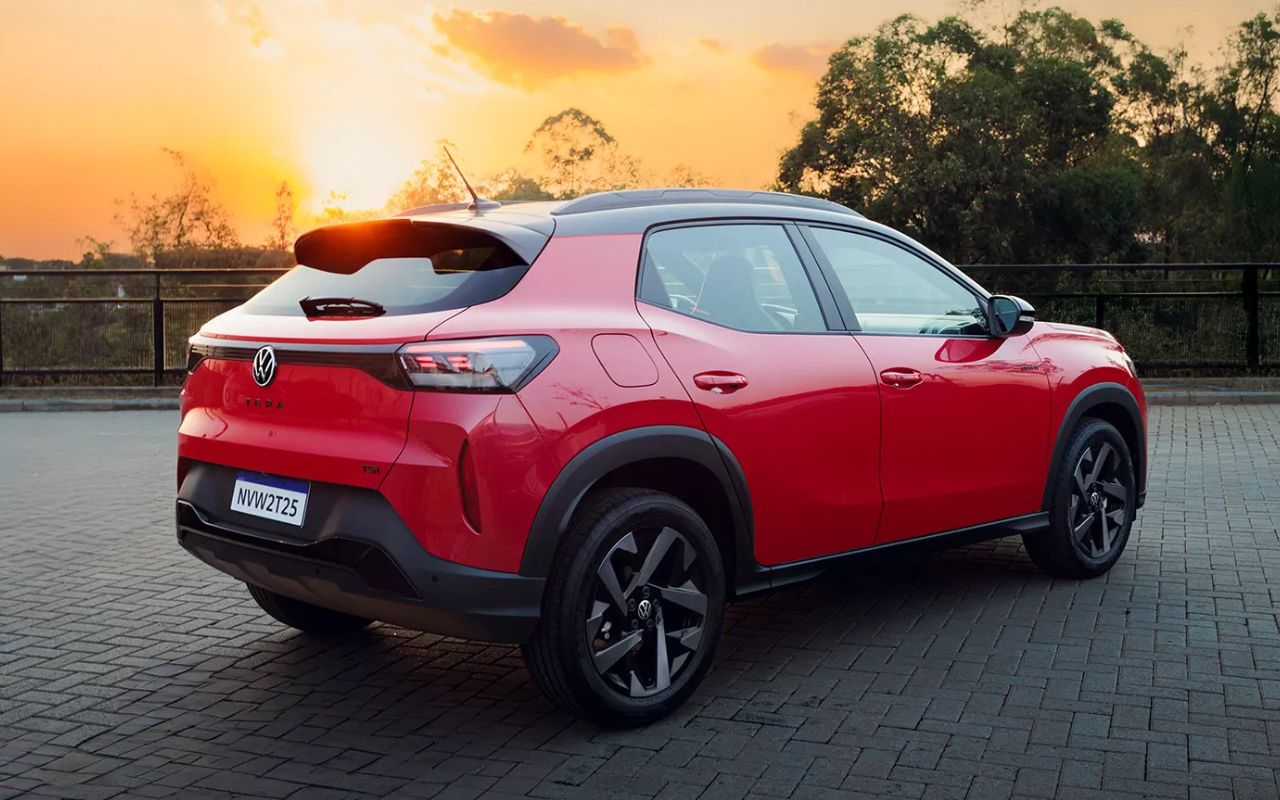
It surpassed the T-Cross, Creta, and Tracker: with nearly 8,000 units sold, the Volkswagen Tera was the best-selling SUV in March 2026.
Sharp Mechanics with Toyota DNA Challenges Corolla Cross
The secret lies in the G-MC 2.0 technology, developed together with Toyota, which equips the GS4 with a complete hybrid system. Under the hood, it features a 2.0 gasoline aspirated engine, Atkinson cycle, with direct injection, generating 140 hp and 18.3 kgfm. But the real trump card is the electric motor, which delivers 182 hp and 30.6 kgfm of torque.
Together, the two motors produce a combined 235 hp of power. Just for comparison, the Corolla Cross Hybrid only generates 122 hp in total — meaning the GAC GS4 delivers almost double the power.
The transmission is a two-speed automatic, with front-wheel drive, and the electric motor is integrated into the transmission, which improves efficiency during acceleration. The lithium-ion battery has a capacity of 2.1 kWh, recharges through regeneration, and allows for driving short distances in 100% electric mode, especially in urban traffic or at constant speed.
Exciting Acceleration and Well-Calibrated Suspension
According to the technical specifications from the manufacturer, the GAC GS4 accelerates from 0 to 100 km/h in 8 seconds and reaches a top speed of 180 km/h. But more than just numbers, the daily performance is noteworthy: the electric motor takes on a significant part of the work during acceleration, delivering almost instantaneous torque and maintaining stamina during overtaking and inclines.
The McPherson front suspension and multilink rear suspension provide comfort on the streets and control in curves. It effectively filters out imperfections in the pavement and keeps the body stable when driving demands more. The only point of attention is the electric steering: it’s too light in normal mode. It only gains weight and improves safety in sport mode.
Interior Full of Surprises and Embedded Technology
If the exterior design already catches the eye, the interior of the GS4 is equally impressive. The cabin blends boldness and practicality, with details that surprise. A good example is the air conditioning system, which has the temperature controls integrated into the central air vents — a beautiful solution, but one that requires some time to adapt to.
Another highlight is the smartphone induction charging base: when in use, it literally lowers and hides away, keeping the cabin visually cleaner.
The Elite version comes packed with premium equipment: panoramic sunroof, electrically adjustable leather-covered seats, electrically opening trunk, 19-inch wheels, head-up display, and a digital instrument panel with a 10.25-inch screen. And for all models, the safety package includes standard adaptive cruise control.
Complete Technical Specifications of the GAC GS4
- Price: R$ 199,990 (Elite version)
- Engine: 2.0 aspirated engine (140 hp and 18.3 kgfm) + electric motor (182 hp and 30.6 kgfm)
- Combined Power: 235 hp
- Transmission: 2-speed automatic
- Drive: front
- Suspension: McPherson (front) and multilink (rear)
- Brakes: ventilated disc in front and solid in the rear
- Tires: 235/55 R19
- Performance: 0 to 100 km/h in 8 s | Top speed: 180 km/h
- Fuel Consumption: 14.1 km/l and estimated total range around 705 km
- Dimensions:
- Length: 4.68 m
- Width: 1.90 m
- Height: 1.66 m
- Wheelbase: 2.75 m
- Weight: 1,673 kg
- Trunk: 638 liters
Why the Consumption of the GAC GS4 Makes Sense: Power Compensates for Extra Liters
It’s true that the GAC GS4 Hybrid is not the most fuel-efficient hybrid SUV in Brazil. The GS4 registers about 14.1 km/l and an estimated total range of around 705 km, depending on urban or highway usage. But before judging solely by fuel averages, it’s worth looking at the whole package and, mainly, what it delivers in power and performance per liter of fuel.
Power That Justifies Every Drop of Fuel
Just looking at the declared consumption can be misleading. Yes, the GAC GS4 has 14.1 km/l in the city, which seems inferior to what the Hyundai Kona Hybrid, Toyota Corolla Cross, and Kia Niro deliver, all exceeding 17 km/l. But here’s the detail that changes the game: none of them even comes close to the GS4’s 235 hp.
Let’s put it in numbers. The Corolla Cross has 122 hp and achieves 17.8 km/l. The Kona and Niro offer 141 hp with about 18.3 km/l. However, the GS4, with almost double the power, does not consume even 30% more fuel.
In other words, if the rivals had double the efficiency, then they would indeed be at the same technical level. But that doesn’t happen: the GS4, even though it’s more powerful and heavier, has one of the best fuel consumptions per horsepower in the segment. This is what engineers call relative energy efficiency — delivering more performance with less penalty on fuel consumption.
According to data from Inmetro, the GAC GS4 achieves 16.66 hp for each liter of gasoline consumed in the city, while the Corolla Cross stands at 6.85 hp/liter. That’s more than double the power per liter.
This relationship shows that, although it’s not the most economical in absolute numbers, the GS4 is more efficient in what it delivers per liter fueled.
New SUV Is a Positive Surprise in a Brazilian Automotive Market Dominated by Expensive Options and Less Performance
The GAC GS4 is a positive surprise in a market dominated by expensive options and less performance. Even being “different” in style, it delivers a package that is hard to beat: striking design, plenty of power, cutting-edge technology, and competitive pricing.
And the most interesting part: it is consolidating itself as a real alternative for those who were only considering Toyota, Hyundai Kona, or Kia Niro. According to specialist Rodrigo Ferreira from InsideEVs Brazil, “the GS4 shows how the new generation of Chinese hybrids can reshape the Brazilian market in the coming years, especially due to the good relationship between cost, power, and internal space.”
So, what did you think of the GAC GS4? Would you trade your SUV for it? Do you think the GS4 will challenge Toyota, Hyundai, and Kia in the hybrid market? Share your opinion in the comments or share this article with that friend who is considering changing cars.










Freio a tambor na traseira em um veículo de 200 mil. É rir da cara do brasileiro.
Acredito que você não tenha lido direito, na traseira é freio a disco, porém o disco é sólido.
O motor a combustão não é flex e vai usar nossa mijolina portanto vai ter problemas cedo. Não é turbo , meu Tcross 1.4 faz 18km/ litro na estrada e pesa 300 kg a menos. É importado da China e vai ter problema de peças e pós venda porque as css vão ser muito poucas. Revenda ruim … daqui 6 meses muda do jeito dos chinas e a revenda ficará ainda pior…
Tive um t-cross highline 1.4, fazia 16/18 km por litro, 0 a 100 em menos de 8 segundos e vel final de 202 km por hora. Disco nas 4 rodas, teto solar, todos os opcionais de fábrica. Muito mais carro.
Acredito que o que importa é o consumo final, não adianta ter grande potência, e gastar mais, tenho HRVEXL 2025 menos potência mas, mais econômico, trabalho e passeio com o carro, e ele me entrega 16km/litro.