





 Portuguese
  English
  Spanish
  3 min of reading



Public competitions are an entry point for various careers in different government areas in Brazil, and have been over the years a form of fair and open competition for all interested parties.
However, due to possible fraud, improving the selection process is a crucial point to continue maintaining public trust in the process, therefore avoiding lack of transparency and undue interference.
For this reason, the federal government intends to create new criteria for conducting public competitions, as a way to increase competition and ensure greater legal security, as well as to better select candidates. But how will these changes be made and what should we expect from them? This is what we will see next.
Federal Government Proposes Changes in Public Competitions
The federal government, through the Lula administration, seeks to approve a bill that has already been approved by the Chamber of Deputies and is now pending in the Federal Senate. The goal is to create new criteria that allow for better candidate selection, increase competition, and ensure greater legal security. The changes may apply not only to federal competitions, but also to states, municipalities, autonomous agencies, and public foundations.
-
Famous sertanejo singer and the automaker BYD appear together on the federal government’s dirty list after instances of work analogous to slavery in Goiás and Bahia.

-
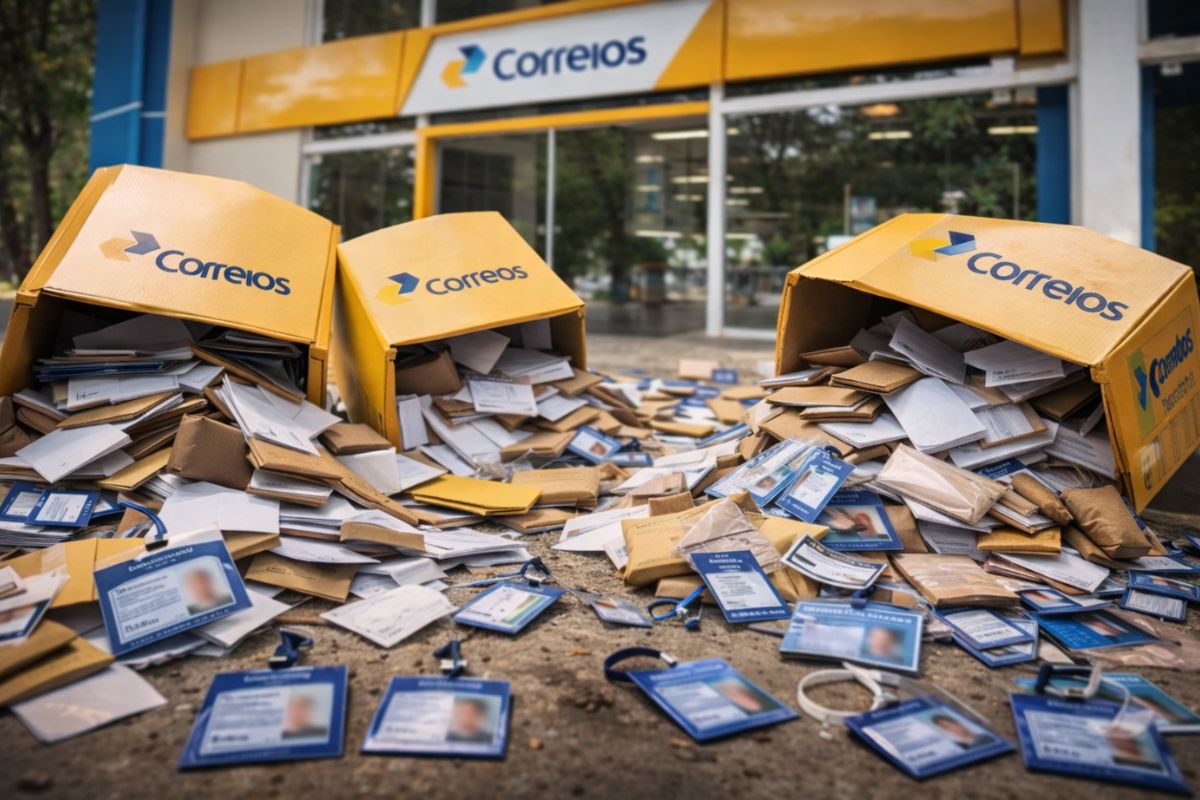
Correios lose more than 3,000 employees in mass layoffs and still aim to reach 10,000 dismissals in an attempt to save a state-owned company that has accumulated losses of R$ 6 billion and a negative net worth of R$ 10 billion.
-
Latin America is stagnant, and Brazil is part of the problem, says the World Bank in a report that highlights Argentina as the main positive exception in the region thanks to fiscal adjustment and Milei’s reforms.

-
Germany is investing in the interior of São Paulo to test the production of green hydrogen and aviation fuel made from sugarcane in a partnership with Cocal and Siemens that could change the Brazilian energy sector.

According to information published by Folha de São Paulo, the criteria for tests will be maintained, but new mechanisms may be created for assessing candidates’ skills, considering practical evaluations related to the respective job activities. Additionally, psychological evaluation exams, mental health assessments, or psychotechnical tests should be prioritized to analyze candidates’ behavioral aspects.
Another point considered is the possibility of conducting online tests, which will be regulated by public administration or the contracting agency, in accordance with legal information security standards.
Draft Law Under Review in the Federal Senate
The draft law that the federal government may use to change the way public competitions are conducted is 2258/2022, which is a substitute from the Chamber of Deputies for the Senate bill 92/2000. The proposal is currently awaiting review in the Senate plenary since March 28.
Among various points outlined in the text, is the determination that public competitions must assess candidates through objective or essay tests; oral tests covering general or specific content; the preparation of documents and simulation of tasks specific to the position, in addition to, eventually, physical fitness tests, psychological evaluations, mental health assessments, psychotechnical tests, and review of qualifications.
The text also stipulates that competitions must account for personnel trends over the last five years and future needs, as well as demonstrate that there is no valid competition and estimate financial impact in the following two fiscal years.
Controversial and Unpopular Changes
The proposal for conducting tests remotely, through online or electronic platform with secure individual access, is one of the most controversial points of the draft under review. The rules will be defined specifically by regulation from public administration or the contracting agency, following legal information security standards.
However, it is important to note that the text has proven to be quite unpopular. On the Senate’s website, which allows the public to indicate whether they approve of the matter, the text currently has 645 votes against and only 22 in favor.
The new criteria for conducting public competitions aim to increase competition and better select candidates, ensuring greater legal security. However, as shown above, the proposal for conducting online tests and other controversial changes have generated dissatisfaction among the public and institutions.







Seja o primeiro a reagir!