





 Portuguese
  English
  Spanish
  4 min of reading
  0 comments


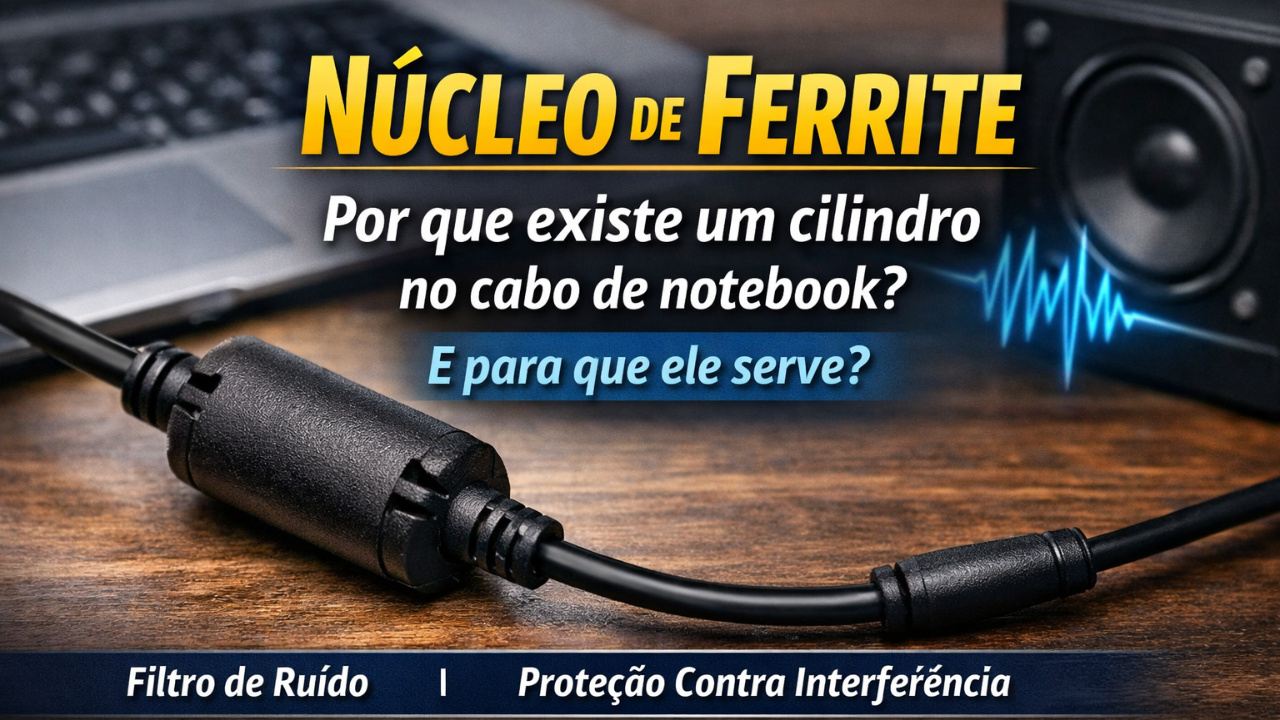
Discover What The Ferrite Core In The Notebook Cable Is For And How It Protects Devices Against Electromagnetic Interference.
Many people have noticed a small cylinder attached to the notebook cable, but few know its real function.
This component, known as the ferrite core, is used by electronics manufacturers to reduce electromagnetic interference and ensure greater stability in the operation of devices.
Present in notebook chargers, monitors, and various electronic equipment, the device acts as a kind of silent protection.
-
With a cost per shot close to zero, the DragonFire laser could change naval warfare in 2027 and provide British ships with nearly unlimited defense against drones.

-
A British startup creates tires that generate electricity in electric vehicles when passing over potholes, speed bumps, and cracks.

-
Scientists have created robots made with living cells that have their own nervous system, swim on their own, explore the environment, and self-organize without any genetic engineering, and now they want to do the same with human cells.

-
Students create a solar-powered ambulance that operates without a plug, without fuel, and still keeps medical equipment running in remote areas.


In practice, it functions as a noise filter that blocks unwanted electrical signals that can affect the performance of other nearby devices.
This feature is widely used by the industry precisely because the flow of electric power in cables can generate magnetic fields capable of causing interference.
Thus, the ferrite core helps to maintain a more stable transmission of energy and data.
Ferrite Core: The Invisible Noise Filter In Cables
The ferrite core is made from a ceramic material primarily composed of iron oxide combined with metals such as nickel or manganese.
These elements have magnetic properties that allow them to absorb unwanted electrical signals.
Inside the cylinder, there is a hollow ring made of this material.
The wire of the notebook cable passes through this ring, which acts as a high-frequency noise filter.
In practice, this system prevents the cable from functioning as an involuntary antenna.
Without this protection, it could emit or pick up electromagnetic signals that interfere with the operation of other electronic devices.
A common example occurs in speakers. Many people have noticed small crackling sounds when a cell phone receives a call near the equipment. This phenomenon is caused precisely by electromagnetic interference.
How The Ferrite Core Helps To Protect Electronic Equipment
Whenever an electric current flows through a wire, it creates magnetic fields around the cable.
In environments with multiple connected devices, these fields can generate interference between the devices.
It is in this scenario that the function of the ferrite core comes in.
It absorbs unwanted electrical frequencies and contributes to a kind of electrical shielding in the system.
With this, the device helps stabilize the transmission of energy or data that passes through the cable.
Additionally, it reduces electrical fluctuations that could affect sensitive components of the equipment.
Another important benefit is the prevention of distortions in nearby devices.
This includes speakers, monitors, televisions, and even communication equipment.
Practical Example Of Interference In The Notebook Cable
Imagine a notebook connected to the charger while a speaker is positioned next to the equipment.
In this case, the notebook cable can generate magnetic fields capable of interfering with the operation of the speaker.
Without the presence of the ferrite core, these fields can cause pops or noises in the audio.
This type of situation is more common when the notebook is transmitting data over Wi-Fi or performing tasks that generate electrical variations in the system.
On the other hand, when the cable has the filter installed, the noise filter absorbs these unwanted frequencies. The result is more stable operation without noticeable interference.
Why Notebooks And Monitors Usually Have This Component
More sensitive or higher-value electronic equipment often includes the ferrite core as part of the design.
This happens because these devices rely on more stable electrical signals to function correctly.
Notebooks, monitors, and professional equipment often work with large volumes of data and delicate circuits.
Therefore, any electromagnetic interference can compromise performance.
Additionally, the presence of this component also contributes to an additional layer of electrical shielding, reducing interference between different devices connected in the same environment.
Is It Dangerous To Use Devices Without A Ferrite Core?
In most cases, it is not dangerous to use cables without this component.
However, the absence of the ferrite core increases the possibility of electromagnetic interference, especially in places with many electronic devices.
Environments such as offices, audio studios, data centers, and industrial areas often have a large concentration of cables and electrical signals.
In these locations, using a noise filter can make a significant difference in system stability.
A Small Component That Makes A Big Difference
Although it is discreet and often goes unnoticed, the ferrite core plays an important role in the functioning of modern electronics.
By acting as a noise filter and reducing electromagnetic interference, it contributes to greater electrical stability and better device performance.
Therefore, that small cylinder in the notebook cable is not just a design detail.
In practice, it functions as a true technical shield that helps protect electronic devices every day.










-

-

-

-

-

-

22 pessoas reagiram a isso.