Portuguese
  Spanish


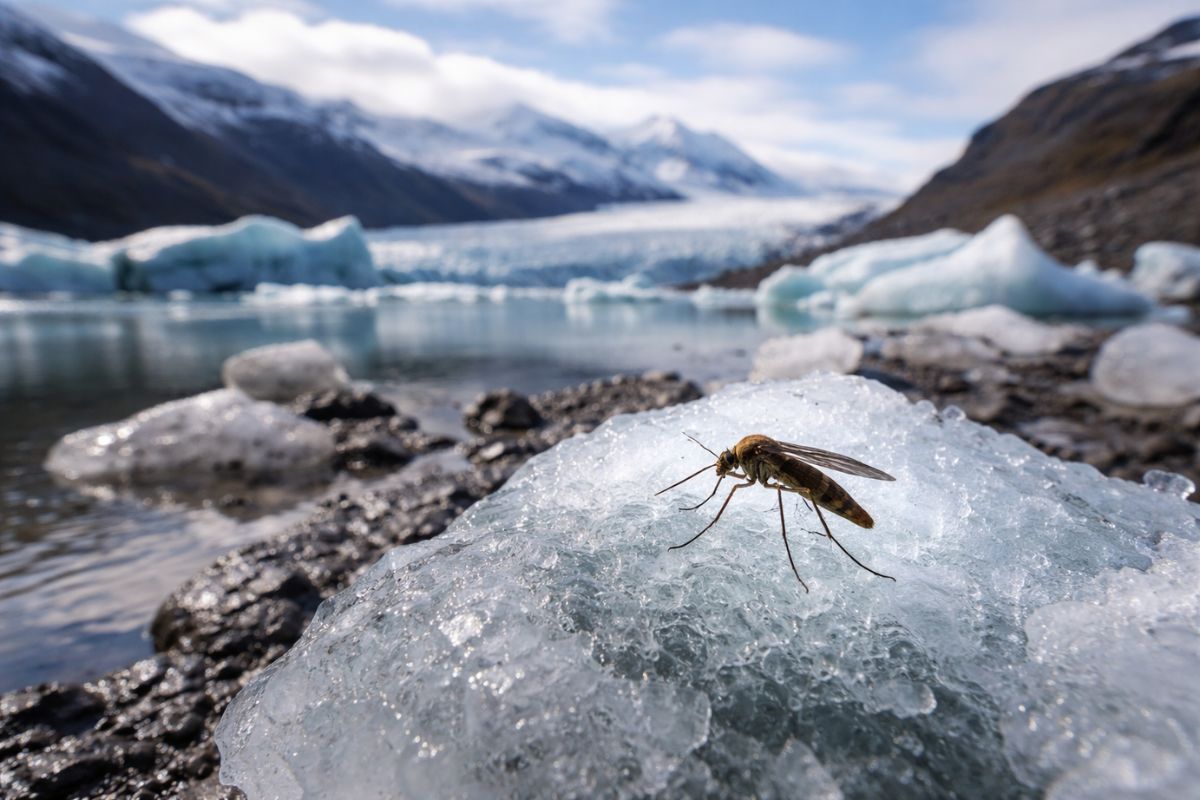


Culiseta Annulata Mosquitoes Identified for the First Time in Iceland, Signaling Measurable Changes in Regional Climate
For centuries, Iceland has been seen as one of the few places on the planet free of mosquitoes, thanks to its geographical isolation and extreme temperatures. This scenario has changed with the confirmation of the unprecedented presence of mosquitoes living in the country, a fact that breaks an environmental barrier considered natural.
The record goes beyond scientific curiosity. It reveals a concrete transformation in the environment, with direct impacts on climate balance and local ecosystems, showing that even historically protected regions are not beyond the reach of global changes.
The discovery involves active mosquitoes adapted to the Icelandic environment, not just insects occasionally brought in. This reinforces the warning about the real possibility of the species’ permanence in the territory.
-
She heard for decades that space was not a place for women, became a pioneer in aviation, was part of the Mercury 13, and at 82, finally traveled with Jeff Bezos before dying at 87.

-
Scientists investigate microplastics in the airways of patients with sleep apnea and reveal a new focus for research on environmental pollution, human exposure, and possible impacts on breathing quality.
-
For the first time, scientists have seen the ocean floor open up in real-time—plates moving apart by two meters in a few days and 160 million cubic meters of lava emerging on the seafloor.
-
Iraq floats and sinks under an arm of the Euphrates 10 giant concrete boxes of 46,000 tons and 125 meters each to assemble a 2.4 km submerged tunnel and open a new land route between Asia and Europe.





What Happened in Iceland and Why the Appearance of Mosquitoes is Noteworthy

The insects were found in Kiðafell, in the municipality of Kjós, south of Iceland, in mid-October. Three specimens were captured in handmade traps, confirming biological activity outside the historical standard of the region.
The identification revealed the species Culiseta annulata, known for its cold resistance and common in Northern Europe. This incident marked the first official documentation of live mosquitoes adapted to the Icelandic climate, something unprecedented until now.
Prior to this, only inactive specimens appeared occasionally on aircraft. The active presence completely changes the environmental reading of the country.
Why the Culiseta Annulata Species Can Survive Extreme Cold
The Culiseta annulata has natural mechanisms that allow it to endure long periods of low temperatures. The species can hibernate in enclosed spaces such as basements, stables, and warehouses, where the intense cold is mitigated.
This behavior increases the chances of survival during the Icelandic winter. With suitable shelter and less severe temperatures, the mosquito’s life cycle can be completed.
This capability paves the way for the emergence of stable colonies, something previously considered unlikely in the territory.
How Regional Warming Created Favorable Conditions for the Mosquito
The Arctic region is undergoing accelerated warming, occurring up to four times faster than the rest of the planet. This process has been altering Iceland’s climate, with less harsh winters and longer thaw periods.
The change directly affects the presence of liquid water, essential for larval development. With less freezing time, the environment becomes viable for the reproduction of the insects.
This new climatic pattern favors not only mosquitoes but also other species previously incompatible with the region.
The Possible Entry Route of Mosquitoes into the Icelandic Territory
The area where the insects were found is close to the port of Grundartangi, which receives frequent traffic from ships and containers. This type of movement facilitates the accidental arrival of external species.
Still, transportation alone does not explain the survival of mosquitoes. Without favorable environmental conditions, the insects would not be able to remain active.
The decisive factor involves the combination of global circulation and <strong progressively higher temperatures, which reduce the natural barriers of the country.
Other Environmental Signs Accompanying This Climatic Transformation
In addition to mosquitoes, warming is already causing visible changes in Iceland. The country is experiencing glacier retreat and the increasing presence of marine species typical of warmer waters, such as Atlantic herring.
These signs indicate a gradual reorganization of the ecosystems. New species find space, while traditional environments lose stability.
The overall changes point to a structural transformation of the Icelandic climate.
What May Happen from Now On with Local Ecosystems
The presence of Culiseta annulata serves as a clear environmental warning. The adaptation of insects to the territory can generate cascading effects, impacting fauna, flora, and natural balance.
The possibility of permanent establishment requires ongoing attention. With a milder climate, new species may emerge, altering known patterns.
Even remote regions show increasing vulnerability. Iceland now joins the group of territories directly affected by global climate changes, with consequences likely to intensify over time.