





 Portuguese
  English
  Spanish
  4 min of reading
  0 comments


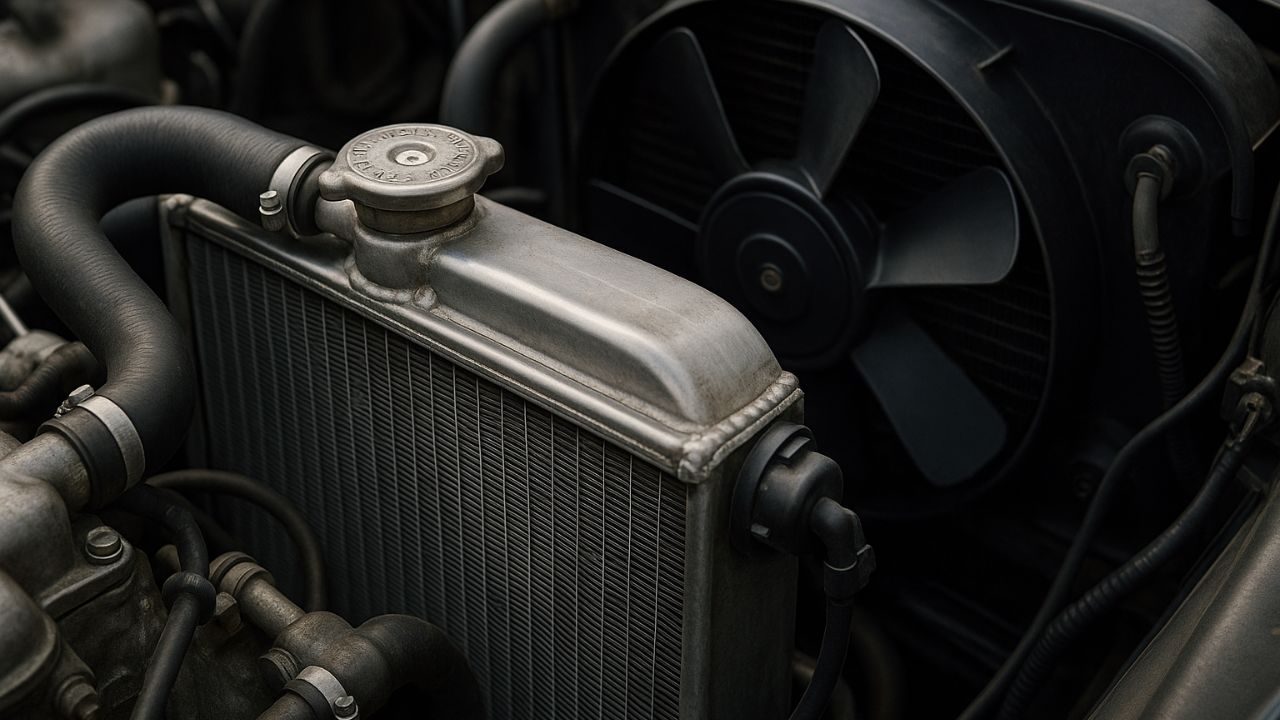
The Absence Of Overheating Does Not Guarantee Engine Health. Silent Corrosion, Caused By Lack Of Maintenance On The Fluid, May Be The True Threat To Your Vehicle.
Many drivers believe that if the car “never boiled,” the cooling system is in perfect condition. This belief is dangerous and misguided. The truth is that the lack of steam under the hood does not mean that degenerative processes, such as corrosion, are not silently destroying the internal components of the engine. Neglecting the maintenance of the cooling fluid is one of the main factors leading to serious failures and high-cost repairs.
Why “Never Boiling” Is Not A Guarantee Of Engine Health
Claiming that the cooling system is great because the car never boiled is a common mistake. There are reports of drivers who used only water for long periods without apparent overheating. However, the absence of the temperature needle in the red zone does not guarantee the integrity of the system.
The fact that an engine does not boil does not prevent internal corrosion from advancing. These problems develop invisibly, undermining the health of vital parts long before a catastrophic failure. Overconfidence in the absence of boiling leads to neglect of the fluid, a crucial element for engine protection and to avoid unexpected expenses.
-
With a price almost R$ 100 thousand lower, the Haval H9 surpasses the SW4 for the first time in March, but Toyota still leads in the accumulated total for 2026; the Chinese SUV bets on technology and premium finishing to compete at the top.

-
6 used cars that cost less than a new Honda CG 160 Titan and still provide trunk space, four seats, and comfort that many new motorcycles cannot offer.
-
Caoa Chery Tiggo 5X skyrockets in sales in Brazil: a 2,318% increase and waiting lists of up to 4 months to acquire the model.

-
Goodbye falls: Singaporean company Omoway begins production of a motorcycle that doesn’t fall and surprises the market by offering automatic balance technology that reduces accidents and transforms the urban riding experience.


Understanding The Cooling System


The engine of a car generates a lot of heat. To operate efficiently, its temperature must be kept within an ideal range, usually between 75ºC and 110ºC. The cooling system not only prevents overheating but also helps the engine reach this optimal temperature as quickly as possible. An engine that is too cold consumes more fuel and oil, in addition to experiencing greater wear.
The cooling process is a continuous cycle, where a special fluid absorbs heat and carries it to the radiator to be cooled. For this to work, several components must operate in harmony. The water pump, the “heart” of the system, drives the fluid throughout the circuit. The radiator acts as the main heat exchanger, while the thermostatic valve regulates the engine temperature by controlling the flow of this fluid. The expansion tank accommodates the extra volume of heated liquid and allows for level checking. At low speeds or when the car is stationary, the fan forces air through the radiator. All fluid transportation is done via hoses, which can deteriorate over time, and the temperature is monitored by a specific sensor. A failure in any of these parts can compromise the entire system.
The Cooling Fluid: Much More Than Just Water
Using only tap water in the cooling system is one of the most fatal mistakes for the engine. Pure water boils at 100°C, a temperature that many engines reach during operation. Additionally, tap water contains minerals that form deposits and accelerate corrosion.
The correct fluid is a mixture of a specific additive with demineralized water. This fluid has multiple essential functions. It acts as an anti-boil, raising the boiling point above 110°C, and as an anti-corrosive, creating a film that protects the metal parts. This is its most critical long-term function. It is also anti-freeze, preventing water from expanding and cracking components in cold weather. Additionally, it has an anti-scaling action to keep the system clean and serves as a lubricant for parts like the water pump. There are different additive technologies (IAT, OAT, HOAT, Lobrid), so it is essential to use the one recommended by the manufacturer and never mix different types.
The Consequences Of Neglecting The Cooling System
The false economy of using only water or an expired additive paves the way for severe problems. Corrosion is the most destructive consequence, as water, without the inhibitors of the additive, degrades the metals of the system. This can puncture the radiator, damage the water pump rotor, and compromise the head gasket.
This corrosion leads to overheating. Rust particles can clog the radiator passages, and damaged components lose their efficiency. The consequences of overheating are severe: warping of the head, burning of the gasket, and in the worst-case scenario, a “seized” engine that completely locks up. The cost of neglect is high. A simple fluid change is inexpensive, but a conventional engine overhaul can cost between R$ 3,500 and R$ 5,500. The damage is progressive, where a small problem leads to an extremely costly repair.
The Secret To Engine Longevity
Avoiding problems in the cooling system is simple with preventive maintenance. With the engine cold, regularly check the fluid level in the reservoir. Also, observe its appearance: a cloudy liquid, with a rust color or oily appearance, is a sign of trouble.
Pay attention to the warnings your vehicle emits. The most direct signal is the temperature light on the dashboard or the needle pointing above normal. Other indications include colored fluid leaks under the car, steam coming from the hood, or a sweet smell characteristic of the additive. Fluid changes should strictly follow the intervals recommended in the vehicle manual, using the specified product and avoiding mixtures. In addition to the fluid, periodically inspect the hoses, the thermostatic valve, and the water pump, replacing them preventively if necessary.







Seja o primeiro a reagir!