





 Portuguese
  English
  Spanish
  4 min of reading
  0 comments


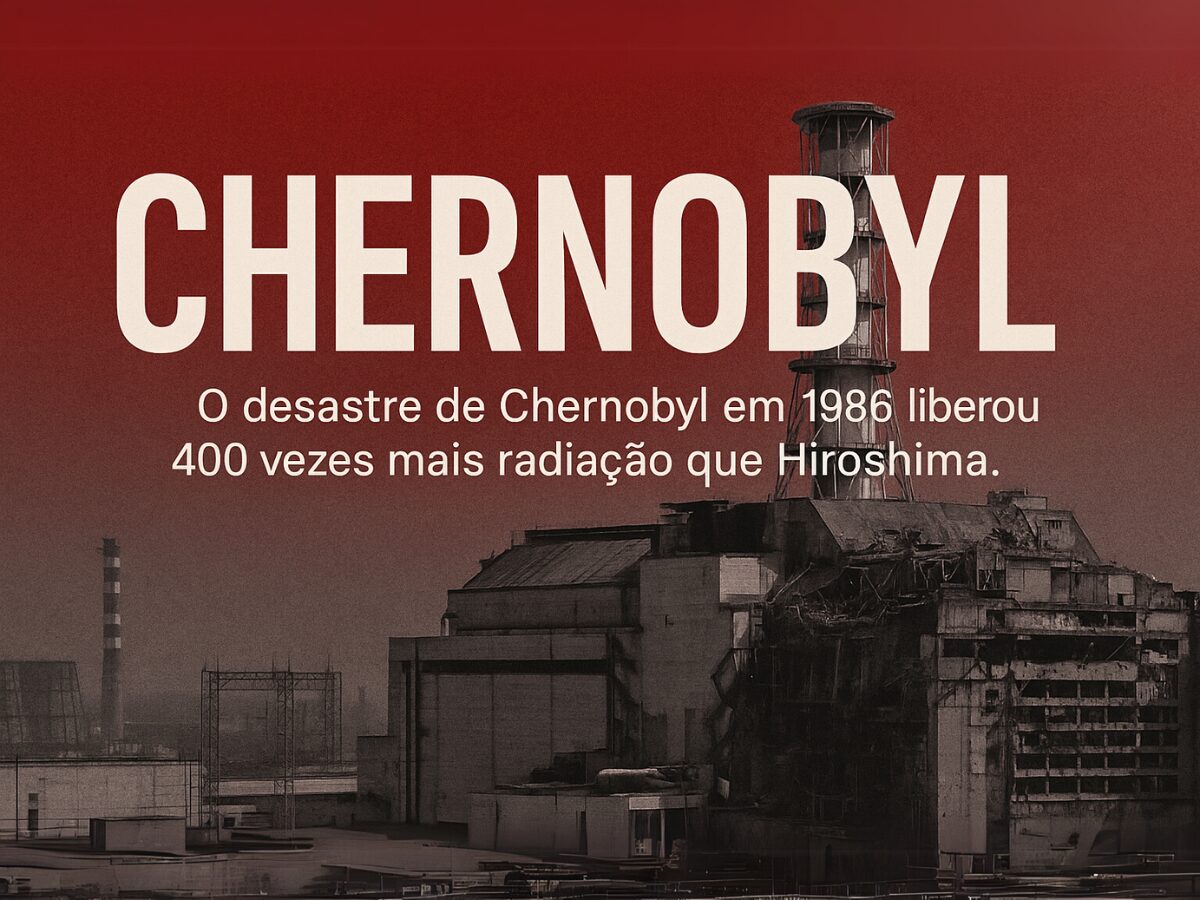
The Chernobyl Nuclear Disaster in 1986 Released 400 Times More Radiation Than Hiroshima. Understand the Technical Causes and Its Global Impact
“The only thing worse than a nuclear accident… is a nuclear accident that could have been avoided.”
On April 26, 1986, at 1:23 AM, reactor number 4 of the nuclear power plant in Chernobyl, then part of the Soviet Socialist Republic of Ukraine, violently exploded during a poorly executed safety test. What followed was the largest nuclear accident in human history — an event whose consequences continue to reverberate nearly four decades later.
The Soviet Promise of Atomic Energy
In the 1970s, the Soviet Union was advancing its ambitious nuclear program. The Chernobyl plant, officially named Vladimir Ilyich Lenin Nuclear Power Plant, was the ninth to be built. Its reactor used RBMK technology, considered an “economic and versatile” solution: it generated energy while allowing for the extraction of plutonium for military purposes.
-
Meta’s new smart glasses are not just for seeing; they use artificial intelligence, analyze your food, summarize messages, and can even change the way you work in professions like engineering.

-
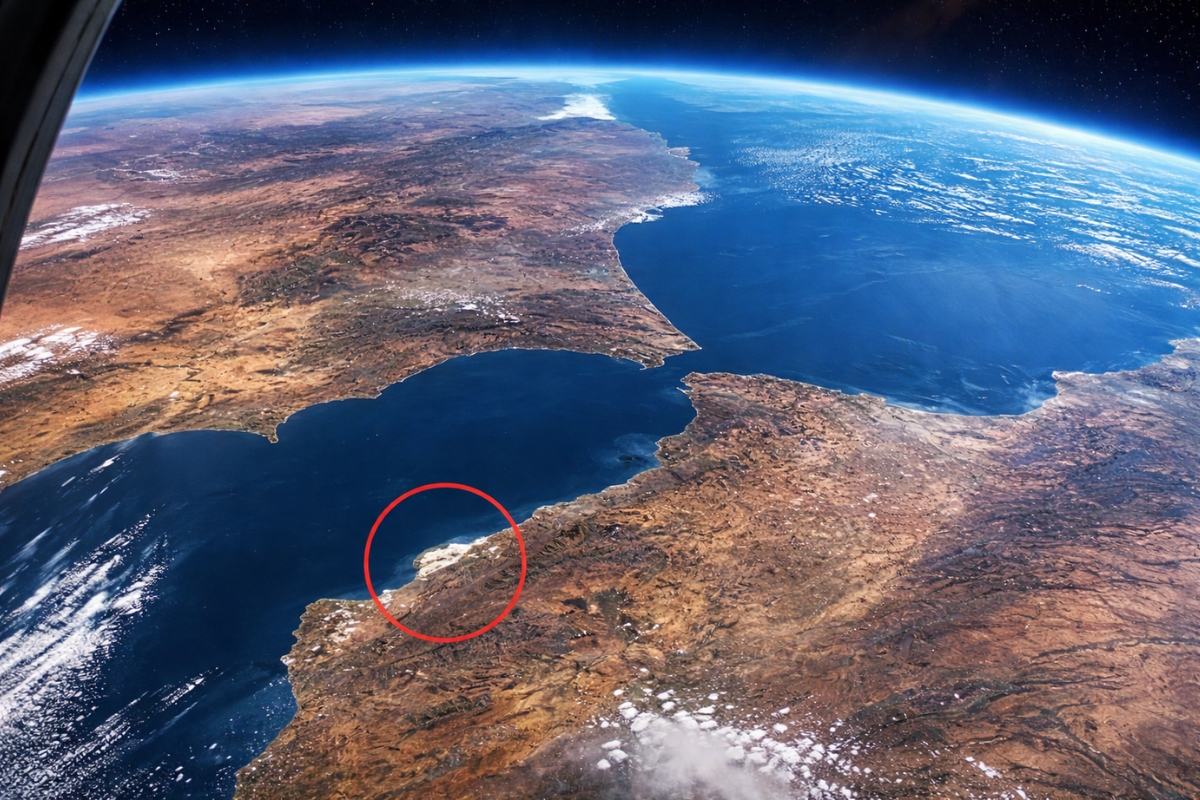
According to an analysis by NASA, only one human-made structure is visible from space, and it is not the Great Wall of China or the Pyramids of Egypt.
-
After 377 years of history, the Brazilian Army will have its first female general: Colonel Claudia Cacho has been promoted to brigadier general by Lula and will receive the sword and command baton this Wednesday in Brasília.
-
A Mercado Livre customer opened their package and found 32 resumes of people looking for jobs crumpled as protective paper inside the box, exposing names, addresses, documents, and phone numbers of dozens of candidates.


The city of Pripyat, planned to house the plant’s workers and their families, was a symbol of Soviet modernism: schools, hospitals, parks, stadiums, cinemas — all designed to accommodate around 50,000 people. The average age of the population was just 26 years. Urbanistically and socially, Pripyat was a success. But what hid behind the scenes of Soviet nuclear engineering was far less promising.
The Reactor Design: An Announced Failure
The RBMK reactor used water as a coolant and graphite as a neutron moderator — a dangerous combination. Unlike other reactors in the world that use light water to moderate and absorb neutrons, RBMKs had a positive void coefficient: that is, when water turned to steam, reactivity increased instead of decreasing — a severe risk.
This design flaw was known. But the political context of the Cold War and the pressure to showcase technological power led to security measures being systematically ignored or underestimated.
The Test That Became Catastrophe
On the night of the accident, reactor 4 was being prepared for a test to see if, in the event of a power failure, the turbine’s rotation could generate enough electricity for a few seconds until the diesel generators kicked in.
The test began with the reactor operating below the safe power level. Due to the buildup of xenon 135 (a neutron absorber), power dropped to only 1% of capacity. To compensate, almost all control rods were removed — a violation of safety protocols.
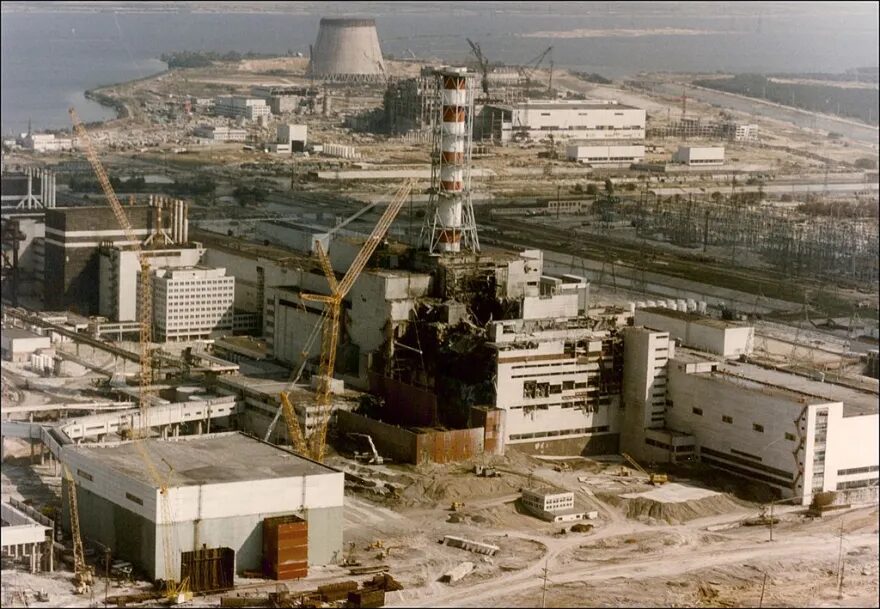
At 1:23 AM, the AZ-5 button was pressed to shut down the reactor. Instead of stabilizing, the reactor experienced a sudden increase in reactivity: the insertion of graphite-tipped control rods accelerated fission for a few seconds. A steam explosion followed, and seconds later, a chemical explosion occurred. Reactor number 4 was literally destroyed.
Invisible Smoke, Lethal Radiation
Fragments of graphite and highly radioactive fuel were released into the atmosphere. The 1,000-ton cover of the reactor was thrown into the air. The fire in the graphite began to emit clouds of radioactive particles that would spread across Europe in the following weeks.
Firefighters were the first to respond — without protective gear, unaware of what they were facing. Among them was Vasily Ignatenko, whose story was immortalized by HBO’s miniseries Chernobyl. Many suffered from acute radiation syndrome and died days later in indescribable agony.
Silence, Cover-Up, and Late Evacuation
Although dosimeters indicated extreme radiation levels (in the range of 30,000 roentgens per hour), the plant director reported to Moscow that “everything was under control.” The population of Pripyat only began to be evacuated 36 hours after the accident. Over a thousand buses transported 49,000 people under the promise that they would return in a few days. They never returned.
The next day, helicopters began dumping sand and boron onto the exposed reactor. The attempt to extinguish the “nuclear fire” was improvised and ineffective. The melted core began to transform into a glowing mass, informally referred to as the “elephant’s foot” — lethal upon mere visual contact.
Anonymous Heroes and the Suicide Mission
Three men — Alexei Ananenko, Valeri Bezpalov, and Boris Baranov — volunteered to manually open water-flooded valves beneath the reactor, preventing another explosion. The world believed they had died, but two of them are alive today. They are considered heroes not only by Ukraine but by humanity.
A Radioactive Graveyard and the Concrete Sarcophagus
As the robots sent to clean up the debris failed due to radiation, flesh-and-blood men — the so-called “liquidators” — were sent to the roof of the plant to remove pieces of radioactive graphite with shovels. They had 40 seconds per shift. In total, 600,000 people participated in the containment efforts, many unaware that they were receiving lethal doses of radiation.
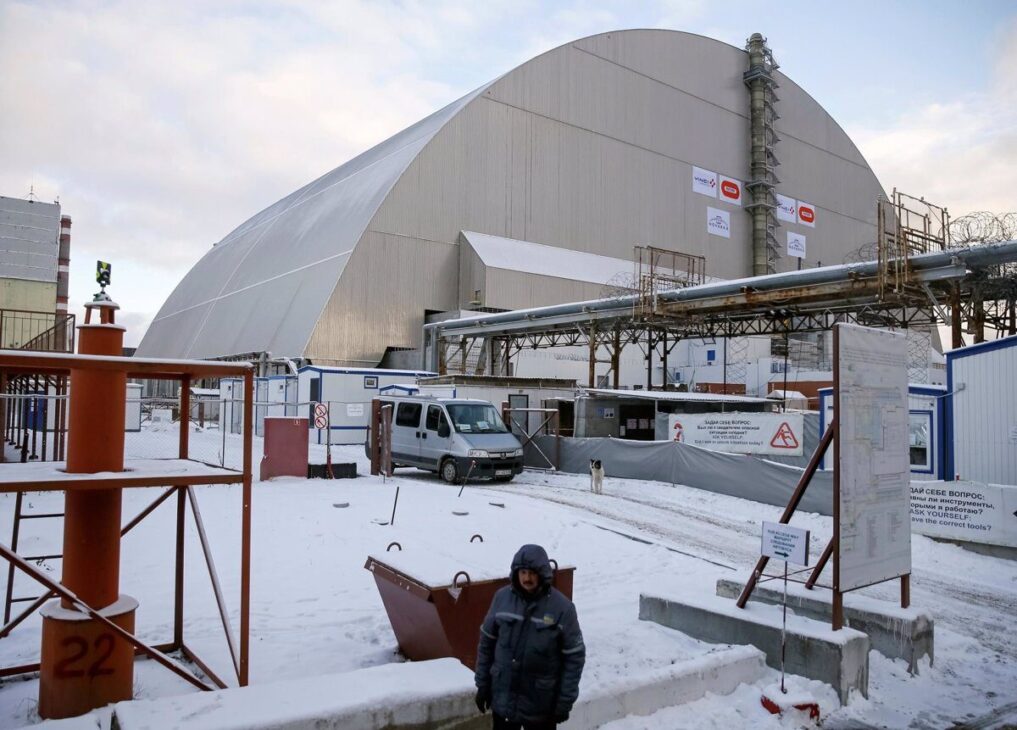
A concrete sarcophagus was built over the reactor. In 2016, it was covered by a new steel structure, funded by an international consortium, called the “New Safe Confinement,” which cost over 2 billion euros.
The Dark Legacy
The official number of immediate deaths was 31. But the World Health Organization estimates that up to 4,000 people died directly due to radiation exposure. Other independent organizations estimate up to 93,000 indirect deaths, mainly from cancer. Thousands of children were born with deformities. In Belarus, it is estimated that 20% of the population lives in contaminated areas.
The 30 km exclusion zone around Chernobyl remains uninhabitable. The city of Pripyat is frozen in time — buildings, toys, and clothes remain where they were left in 1986.







-

Uma pessoa reagiu a isso.