





 Portuguese
  English
  Spanish
  6 min of reading
  0 comments


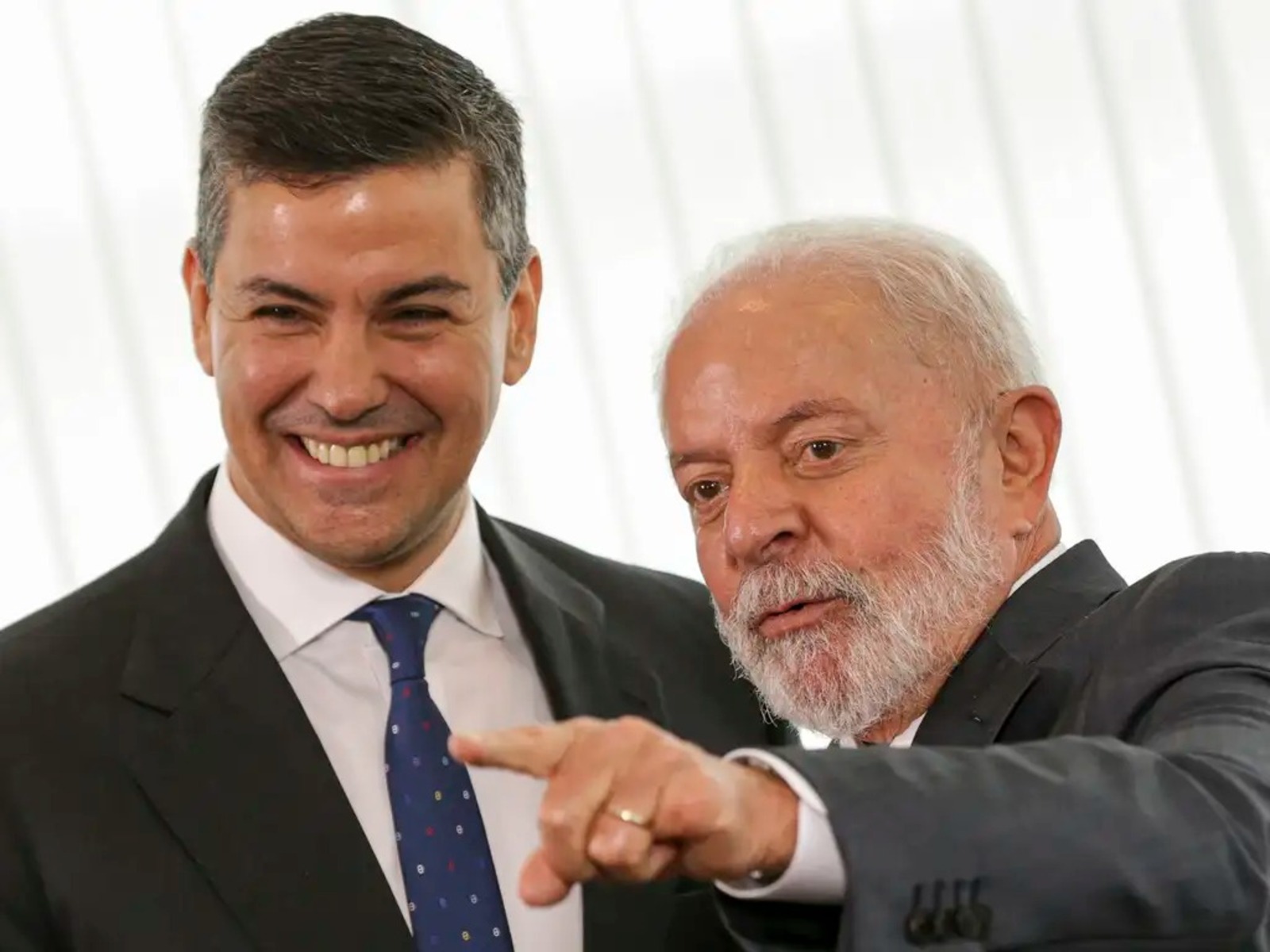
During Ceremony in Asuncion, Paraguayan President Recognized That Lula’s Role in Mercosur Was Essential to Unlock Historic Negotiations and Enable the Signature of the Agreement with the European Union
The President of Paraguay, Santiago Peña, stated this Saturday, in Asuncion, that the diplomatic efforts of Luiz Inácio Lula da Silva were decisive in enabling the agreement between Mercosur and European Union, signed after more than 25 years of negotiations.
Public Recognition by the Paraguayan President During the Signing Ceremony
During the ceremony held at the Gran Teatro José Asunción Flores, in Asuncion, Santiago Peña publicly highlighted the role of the Brazilian president in the negotiating process.
According to the Paraguayan president, without the leadership exercised by Lula during his presidency of Mercosur, the agreement would not have advanced beyond formal discussions.
-
He sold his share for R$ 4 thousand, saw the company become a giant worth R$ 19 trillion, and missed the opportunity of a lifetime.

-
Elon Musk’s Starship megafrocket puts $8 billion at risk, raises alarms in the market, and could affect technology, mining, and space internet startups in the coming years.

-
Airfare prices may rise with increasing fuel costs, and the government is considering urgent measures to avoid a direct impact on the wallets of Brazilians.
-
Chocolate prices soar nearly 15% and become a luxury item for Easter 2026, with increases surpassing inflation and changes in Brazilian consumption habits.


Peña stated that the Brazilian president was a fundamental factor in unlocking complex negotiations, allowing the treaty to move from the paper to the signature.
“I must mention the name of a great and beloved person, unfortunately absent today, who without him we would not have reached this agreement. President Luiz Inácio Lula da Silva was one of the fundamental factors in the negotiation process of the agreement,” said Peña.
The speech took place at a time when Paraguay holds the rotating presidency of Mercosur, a condition that made the country the host of the official act.
Lula’s Absence and Parallel Meetings
Lula did not attend the ceremony in Paraguay and was represented by the Minister of Foreign Affairs, Mauro Vieira, who was present at the event.
On Friday, the Brazilian president met in Rio de Janeiro with Ursula von der Leyen, President of the European Commission.
The President of the European Council, António Costa, was also expected to participate in the meeting but had his flight from Brussels to Rio canceled.
Even though he was absent from the ceremony, Lula expressed public support for the agreement, calling the signing a victory for multilateralism and international dialogue.
Authorities Present at the Meeting Besides the Paraguayan President
The ceremony brought together heads of state and representatives from different political spectrums, reinforcing the multilateral nature of the agreement signed between the blocs.
In addition to Mauro Vieira and Santiago Peña, the presidents Javier Milei of Argentina and Yamandú Orsi of Uruguay participated.
Also present were Rodrigo Paz, President of Bolivia, and José Raúl Mulino, President of Panama.
From the European Union, in addition to Ursula von der Leyen, António Costa participated, representing the European Council at the official act.
Structure and Scope of the Trade Agreement
The agreement between Mercosur and the European Union establishes a free trade treaty covering about 780 million consumers in both blocs.
Together, the blocs represent approximately 25% of the world’s GDP, significantly enhancing the potential for economic and commercial integration.
Negotiated over more than 25 years, the treaty provides for the gradual reduction of import tariffs among the signatory countries.
The central objective is to expand bilateral trade, creating opportunities for European industrial products and South American agricultural products.
Rules Beyond Tariffs
In addition to tariffs, the text includes norms regarding government procurement, services, intellectual property, and mechanisms for resolving trade disputes.
The agreement also incorporates environmental commitments linked to the Paris Agreement and combating illegal deforestation in the participating countries.
These clauses establish formal obligations, allowing for the suspension of the agreement in cases of proven environmental non-compliance.
The inclusion of these rules seeks to address regulatory and environmental concerns raised throughout the prolonged negotiations.
Steps to Entry into Force
The signing of the treaty represents an important formal step, but does not end the necessary process for its effective entry into force.
To produce legal effects, the agreement will need to be approved by the parliaments of all countries involved in both blocs.
In Mercosur, the text will be analyzed by the national congresses of Brazil, Argentina, Uruguay, and Paraguay, as required by internal legislation.
This step is necessary because the agreement establishes legal obligations, including tariff reduction, regulatory adjustments, and long-term trade commitments.
Possibility of Provisional Application
During the ratification process, there is the possibility of provisional application of specific parts of the agreement between the involved blocs.
This application can occur mainly in chapters related to tariff reduction, anticipating economic benefits before full ratification.
The provisional adoption depends on political and legal decisions, both in the European Union and in the Mercosur countries.
The agreement will only enter fully into force after the conclusion of all necessary internal approvals, with no formal exceptions.
Procedures in the European Union
After the signing, the treaty will be submitted to the analysis of the European Parliament, which will assess its legal and economic compatibility.
Certain parts may also require approval from the national parliaments of EU member countries, depending on the legal interpretations adopted.
This process may generate discrepancies between continental and national decisions, influencing the final implementation timeline.
Despite this, the signing is seen as a relevant institutional advance after decades of interrupted negotiations.
Economic Weight of the EU-Mercosur Relationship
The European Union is Mercosur’s second-largest trading partner in goods, consolidating a strategic economic relationship between the blocs.
The agreement would create a free trade area with over 700 million people and a combined GDP of US$ 22 trillion.
In 2025, Brazil exported US$ 49.8 billion to the European Union, a growth of 3.2% compared to 2024.
Imports totaled US$ 50.3 billion in the same period, with a rise of 6.4% in one year, increasing commercial interdependence.
Trade Flow Data
The trade flow between Brazil and the European Union surpassed US$ 100 billion for the first time since 1997, the start of the historical series.
The total volume grew 4.8% compared to the previous year, reflecting simultaneous expansion of bilateral exports and imports.
According to a study by Ipea, completed in early 2024, the agreement could boost Brazilian GDP.
The projection indicates an increase of 0.46% by 2040, equivalent to US$ 9.3 billion, about R$ 50 billion at the current exchange rate.
Main Points of the Treaty
The agreement provides for the gradual elimination of customs tariffs on most goods and services traded between the blocs.
Mercosur will eliminate tariffs on 91% of European goods within up to 15 years, while the EU will eliminate tariffs on 95%.
These reductions will occur within up to 12 years for products from Mercosur, according to schedules established in the final text.
The industry is identified as one of the main beneficiaries, with immediate zero tariffs on various industrial products.
Sectors and Safeguards
Among the favored sectors are machinery, equipment, automobiles, auto parts, chemicals, and aircraft, increasing access to strategic markets.
For sensitive agricultural products, such as beef, chicken, rice, honey, sugar, and ethanol, the agreement establishes import quotas.
Above these quotas, tariffs continue to apply, avoiding abrupt impacts on European farmers and local producers.
The EU may reintroduce tariffs temporarily if imports exceed limits or prices fall below European market levels.
The treaty maintains strict sanitary rules, without relaxing the phytosanitary standards of the European Union for products imported from Mercosur.
There are also advancements in trade in services, investments, public procurement, and intellectual property protection, including 350 European geographical indications.
A specific chapter addresses small and medium-sized enterprises, with measures to reduce costs, bureaucracy, and information asymmetries.
After decades of negotiations, the agreement now proceeds to a decisive stage, marked by legislative debates, economic expectations, and political attention in both blocs.
With information from Poder 360.






-

-

2 pessoas reagiram a isso.