





 Portuguese
  English
  Spanish
  4 min of reading
  0 comments


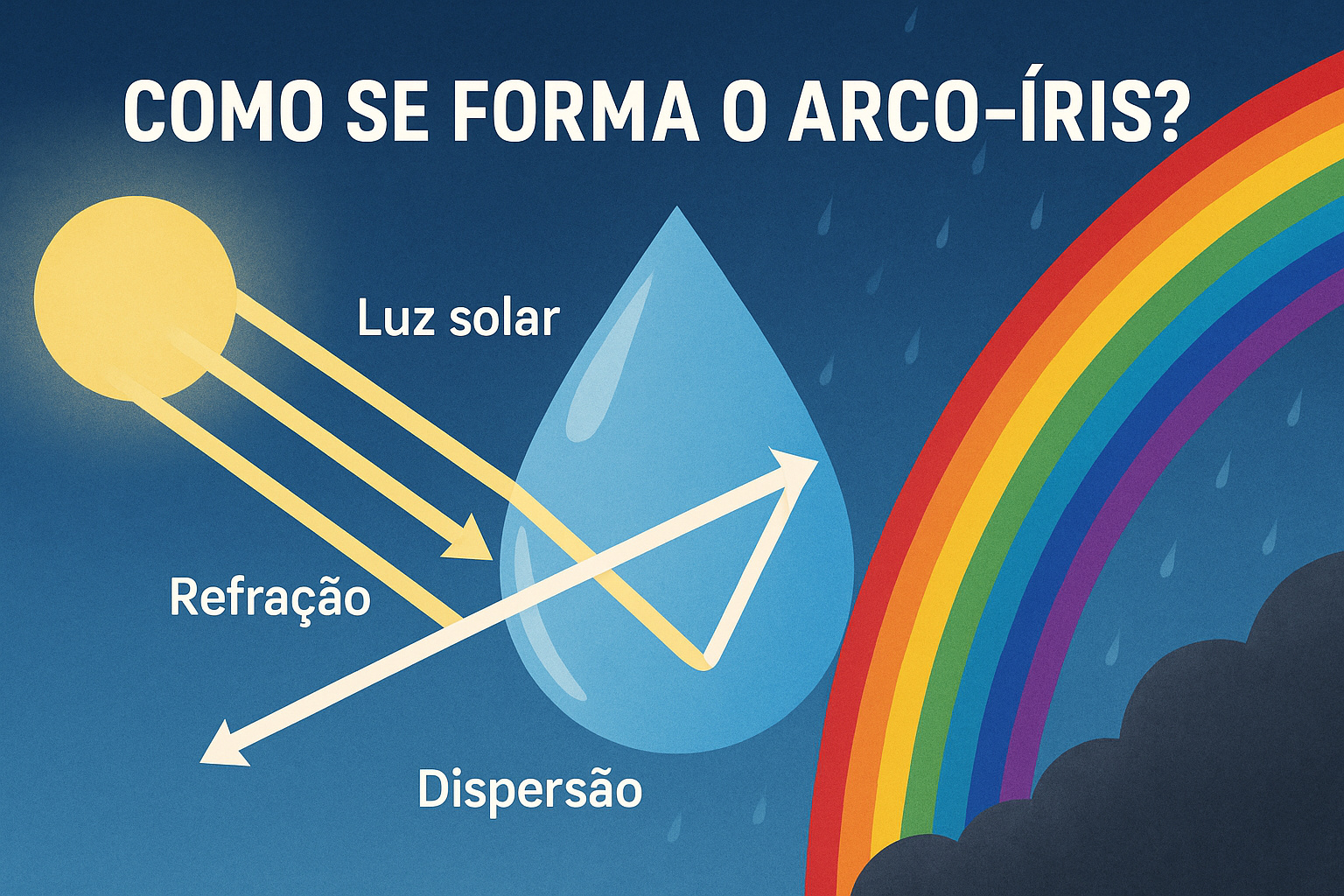
How The Sunlight And Raindrops Create One Of Nature’s Most Beautiful And Curious Phenomena Through Refraction And Dispersion
The rainbow is one of the most popular phenomena in nature. It appears after rain, sparks curiosity, and has been depicted in songs, movies, and even tales about pots of gold. But what is really behind this colorful image we see in the sky?
The Role Of The Prism In The Separation Of Light
The formation of the rainbow begins with a simple concept: the behavior of light as it passes through a prism. A prism is a piece of glass or plastic with a triangular shape.
When white light enters this prism, it is separated into several colors. This phenomenon is the result of the refractive index of the material, that is, how much the light bends as it passes from one medium to another.
-
Sleeping at different times each day can be a bomb for your heart and even double your risk of having a heart attack.

-
Without help and without heavy machinery, a woman builds a house from scratch with stone, wood, and cement, erects a chimney, creates a complete leisure area, and transforms an empty lot into her dream home.

-
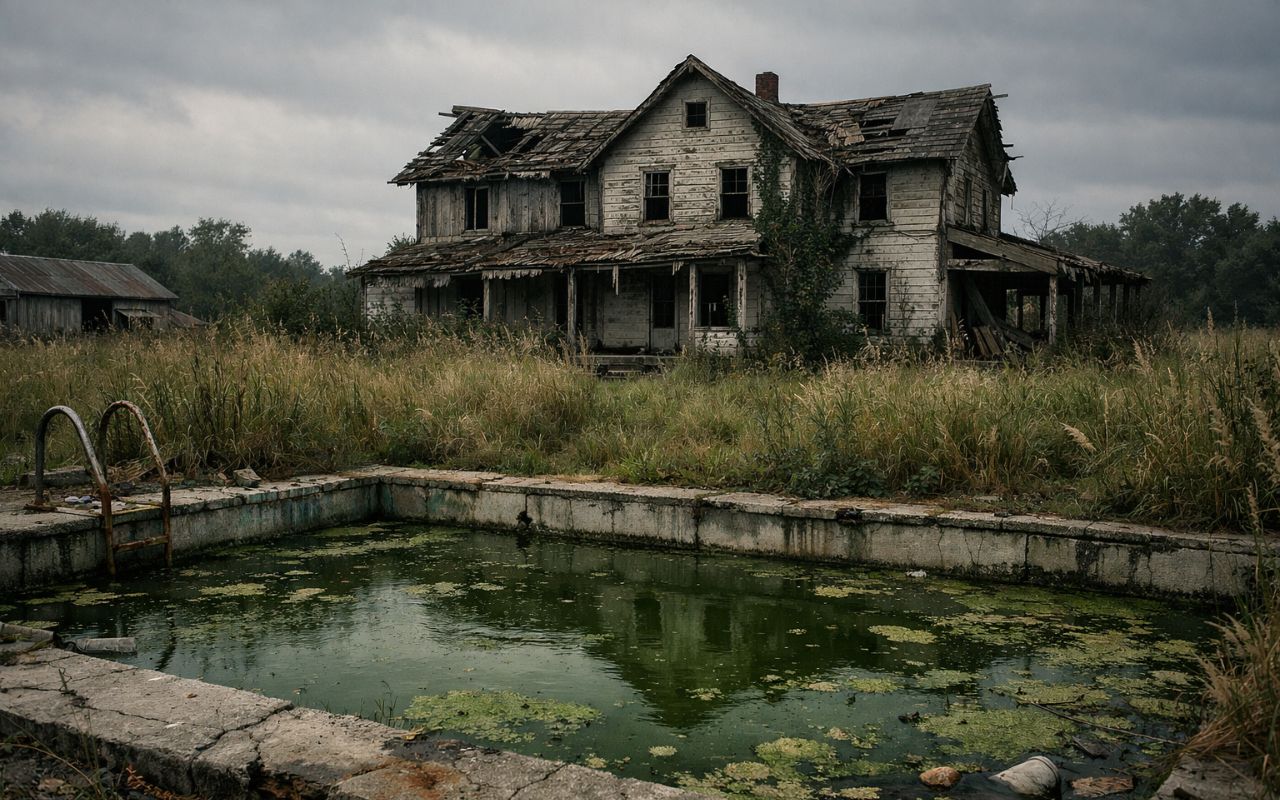
Couple transforms abandoned house after years of being closed; residence was overgrown with weeds, had a green pool, and a deteriorated structure in the interior of Rio de Janeiro.
-
Hidden marks on the walls of the site associated with the Last Supper of Jesus for centuries have been deciphered in Jerusalem, revealing medieval inscriptions left by pilgrims, European nobles, and travelers from the Middle East.

The process begins when light enters one side of the prism. Due to the glass’s refractive index being different from that of air, the light bends — which we call refraction.
As it continues inside the prism, the light is divided into several colors. This is known as dispersion.
Refraction And Dispersion: The Keys To The Rainbow
Refraction happens when light changes direction as it passes from one medium to another. In the case of the prism, light enters from the air, travels through the glass, and thus changes direction.
Dispersion occurs shortly after: each color of white light bends at a different angle.
The colors of white light are separated according to their wavelengths. Red light, which has the longest wavelength, bends the least.
Violet light, with the shortest wavelength, bends more. This is what forms the famous color spectrum we know as the rainbow.
The Seven Colors Of The Rainbow
The rainbow has seven main colors. They are, in order: red, orange, yellow, green, blue, indigo, and violet.
To remember the sequence, many use the acronym “Roy G. Biv,” which corresponds to the initials of the color names in English.
These colors are not made up or artificial. They are the real colors that make up visible light to the human eye, separated through dispersion.
Raindrops As Small Prisms
In nature, the rainbow phenomenon occurs without the presence of artificial prisms. Instead, raindrops play the role of prisms.
When sunlight hits a drop of water, it enters, bends, and reflects inside the drop before exiting.
This process inside the droplets is the same observed in a prism: refraction, reflection, and dispersion. The combination of these actions in millions of droplets forms the visible rainbow in the sky.
The Geometry Of The Arc In The Sky
The formation of the rainbow also depends on specific angles. Red light exits the droplets at an angle of 42 degrees. Violet light exits at a slightly lower angle of 40 degrees.
These small differences in angle, multiplied by millions of raindrops, produce the circular shape of the rainbow. However, we typically only see part of the circle, as the ground blocks the full view.
The Double Rainbow Phenomenon
The double rainbow is an interesting variation. It occurs when light reflects twice inside water droplets. The second arc appears outside the first and has the colors reversed.
This phenomenon is rarer and depends on the exact size of the droplets. When it occurs, it’s an additional spectacle of the same science of light.
The Rainbow As An Optical Illusion
Although it seems like a physical object, the rainbow is, in fact, an optical illusion. What we see are beams of light reflected at specific angles.
The image is only visible from certain observation points and changes according to the observer’s position.
Our eyes capture visible light and the brain interprets this as bands of color. The formation depends on the simultaneous presence of sun and rain and the correct position between the observer, the sun, and the raindrops.
The Structure Of Light
Finally, the physical explanation involves photons — particles that make up light. These particles also behave like waves.
When these waves encounter a different medium, such as water or glass, they bend.
This behavior of light, in its form as photons and waves, is what makes refraction and dispersion possible — and consequently, the rainbow.
A Symbol And A Wonder Of Physics
In addition to being a fascinating optical phenomenon, the rainbow has symbolic meaning in various cultures. In many places, it is seen as a sign of hope and renewal.
But above all, it is a clear example of how physics and nature combine to create something beautiful and precise.
The next time you see a rainbow in nature, remember: the colorful spectacle is the work of light, raindrops, and perfect angles in the sky.
With information from Howstuffworks.









-

3 pessoas reagiram a isso.