





 Portuguese
  English
  Spanish
  2 min of reading


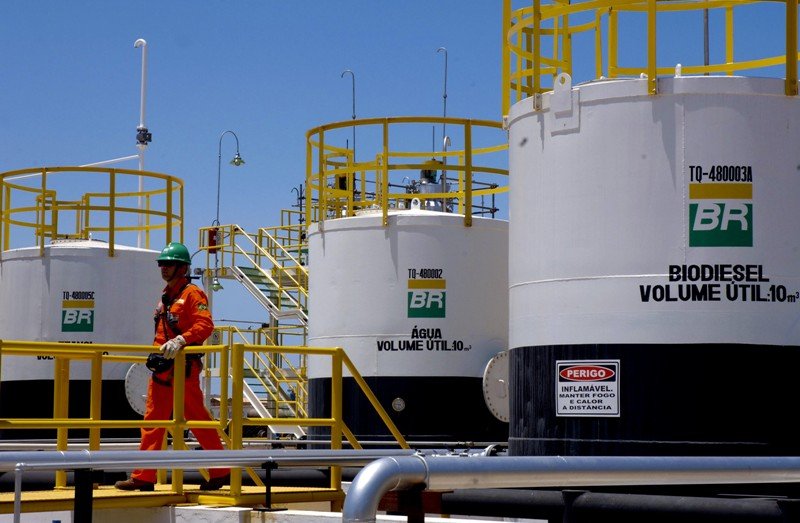
Petrobras Reports That National Oil Production Is Not Enough to Maintain Diesel and Some Derivatives Supply
Government proposals to reduce the price of diesel oil for consumers may lead to fuel shortages and price collusion, according to warnings from Petrobras and Cade (Administrative Council for Economic Defense). The oil company says that the proposed subsidy calculation to be paid starting in September makes imports unfeasible and that, without the product brought from abroad, there will be a diesel shortage. The Ministry of Finance’s agency highlights the risk of price uniformity if the requirement for companies, including Petrobras, to disclose the components of their prices, such as profit margins, remains.
The new methodology for calculating the diesel subsidy and also the transparency in price formation were proposed by the National Agency of Petroleum, Natural Gas and Biofuels (ANP), based on government guidance, and are now undergoing scrutiny from the market in public consultations.
-
Russia spent $5 billion and 28 years modernizing a nuclear warship that had been inactive since 1997. The Admiral Nakhimov returned to the sea in August 2025 as the heaviest surface combat ship in the world, with 176 missile launchers, including hypersonic Zircon missiles.

-
James Webb finds 300 galaxies with mysterious scars, and this discovery may show that the universe was born much more violently than astronomers had imagined.

-
Haiti’s capital is experiencing an energy and construction crisis, facing blackouts, a blocked port, and buildings at risk after years of instability and a significant earthquake.

-
Government unlocks R$ 554 million for a highway that has been requested for decades and accelerates the duplication of BR.

In proposing changes to the subsidy calculation, the regulatory agency sought to incorporate freight costs for diesel imports to address the demands of trading companies participating in this market alongside Petrobras. However, in a document sent to the ANP, the state-owned company claimed that the proposal lacks economic rationale and that instead of attracting importers, it tends to drive them away, which would lead to shortages.
“The proposed formula is likely to make it unfeasible to supply imported products and the participation of non-producing third parties in the (subsidy) program, restricting competition in the market. Additionally, considering that agents (both producers and importers) will only offer products on economic bases and that the national balance is deficient in diesel, there is a potential risk of market shortages,” stated Petrobras in its contribution to the public consultation.
On Friday, the 17th, during the hearing at the agency’s headquarters, Petrobras’ Marketing and Commercialization Manager, Guilherme França, expressed doubt that “the board (of the state company) will authorize diesel imports at the risk of incurring losses.” A representative of importers, Abicom, argued similarly. “No investor feels secure putting money in these conditions. This proposal could condemn Brazil to stop growing,” says Sérgio Araújo, president of Abicom.
Furthermore, the disclosure of the price components practiced by all companies participating in the market, also proposed by the ANP, may generate “upward price pressure considering the greater risk of collusion (cartel formation),” stated Cade in a technical note sent to the regulatory agency. Source: Estadão
Petrobras and Ensco Enter Into Agreement Regarding Drilling Rig DS-5










Seja o primeiro a reagir!